For three years the track every owner of an aging building had heard of has been off the table. TAMA 38 lapsed, and what replaced it is a different mechanism entirely — its own entry conditions, its own ceilings on development rights, and one question that settles everything else: what year your building was permitted.
The confusion around that handover costs money. Some owners are waiting for their city to "adopt" the new track — there is nothing to wait for. Others are certain their building qualifies, and find that a strengthening job done years ago disqualified it. And whether the building comes down or is strengthened decides which of two entirely different deals you are in, settled long before anyone talks to you about what you get.
TAMA 38 lapsed. What exactly took its place?
The replacement arrived in Amendment 139 to the Planning and Building Law, published in the official gazette (Sefer HaChukim 3004) on July 10, 2022. It added a new article to the statute — Sections 70a through 70i. The market calls it the "Shaked Alternative," after the interior minister who pushed it through. The statute calls it a "plan for building resilience against earthquakes."
The official name is the more accurate one. The statute is aimed at resilience, not renewal — which is why a building already strengthened to the standard is not eligible.
TAMA 38 itself lapsed on October 1, 2023. Some local committees received a safety net that ran to May 18, 2026 at the latest — not automatically, and not everywhere. That date has passed too.
Bottom line: TAMA 38 is not an open track for anyone starting today. Anyone still citing it is citing a lapsed plan.
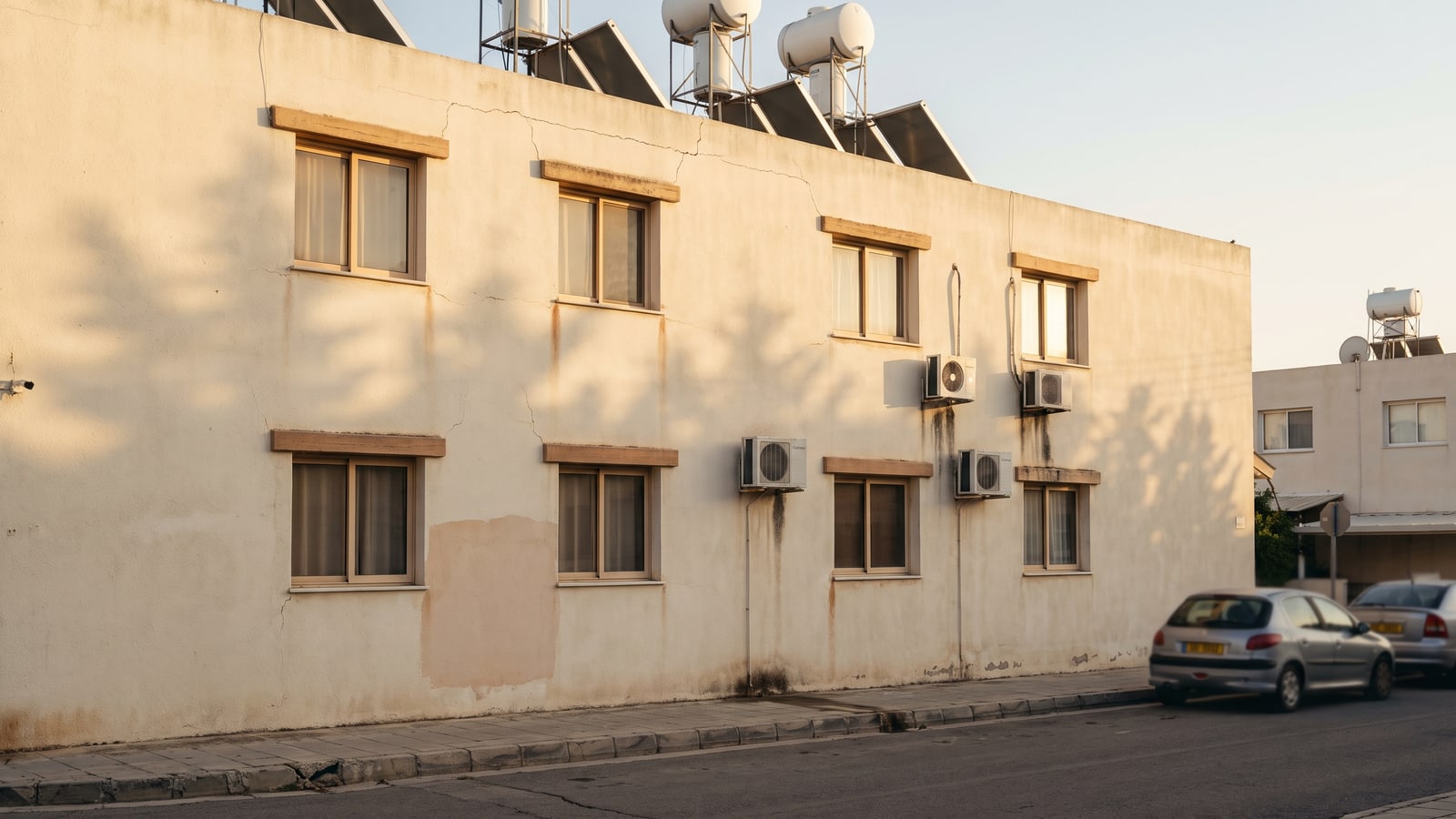
Does your city have to opt in?
No — and this is what most owners get wrong. The Shaked Alternative is not a plan a municipality adopts. It applies nationwide by operation of law, and the entry conditions are tested against the building, not the city. There is no council vote to wait for and no policy document you are stuck without.
⚠ But two questions here sound like one, and they are not. The first is whether the track is open to you at all. That is a question about your building, and the answer does not depend on your municipality. The second is whether your particular plan gets approved, and at what scale — and that is the local committee's call.
Section 70i lets the committee reject a plan on planning, architectural, landscape, or economic grounds, for lack of adequate infrastructure and public facilities, or where it finds that complex-wide planning would be better — provided it sets out its reasons in writing. And every percentage below is a ceiling the statute permits it to approve, not an entitlement.
What does switch the track off entirely? Only a plan approved under Section 64(b). As of today there is exactly one such approved plan in Israel, in Holon. ⚠ A plan already approved under Section 23 of TAMA 38 does not switch it off — the two run side by side, and the committee may prefer the local one.
Bottom line: nothing to wait for, and someone to work with. Eligibility follows the building; scale is settled with the committee.
How do you know if a building "requires strengthening"?
The definition sits in Section 70a, and it is built from cumulative conditions — all of them, not most. A building that fails one is outside the track, however old and however tired:
- the lot's designation in a plan includes residential use;
- at least 70% of the existing floor area is lawfully in residential use — "lawfully" is the word that knocks out additions built without a permit;
- the building permit was issued before January 1, 1980 — or between January 1, 1980 and December 31, 1984, together with a structural engineer's opinion that it was not built to SI 413, Israel's earthquake-resilience standard, as it stood when the permit was issued;
- no strengthening work to the standard has been carried out;
- it has at least 2 stories above ground and at least 4 permitted dwelling units.
Two details that change the arithmetic in practice: an open ground-floor level on columns (pilotis) counts toward the total, but a top story smaller than half the floor below it does not. And a building permitted on or after January 1, 1985 does not qualify at all, by any route.
Cumulative conditions — one unmet is enough for the track not to apply. Section 70a of the Planning and Building Law, as enacted by Amendment 139 (Sefer HaChukim 3004, July 10, 2022).
Bottom line: the permit year is the entry ticket. It is in the building file at the committee, and you can ask for it this week.

How much can be built on each track?
The amendment set different ceilings according to what happens to the building. A ceiling is what the statute permits the committee to approve — not a promise of approval, and not what you will end up with:
⚠ And two definitions people forget, both of which move your number. The area of a protected space (the reinforced safe room Israeli construction requires) is included within the increase rather than added to it. And in calculating the existing area, any addition permitted after May 18, 2005 is left out — a balcony or room added after that date does not enlarge the base the rights are calculated from.
On top of these, the statute also allows floor area for public uses: up to 10% of the added area on the demolition track, and up to 14% on the strengthening track.
Bottom line: the track is settled before anyone talks numbers with you — and the track is what decides how much there is to divide.
What about a building designated for preservation?
A preservation building is excluded from the track under Section 70h — whether designated in an approved or deposited plan, listed on a schedule of preservation sites, or designated by a notice under Section 77 or conditions under Section 78.
One opening remains: the Section 70e route — strengthening the building in place, with the added rights built on another lot, no increase in rights on its own lot, and no provision conflicting with the preservation documents.
Bottom line: a preservation building has one route. Anyone offering you another has not read Section 70h.
How much of the upside goes to the local committee?
A plan creates betterment (an increase in value), and a betterment levy is paid on it. For plans under this article the statute set a reduced rate: one quarter of the betterment, under Section 19(b)(10a) of the Third Schedule. The ordinary rate of one half applies to the remainder, and the local authority may reduce the levy on the addition.
That number sits in the developer's pro forma, and it bears directly on what is left to distribute to owners.
Bottom line: a quarter of the betterment is a line in the same budget your compensation comes out of.
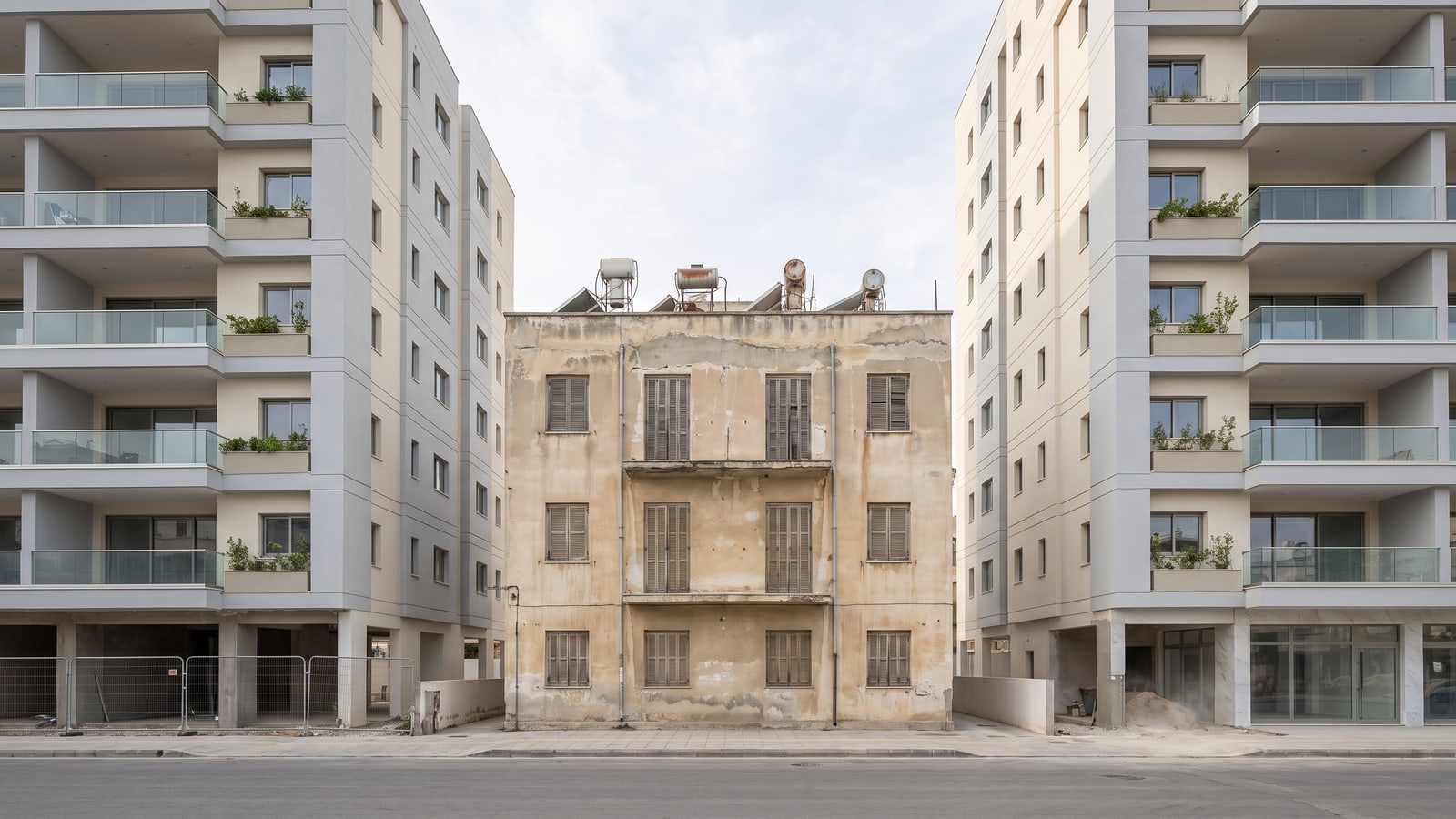
Shaked, TAMA 38, or pinui-binui — what is the difference?
All three names come up in the same conversation, and they are three different things. One of them no longer applies. Pinui-binui is evacuate-and-rebuild: a whole cluster of buildings, not one.
| TAMA 38 | Shaked Alternative | Pinui-binui | |
|---|---|---|---|
| Statutory basis | A national outline plan | Sections 70a–70i of the Planning and Building Law | Evacuate and Rebuild (Encouragement) Law, 5766-2006 |
| What it applies to | A single building | A single building, on conditions tested against it | A cluster of condominium buildings |
| What opens the door | — | Automatic, nationwide application | A special majority under Section 1 |
| What switches it off | — | Only a plan under Section 64(b) — one approved, in Holon | — |
| Status today | Lapsed October 1, 2023 | In force | In force |
Bottom line: Shaked and pinui-binui answer different questions of scale. One building on its lot is Shaked; a whole block is pinui-binui.
What must the committee see before it approves?
Section 70g lists what the committee must have in front of it ahead of a decision to deposit the plan for public review or to approve it, which is why a thinly prepared plan stalls:
Bottom line: how well the plan is prepared is part of what decides whether it is approved.
We signed a TAMA 38 agreement. What happens to it now?
The agreement did not evaporate with the plan — it is a contract, and it still binds. What changed is the planning basis it rested on.
A developer who offers to "convert" your agreement to the Shaked Alternative as though it were a technical update is skipping the stage that matters to you. These are new deal terms — your chance to revisit whatever you liked least in the original.
Bottom line: read what is signed first. Then talk about what comes next.
What to do now: five steps
- 1Get the permit year. It is in the building file at the local committee, and it is the entry ticket — until you have it, there is nothing to discuss about compensation.
- 2Confirm no strengthening work was done. An old job to the standard takes the building out of the definition, even if nobody remembers it happening.
- 3Check whether a Section 64(b) plan was approved in your city. That is the one check where your city actually affects whether the track applies.
- 4Organize an owners' committee before you talk to a developer. A developer negotiates differently with an organized building than with twelve owners acting separately.
- 5Do not sign a term sheet without having it reviewed. Even an innocuous-looking page creates real commitment, and you only get one opening position.

What to verify before signing
Our city has no Shaked policy. Are we stuck?
No, and there is nothing to wait for. Eligibility under the Shaked Alternative is decided by the building, not by city hall: the track applies nationwide by operation of law. No municipal policy document is holding you back.
What is worth checking with the municipality is something else: whether a plan under Section 64(b) has been approved where you are, which is the only thing that replaces the track. As of today there is one approved plan of that kind in Israel, in Holon.
⚠ And note the distinction: even where the track is open, the local committee approves your particular plan and sets its scale, under Section 70i. Nothing to wait for to start — and someone to work with to finish.
Our building was permitted in 1982. Are we in?
Quite possibly — but not automatically. A permit from 1980 to 1984 enters the track only with a structural engineer's opinion that the building was not built to the earthquake-resilience standard as it stood when the permit was issued. Without it the building does not meet the Section 70a condition.
In practice, that is the first check to run, before any conversation about compensation. Two years' difference in the permit date changes the whole picture.
We strengthened the building a decade ago. Can we still use the Shaked Alternative?
If the work was done to the standard — no. One of the Section 70a conditions is that no strengthening work to the standard has been carried out. A building already strengthened is not a "building requiring strengthening," and the logic holds: the track exists to produce resilience, not to reward a building that already has it.
This is why the official name — a plan for building resilience against earthquakes — explains the track better than the nickname does. Before getting excited about a rendering, check what has already been done to the building.
We signed a TAMA 38 agreement two years ago. Is it dead?
Not automatically. The agreement is a contract between the owners and the developer, and it was not erased when the plan lapsed. What governs now: what your agreement says about conditions precedent and timetables, how far the project got through planning, and whether it contains a mechanism for changing track.
Do not sign a "conversion" as though it were paperwork. A change of track is a new set of terms, and a new set of terms is an opening position.
The developer says we have to hurry and sign now. Is that true?
The speed in the Shaked Alternative is procedural, not contractual. The amendment also created a fast-track licensing plan under Section 145a1 — for a single lot or two contiguous lots — which merges planning and permitting. It was built to shorten the road to approval, not your reading time.
Before signing, three answers are worth having in hand: which track this is, whether the building meets the entry conditions, and what each owner receives. Signing without all three gives up your leverage before the negotiation starts.
Know which track you are on, and you know what there is to negotiate
"Are we in the Shaked Alternative?" sounds like a yes-or-no question. In practice it is a set of cumulative conditions, one route among several, and a rights ceiling that determines what there is to divide in the first place. Gottlib is an Israeli real estate law firm that represents apartment owners in urban renewal: we map the building's status against the Section 70a conditions, draft the documents, and represent you across the table from the developer and before any authority — from the first idea to registered title.
An aging building, a developer at the door, or just a question about whether you qualify? Message us on WhatsApp — tell us the year the permit was issued and how many apartments the building has, and we'll come back to you with where you stand.
TAMA 38 is over, but the track that followed it is already open — nationwide, by operation of law, with no municipal adoption to wait for. Owners who work that out before a developer explains it to them walk into the negotiation with the stronger hand.
Sources: Planning and Building Law (Amendment No. 139), 5782-2022 — Sefer HaChukim 3004, July 10, 2022; Sections 70a–70i of the Planning and Building Law; Sections 64(b) and 145a1 of the Planning and Building Law; Section 19(b)(10a) of the Third Schedule; Evacuate and Rebuild (Encouragement of Evacuate-and-Rebuild Projects) Law, 5766-2006; National Planning and Building Council decisions on the lapse of TAMA 38. Text checked September 10, 2026. The above is preliminary information and is not legal advice or a substitute for it; consult a lawyer before taking any step.
General information — not legal advice.