
An apartment doesn't divide itself.
Drafting a will in Israel — the four forms the law recognizes, mutual wills, and a will that can be carried out even when there's an apartment in the estate
A will says what happens to your property after you die. Israeli law recognizes four ways to make one, each with requirements of its own. That much you can look up. The hard part comes next: when the estate holds an apartment, naming who gets it is where the drafting starts. After it come the questions somebody has to answer regardless. In what shares, what happens to the mortgage, who goes on living there, and how any of it reaches the Land Registry. We write those answers into the will itself.
With no will, the law already decided for you.
The question never goes unanswered. The Inheritance Law, 1965 sets the rule: inheritance is under the law except to the extent it is under a will. A default is always running, and a will is the only way to displace it. The question isn't whether there's an instruction. The question is whose it is.
The heirs come off a closed list
The statute names them: the spouse, the deceased's children and their descendants, the parents and their descendants, the grandparents and their descendants. Children come before parents, and parents before grandparents. A partner you never married, a grandchild you meant to single out, a sibling who stood by you for years, a nonprofit — none of them are on that list, and without a will they simply aren't there.
Your spouse doesn't take everything
A surviving spouse takes the household effects, including the family car, and half of the rest of the estate where the deceased left children or their descendants or parents. Half the apartment moves to the children that same day. There is one carve-out: where the deceased left siblings or their descendants or grandparents, and the spouse had been married to them for three years or more and was living with them in an apartment that forms part of the estate, the spouse takes the deceased's entire share in that apartment, plus two thirds of what remains.
What passes is a share, not an asset
The deceased's children divide equally among themselves. What each one receives is a fraction of the estate, not a particular apartment. And until the estate is divided, the law holds that an heir's right in a specific estate asset cannot be transferred, pledged or attached. In practice: nobody sells, mortgages or registers anything until the division closes.
Whoever lives there can stay — as a tenant
In an apartment the deceased owned and lived in, the spouse, children, and parents who were living there at the time may go on living there — as tenants of the heirs to whom the apartment fell. The rent, the term and the conditions are set by agreement among them, and failing agreement, by the court. That is the default. It is rarely what people had in mind, and a will can put your own arrangement in its place.
What the statute demands of each one.
Under the Inheritance Law, a will is made in handwriting, before witnesses, before an authority, or orally. Four separate routes, each with formal requirements of its own. Defects in those requirements are what ends up in court. There is one safety valve, and it does not cure everything.

Handwritten
The requirements are exact: the will must be written entirely in the testator's own hand, bear a date written in that hand, and be signed by that hand. Three of them, no witnesses, nobody else in the room. What usually sinks one: a printed form with the details filled in by hand, or a typed schedule stapled to the back. A defective will can still be upheld, but only where its core element survives, and for a handwritten will the core element is that the whole document is in the testator's handwriting.
Before witnesses
What the law asks for: in writing, dated, signed by the testator before two witnesses after declaring to them that this is their will. The witnesses then confirm it on the spot, in their own hand, on the face of the will. Three things sink one: a witness who is a minor or has been declared legally incompetent; witnesses who signed one after another, each in their own time; and a witness who is also a beneficiary, which voids the provision in their favor.

Before an authority
On this route the testator states the will aloud, or hands it in writing themselves, to a judge, a court registrar, the Registrar of Inheritance Affairs, or a member of a religious court; a notary counts as a judge for this purpose. The words are read back to the testator, who declares this is their will, and the authority certifies it by signature on the face of the document. A will made this way is prima facie evidence that it was made on the date and at the place it names. Written in a language the testator does not understand, it is read to them in translation, and the translator certifies that on its face.

Oral
The law reserves this one for a person on their deathbed, and for someone who, in circumstances that justify it, sees themselves facing death — spoken before two witnesses who understand their language. The witnesses record a memorandum noting the day and the circumstances, sign it, and deposit it with the Registrar of Inheritance Affairs as soon as they reasonably can. And it does not last: once the circumstances that justified it have passed and the testator is still alive, the will is void after one month.
"In equal shares" is not a division instruction.
A will can get by on names alone. An apartment can't. The right itself passes at the moment of death — on a person's death their estate passes to their heirs — but between that moment and a name on the Land Registry (Tabu) record there is a whole chain: a probate order, an actual division, and registration. Every link in it leans on what the will says, so we draft the will down to the last link.
Which rights, and in what shares
The statute separates two very different things: leaving a proportionate share of the whole estate, or leaving a particular asset — what the statute calls a specific bequest. "A third of the estate" is a fraction someone will have to translate into assets later. "The apartment at 12 Herzl Street, block and parcel so-and-so, in full" is an instruction that can be carried out. And where the will does say how the assets are to be divided, the court follows the will's instructions unless it is persuaded, for reasons it must record, that there were special grounds to depart from them.
The mortgage
A mortgage does not die with the borrower. It is a debt of the estate, and the Inheritance Law sets the order in which estate debts get paid. Until the estate is divided, the heirs are liable only out of estate assets; but if the estate is divided without summoning creditors and without settling the debts that were known, each heir becomes liable up to the value of the entire estate as at the division. A will settles this ahead of time. The law lets you direct something an heir is obliged to do out of what they received from the estate: that whoever takes the apartment carries the outstanding loan, for instance. And mortgage life insurance runs on a separate track altogether. Insurance proceeds are not part of the estate, and they are read against the policy itself.
Your spouse's right to stay
You can leave this to the statutory default: occupancy as a tenant of the heirs, at a rent fixed by agreement or by the court. Or you can write something else. The law offers three routes: a specific bequest of a right of residence or use for life; an obligation imposed on the heir who takes the apartment; or successive beneficiaries — the first takes now, the second takes on the first's death, and the second takes only what the first left. Each structure produces a different outcome on the day the apartment is sold. You pick one on purpose, in advance.
How it actually gets done
A will is not a land transaction. The Land Law, 1969 defines a transaction and expressly carves out inheritance under a will, so it is not completed by registration the way a sale is. What the road does require: a probate order, since no rights may be claimed under a will and no effect given to it as a will unless a probate order has been issued; a division, by agreement among the heirs or by court order; and only then registration. And where the will never said how, the statutory fallback steps in: an asset that cannot be divided — an apartment being the classic case — goes to the heir who bids the most for it, provided the bid is not below market price, and if no heir is willing to buy, the asset is sold and the proceeds split.
Five places a will fails to hold.
Not every signed will gets carried out. Some failures are formal, some go to substance, and some sit in assets the will never touched in the first place. All of them can be settled in one sitting, before anyone signs.
"The siblings worked it out"
The statute is blunt about it: an agreement concerning a person's inheritance, and a waiver of it, made during that person's lifetime — both void. A gift meant to vest only after the giver's death is likewise ineffective unless it was made by will. Married couples do have a real instrument for this — mutual wills, made in reliance by each spouse on the other's will. They carry a price of their own, and the law spells it out.
The child who handled the arrangements
The rule here is automatic: a provision benefiting whoever drafted the will, witnessed it, or otherwise took part in preparing it — and a provision benefiting that person's spouse — is void. "Taking part" is not only drafting: booking the meeting, relaying the instructions to the lawyer, sitting in the room. A second rule sits alongside it, voiding any provision made through duress, threat, undue influence, deceit or fraud. So the meeting is held with the testator alone, and the child who wants to help stays outside the room. That rule protects them first.
The assets a will cannot move
The statute puts them outside the estate: sums payable on a person's death under an insurance contract, under membership in a pension fund or a provident fund, or on a similar basis, are not part of the estate unless it was stipulated that they are payable to it. An executive life policy (bituach menahalim), a pension fund and a provident account go to the beneficiary recorded with the institution that holds them, even when the will says otherwise. Those beneficiary designations get reviewed and updated separately, institution by institution. And anyone who also signed a durable power of attorney should know that their agent has no authority to designate such beneficiaries under the Legal Capacity and Guardianship Law, 1962.
The will nobody found
A will must be proved by producing the original; a copy is accepted only where it is shown that the original was destroyed in circumstances that do not void it, or that it cannot be produced. A later will also revokes an earlier one to the extent their provisions conflict, even with no express revocation, and destroying a will raises a presumption that the testator meant to revoke it. So "where is the original kept" is not a clerical question. A will made in handwriting or before witnesses may be deposited with the Registrar of Inheritance Affairs, and the deposit is itself prima facie evidence that the will was made no later than the day it was deposited.
An instruction nobody can carry out
The statute voids a provision from which it cannot be seen to whom or what the testator left, or whose meaning cannot be understood. A provision whose performance is unlawful, immoral or impossible falls the same way. And the law bars the testator from handing anyone else the choice of who takes, or how much — except a choice among people or assets the testator named in the will. "The children will sort it out" is not a division instruction. What rescues a will that is partly void is a separate rule: the rest of its provisions stand, unless they are inseverably bound up with the part that failed.
A will ends where the original is kept.
A will is written once and read once — with the person who wrote it no longer in the room to explain what they meant. So the work starts by establishing what there actually is, and ends with the question of where the document will be on the day someone goes looking for it.

- 01
What there is, and in whose name
A Land Registry (Tabu) extract for every property and what it actually shows: ownership or leasehold, mortgages, notations. Property still recorded with a housing company or the Israel Land Authority and not yet registered. Accounts, companies, assets abroad. And alongside all of it, what never enters the estate at all: insurance, pensions, and funds with a recorded beneficiary.
- 02
The decisions
Who takes what, and what happens if one of them goes before you. The law lets you name in advance who takes in their place. Married couples also decide here whether to make mutual wills, with the full picture in front of them beforehand: what those wills lock in, and what is required of whoever later wants to change course.
- 03
Wording that can be carried out
This is where the apartment comes in. A specific bequest or a proportionate share, a division instruction the court will follow, an obligation on an heir, successive beneficiaries, a condition precedent or a condition subsequent. Each of these lands differently at the registry and differently on tax. You choose the outcome first, and the wording follows.
- 04
Signing
You pick a form — usually before witnesses or before an authority — and meet its requirements exactly: two qualified witnesses who are not beneficiaries and not married to beneficiaries, certification on the spot, a date. The will is made by the testator personally, at a time when they understand the nature of a will.
- 05
Where the original is kept
Deposit with the Registrar of Inheritance Affairs, which is also prima facie evidence that the will was made no later than the day of deposit — or another safekeeping arrangement, one you know about and one the people who will need to find it know about too. And when the day comes: the probate application goes to the Registrar, who publishes notice of it and sets a period of no less than two weeks for objections; if an objection is filed, the application moves to the court; and the order, once given, holds good against the world until it is amended or revoked.
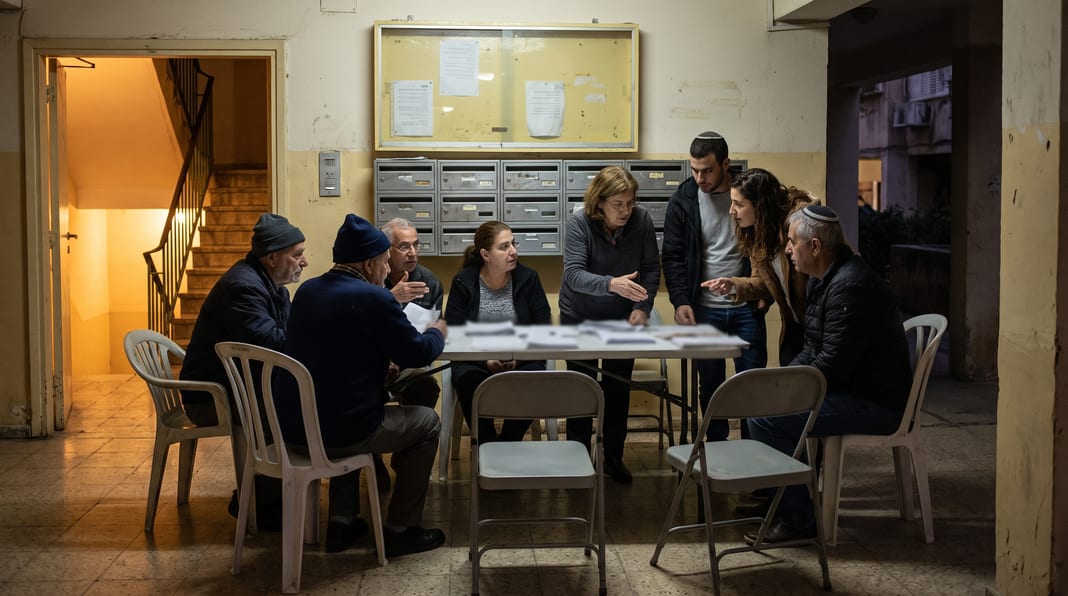
Two documents, one second apart.
A durable power of attorney runs for as long as the principal is alive. A will starts running the moment they are not. No gap between them, no overlap. They touch at a single second, and that is what dictates how they get drafted: in one sequence, each read against the other.
The seam
Under the Legal Capacity and Guardianship Law, 1962, a durable power of attorney expires on the death of the person who granted it. In that same second the Inheritance Law takes over: on a person's death their estate passes to their heirs. There is no moment when both documents are running, and no moment when neither is.
What isn't written in time never gets written
An agent has no authority to make a will on the principal's behalf, or to designate beneficiaries for sums payable on death under the Inheritance Law. So even appointing the person closest to you creates no will, and changes no beneficiary designation. Both are done while a person is still capable of doing them.
The same apartment, two sets of instructions
The will decides who the apartment reaches. The power of attorney decides what may be done with it before then — sold, mortgaged, leased, and on what terms. Drafted separately and years apart, the two can contradict each other: an advance instruction permitting a sale to fund care, against a will leaving that same apartment to a named person. We draft both in the same file, and cross-check every instruction that touches the apartment.
What people ask us when there's an apartment in the estate
Can I write a will myself, by hand?
Yes, and the statute recognizes it expressly: the will must be written entirely in the testator's own hand, bear a date written in that hand, and be signed by that hand. Three conditions, no witnesses, nobody else involved. These wills almost always fail at the same point: a printed form with the details filled in by hand, or a typed schedule attached at the back. A defective will can still be upheld, but only where its core element survives, and for a handwritten will the core element is that the whole document is in the testator's handwriting. One last, practical point: when the day comes, the original itself has to be produced.
We wrote "the apartment to our three children in equal shares." What actually happens?
All three become co-owners, and every decision about the apartment then needs consensus. The division itself is made by agreement among the heirs or by court order, and until the estate is divided none of them can transfer or pledge their right in a specific asset. Absent agreement, the statutory fallback takes over. An asset that cannot be divided goes to the heir who bids the most for it, provided the bid is not below market price, and if no heir is willing to buy, the asset is sold and the proceeds split. That is where "in equal shares" runs out. On the tax side, under the Real Estate Taxation Law, 1963, inheritance itself is not a sale, and dividing estate assets among heirs is not treated as a sale either. But where one heir compensates another with money that did not come out of the estate, the portion of the estate for which that consideration was given is treated as sold. Which is precisely the argument for writing the division into the will: where the deceased directed how the assets are to be divided, the court follows that direction unless it is persuaded there were special grounds to depart from it.
There's a mortgage on the apartment. Who pays it?
Absent an instruction in the will, it is a debt of the estate, and the statute sets the order in which estate debts are settled. Until the estate is divided, the heirs are liable for its debts only out of estate assets. After a division made without summoning creditors and without settling the known debts, each heir is liable up to the value of the entire estate as at the division. So the sequence matters as much as the name. A will can settle who carries what in advance, through an obligation imposed on the heir who takes the apartment. And where mortgage life insurance is in place, the proceeds are not part of the estate, and they are read against the terms of the policy itself.
Will my spouse get to stay in the apartment?
The statutory default gives them tenancy, not ownership: a spouse, children, and parents who were living in the apartment with the deceased at the time may go on living there as tenants of the heirs to whom the apartment fell, and the rent, the term and the conditions are set by agreement — failing which, by the court. If that isn't the result you wanted, you write something else. The tools exist: a specific bequest of a right of residence for life, an obligation on the heir who takes the apartment, or a successive structure — your spouse takes now, the children take on their death, and the second takes only what the first left. The difference between them surfaces on the day the apartment is sold, and that is the decision that actually has to be made.
My siblings and I signed a division while our father was alive. Does it hold?
No, a division of your father's estate signed while he was alive does not hold. The Inheritance Law is explicit: an agreement concerning a person's inheritance, and a waiver of it, made during that person's lifetime — both void. A gift meant to vest only after the giver's death is likewise ineffective unless it was made by will. What does hold: a transfer actually made and registered during life; a will in one of the four forms the statute recognizes; and, for married couples, mutual wills. Mutual wills come with a revocation mechanism of their own, and that is where the cost comes in: while both spouses are alive, written notice of revocation to the other spouse voids both wills; after one of them dies, the survivor who wants to revoke must renounce what they were to receive, or return what they already inherited.
How long does probate take, and what if someone objects?
The application goes to the Registrar of Inheritance Affairs, who is empowered to declare the beneficiaries' rights by a probate order. The Registrar publishes notice of the application and sets a period of no less than two weeks for objections, and any interested party may object within that window and for as long as the order has not been given. If an objection is filed, the file moves to the court, and from there the timetable belongs to the proceeding. An order, once given, holds good against the world until it is amended or revoked, and an application to amend or revoke it can be made to the body that gave it.
A conversation with a real estate lawyer, wherever you are in the process.
An apartment you're buying or selling, a building entering renewal, or a contract waiting on a decision. Leave a name and a number and a senior lawyer on the team will call you back: we hear you out and tell you what the next step is — even when it isn't with us.