Combination deals — counsel for the landowner across the table from the developer
The developer needs the land.
It's yours.
In a combination deal you hand over part of your land today and receive apartments in a building that doesn't exist yet. Everything turns on what gets signed: which part, which apartments, to what specification, what stands behind the promise until the keys change hands — and what you'll pay in taxes, and when. We represent the landowner side, from the first question until the apartments are registered in your name.

When do people look for a combination-deal lawyer?

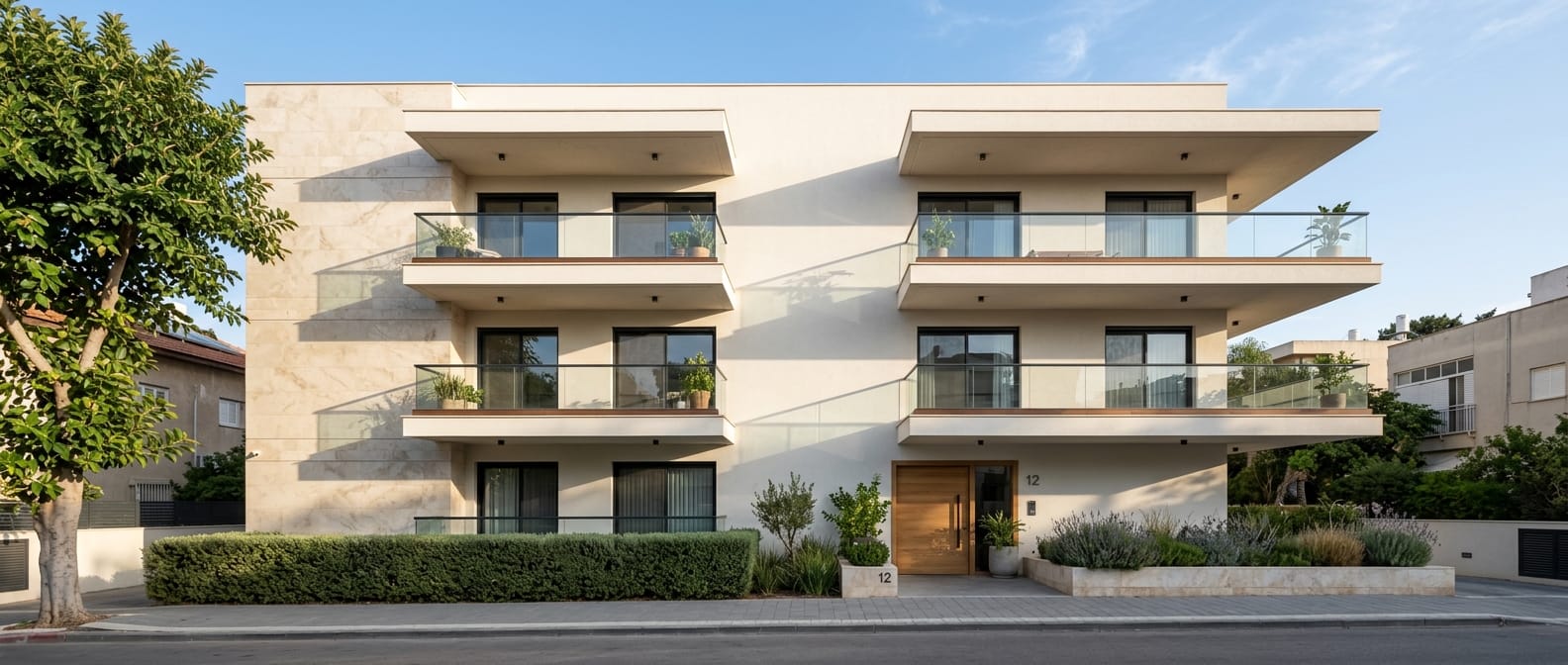

What is a combination deal, exactly?
You transfer part of your land to a developer. The developer builds on the whole lot, and your apartments stand on the part that stays yours. You didn't sell for cash and you didn't buy anything — you entered a years-long partnership whose payoff stands only once the building does.
What you give
A defined share of the land — not all of it. That share is the heart of the deal, and it follows from the land's value with its rights against the cost of construction.
What you get
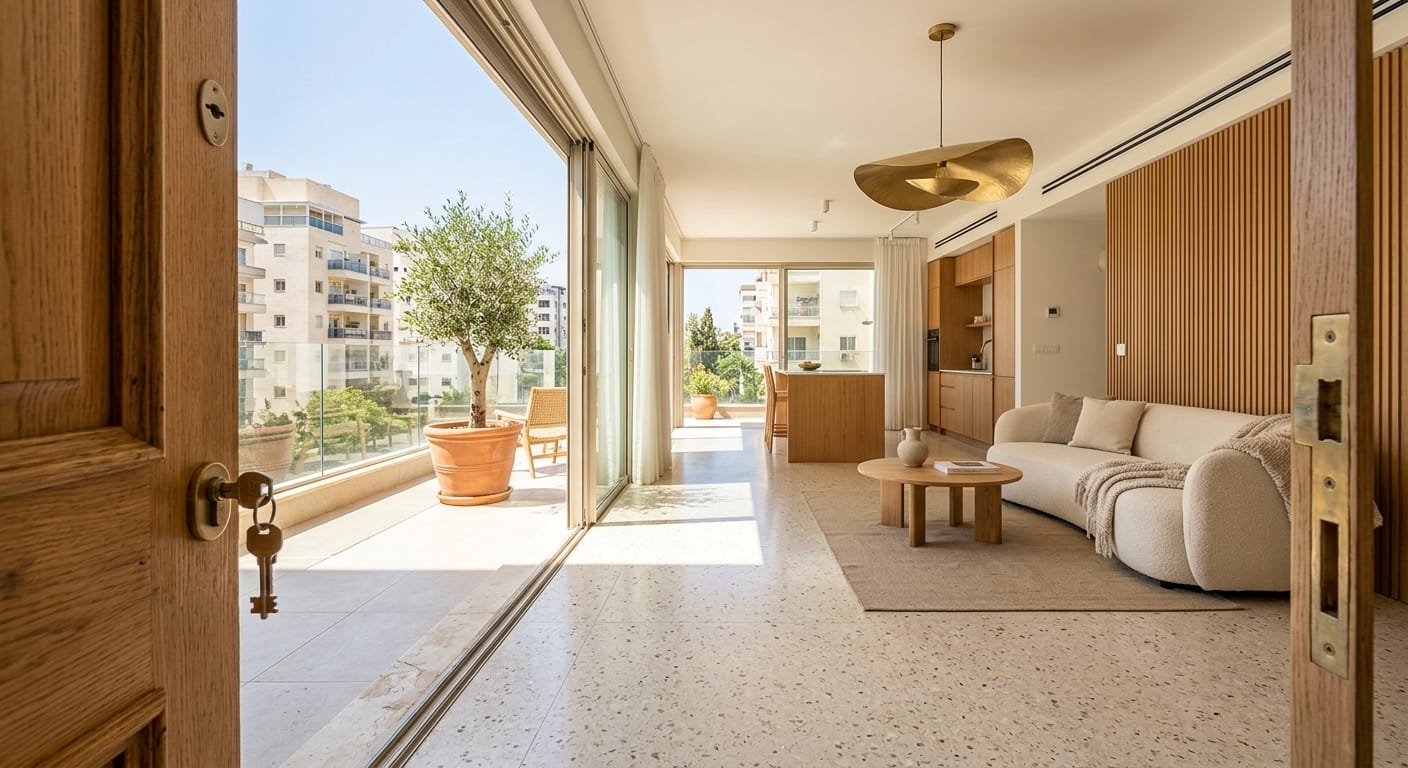
Apartments defined up front: which floor, which orientation, how many rooms, what specification, parking and storage. “Apartments in the building” with no definition is not yet consideration.
Who holds the land meanwhile
In most deals the land stays registered in your name until the building stands, and the developer holds a caution note — the registry entry that flags the pending deal. That is the foundation the entire protection structure is built on.
When it ends
Not at signing and not at occupancy — when your apartments are registered in your name in the condominium. Until then, we are in the deal.
The tax is set today. The building comes years later.
This is the principle that surprises most landowners: the deal's value for tax purposes is fixed at signing and reported within 30 days — while the apartments arrive years later. Which is why the structure is settled before anyone names a ratio.
Appreciation tax
Falls on you, on the part sold, with the sale value set at market — in practice, the value of the construction services you receive. Owners of a qualifying residence have a dedicated exemption track for the part sold, elected before signing.
Purchase tax
The deal's purchase tax is the developer's, on the share of land the developer bought — 6% on land, with one-sixth refunded when a permit for at least one residence issues within 24 months.
VAT
The construction services the developer provides you are a taxable transaction — and the developer is the one liable. Even the sale of your land share to the developer is a “one-time transaction” — and the developer pays the VAT on it by self-invoice. You are not required to register as a dealer.
Betterment levy
The statutory debtor is the landowner — and transferring part of the land to the developer already counts as realization. When the developer assumes the levy, that is a contractual undertaking, and we draft it to hold up before the committee as well.
The exemption election
Whoever sells part of their rights in a qualifying residence for construction services can elect an exemption on the part sold. And the election is made before signing, together with the full tax picture.
The numbers in the tax report and in the agreement tell the same story — that is what we settle before the deal leaves the room.
VAT: combination vs. renewal — the article
Combination, proceeds, cash — or a blend
The same land can turn into consideration several ways. The statute doesn't define the tracks — the distinction grew out of practice — but the difference is concrete: who holds what along the way, and what each side pays.
| Sale combination | Proceeds deal | |
|---|---|---|
| What you give | Part of the land | All of the land |
| What you get | Defined apartments in the future building | An agreed share of apartment-sale proceeds |
| The land meanwhile | Stays registered in your name; the developer holds a caution note | Passes to the developer — the security is built around the money |
| How the consideration moves | With the value of your defined apartments | With actual sale prices across the project |
How much land do you give, and how many apartments come back?
There is no fixed rate. The combination ratio is the product of an appraisal, not a rule of thumb: the land's value with its rights on one side, construction cost and developer's profit on the other. Anything that moves either side moves the ratio.
The rights
How many units may be built, at what area, and what else the plan allows. Building rights are the number everything else derives from.
Location and sale prices
Price per square meter in the area sets what each of your apartments is worth — and how much the developer can give.
Construction cost and financing
A building with an underground garage, basements or hard ground costs more, and that comes off the developer's side of the table.
Levies and taxes
Betterment levy, development levies and VAT on the construction services — who carries them moves the ratio by whole percentage points.
Clean title, clean lot
Registered land with no liens and no dispute among the owners is worth more to a developer — and that is brought to the table before anyone names a number.
The number comes from an appraisal we commission on your behalf — not from the developer's opening offer.
Appreciation-tax calculator
You gave land today. What holds tomorrow's apartments?
In a combination deal you give first and receive later. So the security package is not an annex to the agreement — it is the agreement. These are the instruments, and who holds each one.
The land stays in your name
Ownership passes to the developer only when the building is complete and the apartments delivered. Until then the developer holds a caution note — and you hold the title.
A bank guarantee
An on-demand bank guarantee, sized off the value of your apartments, held in escrow and adjusted as construction advances.
A power of attorney in escrow
The developer needs an irrevocable power of attorney to act on the land. It sits with your lawyer and is released against milestones — not on signing day.
A timetable you hold
Permit by a date, completion by a date, delivery by a date. Every month past it has agreed compensation written in advance, and every milestone has a check before anything moves on.
Carve-out from the financing bank
The developer leverages its share with bank financing. Your apartments and your share of the land are carved out of the lien in writing — before the bank comes in.
Registration — with security on it
The deal ends in registration: reparcellation if needed, the condominium, your apartments recorded in your name. Those are duties the agreement puts on the developer — and part of the security stays in your hands until they are done.
These are the terms we set in combination deals where we represent landowners. Their exact makeup is fixed deal by deal — and settled before signing.
What gets settled before signing — not fixed after
In a combination deal, signing is the last moment all the leverage is yours. These are the points that decide the deal, in the order they come up.
Who the developer is
Track record, delivered projects, financial strength, who the executing contractor is. A developer is chosen — not accepted.
The appraisal
An appraiser on your behalf values the land with its rights and the apartments you'll receive. The ratio follows from those numbers.
The apartments, by name and number
Which floor, which orientation, how many square meters, what specification, which parking spot. The consideration-apartments annex is the document you’ll hold the developer to, four years from now.
The conditions precedent
Building permit, financing, plan approval. Every condition has a date, every date has a written consequence — while the 30-day tax-reporting clock runs from signing, not from their fulfillment.
Who pays what
Appreciation tax, VAT, betterment levy, development levies, fees, hookups. One table — no “to be agreed later.”
Insurance and supervision
Contractors' all-risks insurance with you named on the policy, and a supervisor on your behalf checking that your apartments are built to the signed specification.
Grandma's house — four heirs, one developer
Most houses that reach a combination deal arrived by inheritance first. A deal like this goes beyond ordinary management of shared property, so it takes every owner's signature — and it starts inside the family, before it reaches the table.
Registration first
A succession or probate order, and the heirs registered in the Land Registry (Tabu). A developer deals with whoever is on the register.
An agreement among the heirs
Who decides, how the apartments are divided, and who takes cash instead of a home — an agreement among the owners, before the agreement with the developer.
One voice across the table
We represent all the owners as one body. The developer gets a single address — and you get one deal — with every owner inside it.
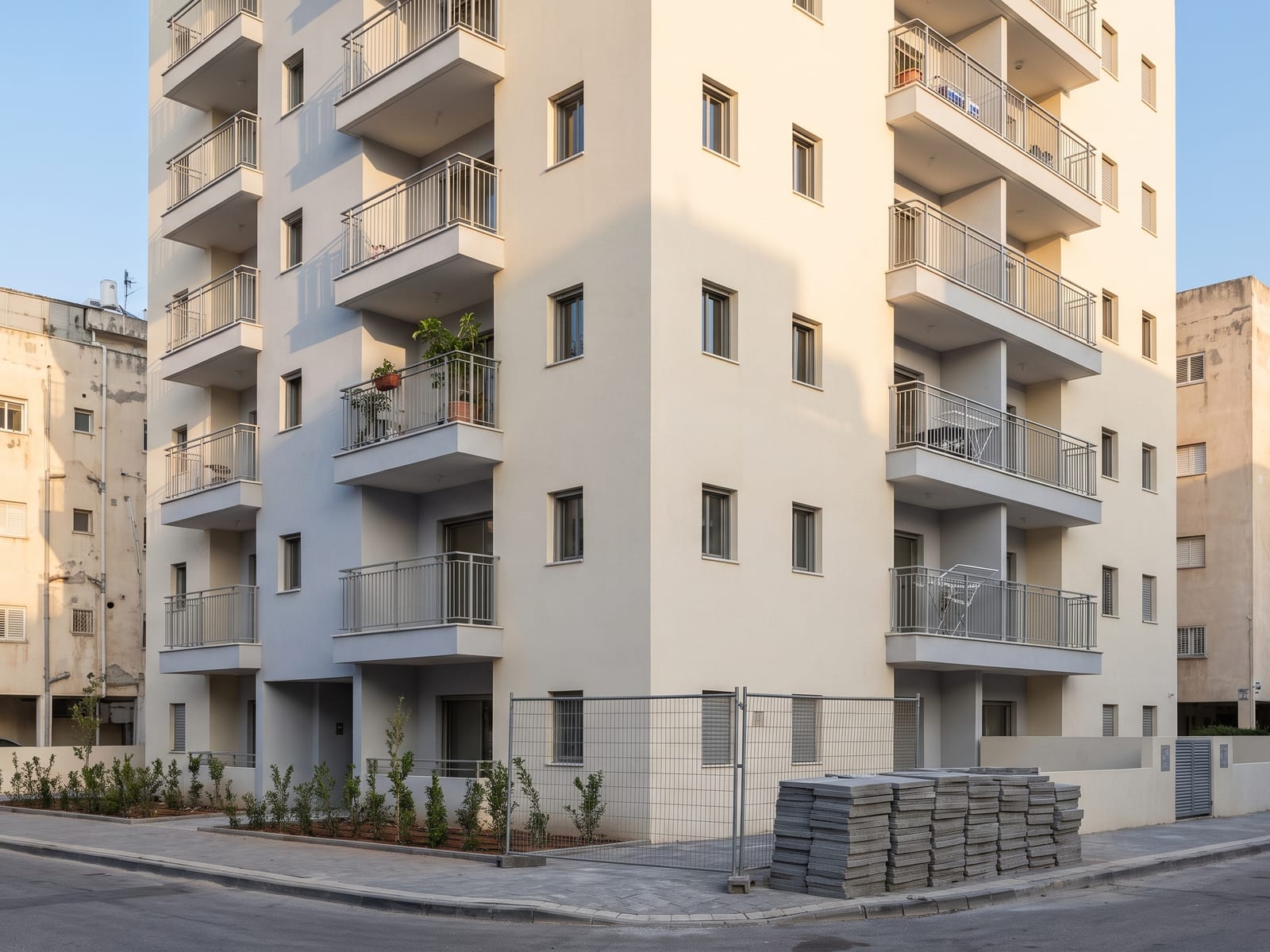
From the lot to apartments in your name
- 1
The land and the rights
Title extract, plans in force, what may be built, liens and notes — and what is about to change at the committee.
- 2
Deal structure and the tax picture
Combination, proceeds, cash or a blend — each alternative with its tax, before the ratio ever comes up.
- 3
Choosing the developer, and the appraisal
Offers from several developers, who stands behind each one, and an appraiser on your behalf turning it all into one number.
- 4
The agreement and the security package
Negotiating the text, the consideration-apartments annex, the guarantees and the escrow — through signing.
- 5
Construction — until everything is registered
Tax filings on time, documents released against milestones, delivery of the apartments — and the registration the developer owes, with security standing until it is complete.
The other side of the table, in a different deal
We also act for developers in combination deals — never in the same deal where we represent the landowner. Knowing the landowners' demands from the inside is what lets us build a developer an offer landowners actually sign.
The agreement, developer side
Title and rights, conditions precedent that fit the planning timeline, and a security package the financing bank accepts too.
The financing
Fitting the agreement to the bank's requirements: carve-outs, the order documents are released in, the lien on the developer's share.
The sales period
A sale kit for buyers, security under the Sale Law (Assurance of Investments), the voucher ledger and filings — through condominium registration.
What landowners ask before they sign
The developer proposed a combination ratio. How do we know it's fair?
Not by comparing with the neighbors. An appraiser on your behalf values the land with its rights and the apartments you would receive, and the ratio follows from the gap. The developer's offer is an opening position for negotiation — not a price list.
How long does a combination deal take?
From signing to keys — usually years, not months: permit, construction, occupancy, registration. That is why the agreement puts a date on every stage, and the security stands the whole way through, not just on signing day.
Do we pay appreciation tax on apartments that don't exist yet?
Yes, in a combination deal you pay appreciation tax even on apartments that don't exist yet. The tax is computed on the deal's value at signing and reported within 30 days, even if the apartments arrive four years later. There are tracks that change the computation — and they are chosen before you sign.
We're several heirs and not everyone agrees. Can we still move forward?
A deal in shared land is signed by all the owners, so the first work is internal: an agreement among the heirs on how decisions are made and how the apartments are divided. In most families the gap isn't “yes or no” but “apartment or cash” — and the deal structure can answer that. And when someone truly blocks, the law lets any co-owner demand partition — in practice it almost always settles by agreement, long before a courtroom.
Can we sell our consideration apartments before the building is finished?
Yes, and it's common. But whoever sells an apartment on paper steps into a seller's obligations — security, specification, dates — so the agreement with the developer has to allow for it up front: the developer's cooperation, and the financing bank's. We handle that sale too.
Which is better — a combination deal or selling for cash?
It depends on what you need and what the land is worth with its rights. Cash ends it today, with certainty. A combination deal keeps you a partner in the value the rights generate once the building stands — with a wait, and with a protection structure. We put both alternatives in numbers before you choose.
We already have a developer. When does the lawyer come in?
Before the first document of any kind. A signed “memo of understanding” — even a one-page term sheet — can bind you and lock in terms before any protection structure exists. The right moment is before the developer gets anything in writing.
A conversation with a real estate lawyer, wherever you are in the process.
An apartment you're buying or selling, a building entering renewal, or a contract waiting on a decision. Leave a name and a number and a senior lawyer on the team will call you back: we hear you out and tell you what the next step is — even when it isn't with us.