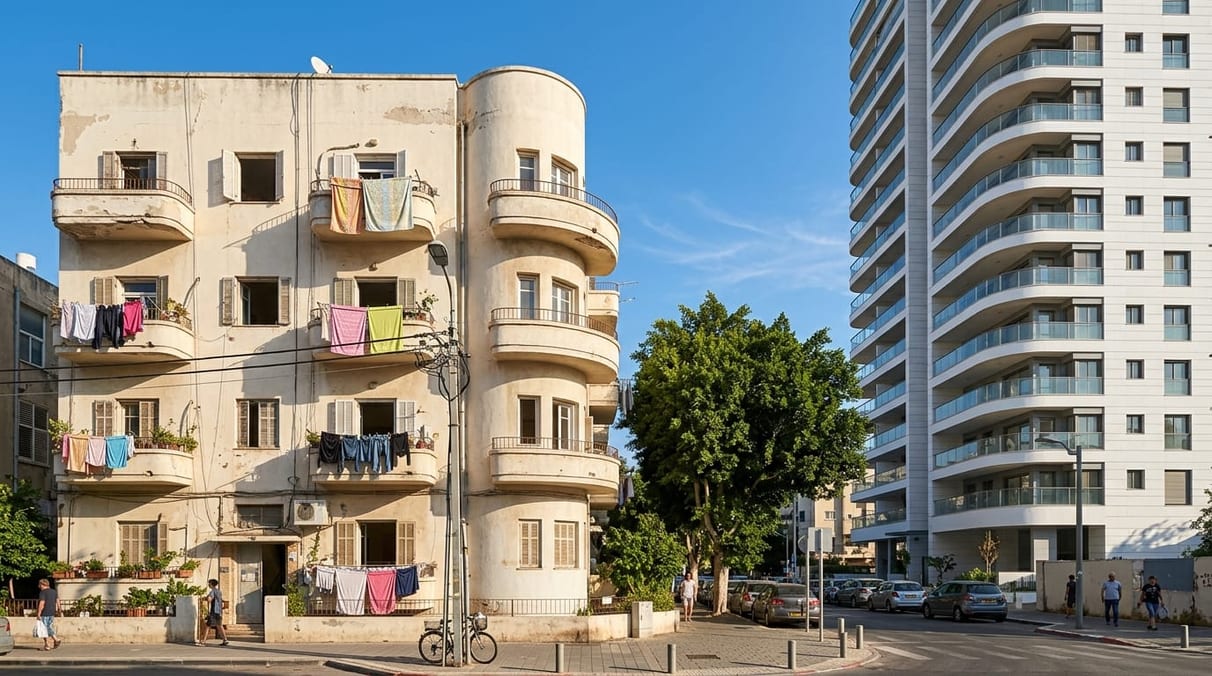
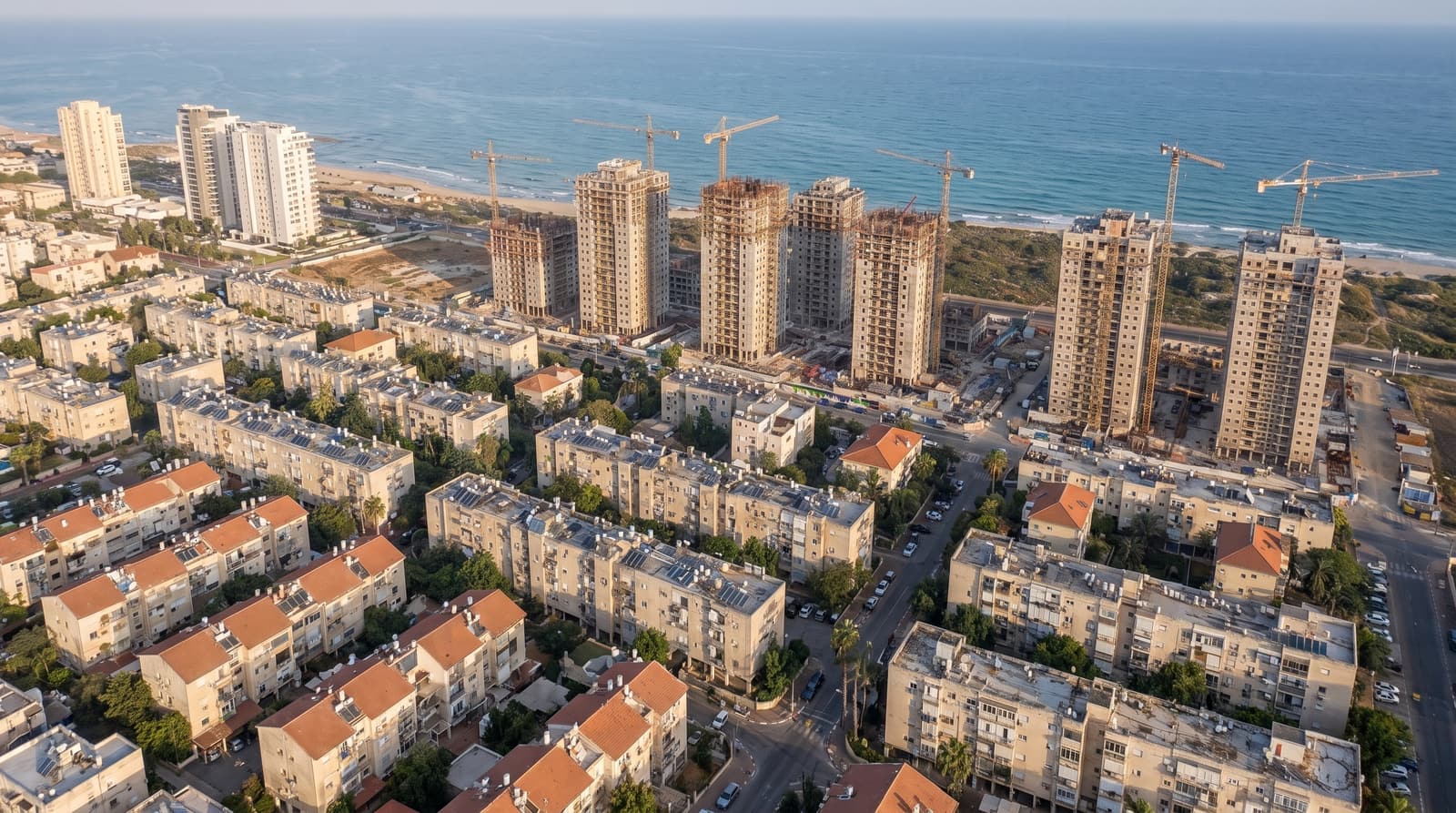
Compensation, guarantees and the schedule are all settled in the agreement with the developer, before anyone starts building. We represent apartment owners in Pinui-Binui and Shaked-track projects, from the first signature to registered title — and this page lays out the mechanisms themselves.
We believe this wholeheartedly: when a building is renewed, life changes for the people who live in it — and the whole city gains.
A new, larger apartment
A reinforced safe room, balcony, elevator, and parking — at no construction cost to you.
Higher property value
A new apartment in a new building is worth significantly more.
Emergency readiness
A code-compliant safe room and an earthquake-resistant building.
Quality of life
A new lobby, new infrastructure, a renewed environment.
Upgraded infrastructure
Electrical, plumbing and communications — all new.
Sustainability
Green construction, accessibility, and a renewed streetscape.
Easing the housing shortage
More homes on the same land, in the heart of the city — a real answer to Israel's housing crunch.
Attainable housing
New supply in established neighborhoods — homes the next generation can actually afford.
Social integration & local growth
A renewed neighborhood draws businesses, services and a diverse community back to the street.
Why now
What's in it for you?
We believe this wholeheartedly: when a building is renewed, life changes for the people who live in it — and the whole city gains.
A new, larger apartment
A reinforced safe room, balcony, elevator, and parking — at no construction cost to you.
Higher property value
A new apartment in a new building is worth significantly more.
Emergency readiness
A code-compliant safe room and an earthquake-resistant building.
Quality of life
A new lobby, new infrastructure, a renewed environment.
Upgraded infrastructure
Electrical, plumbing and communications — all new.
Sustainability
Green construction, accessibility, and a renewed streetscape.
Easing the housing shortage
More homes on the same land, in the heart of the city — a real answer to Israel's housing crunch.
Attainable housing
New supply in established neighborhoods — homes the next generation can actually afford.
Social integration & local growth
A renewed neighborhood draws businesses, services and a diverse community back to the street.
You at the center
Our motto You are the landowners. You are the project.
You make the decisions — and you shape the outcome.
What this means in practice
The bid process works for you
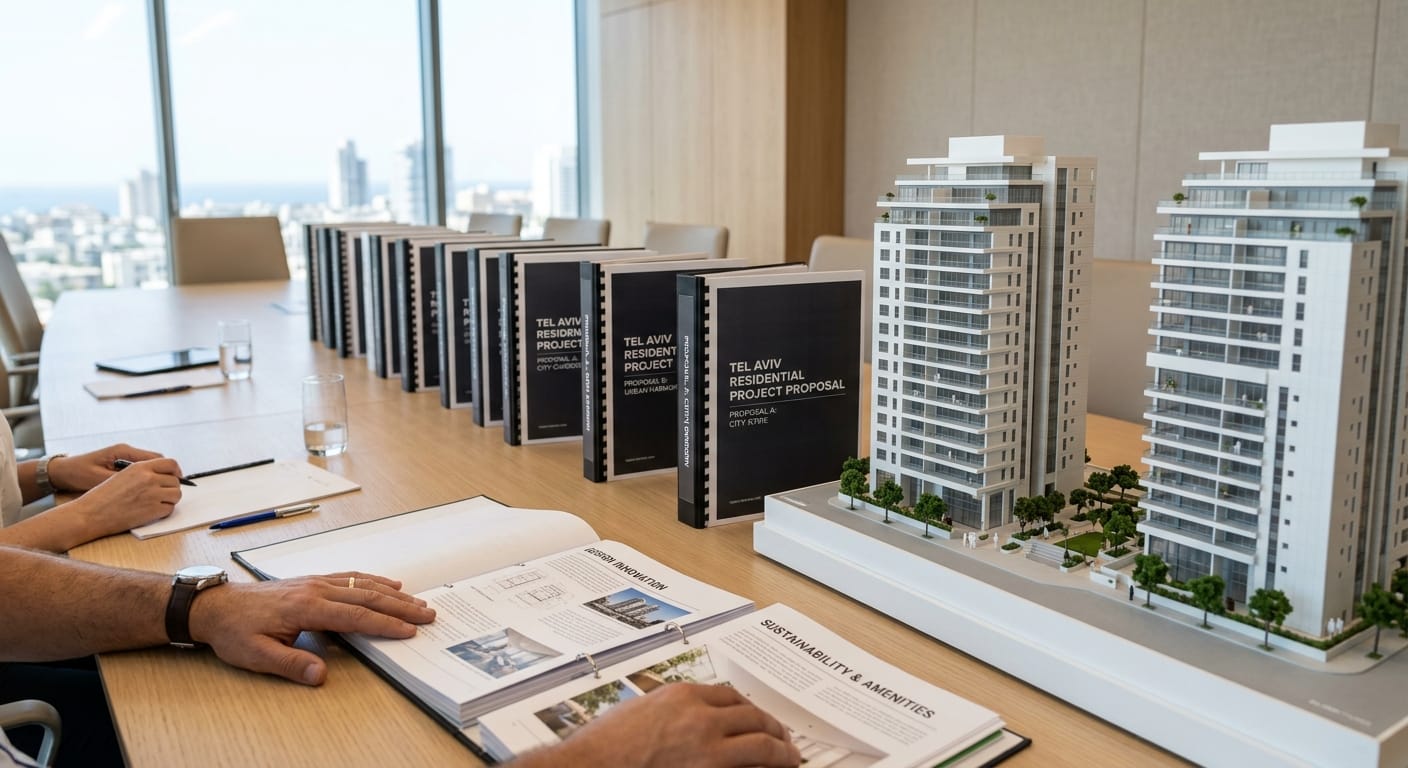
We put the strongest developer bids in front of you and negotiate to get the most out of them — weighing the developer's track record and financial strength, the compensation, the guarantees and the schedule.
The decision is always yours
One bid may pay more but take longer; another may be solid and fast. You decide which one, all things considered, is right for you. We're with you the whole way — and on your side.
Where you are in the process
The project's 13 stages
Thirteen stages. What gets settled in the first six decides all the rest — who represents you, and what the agreement says.
Hover over a stage to see what happens there. Click the number to mark where your building is today.
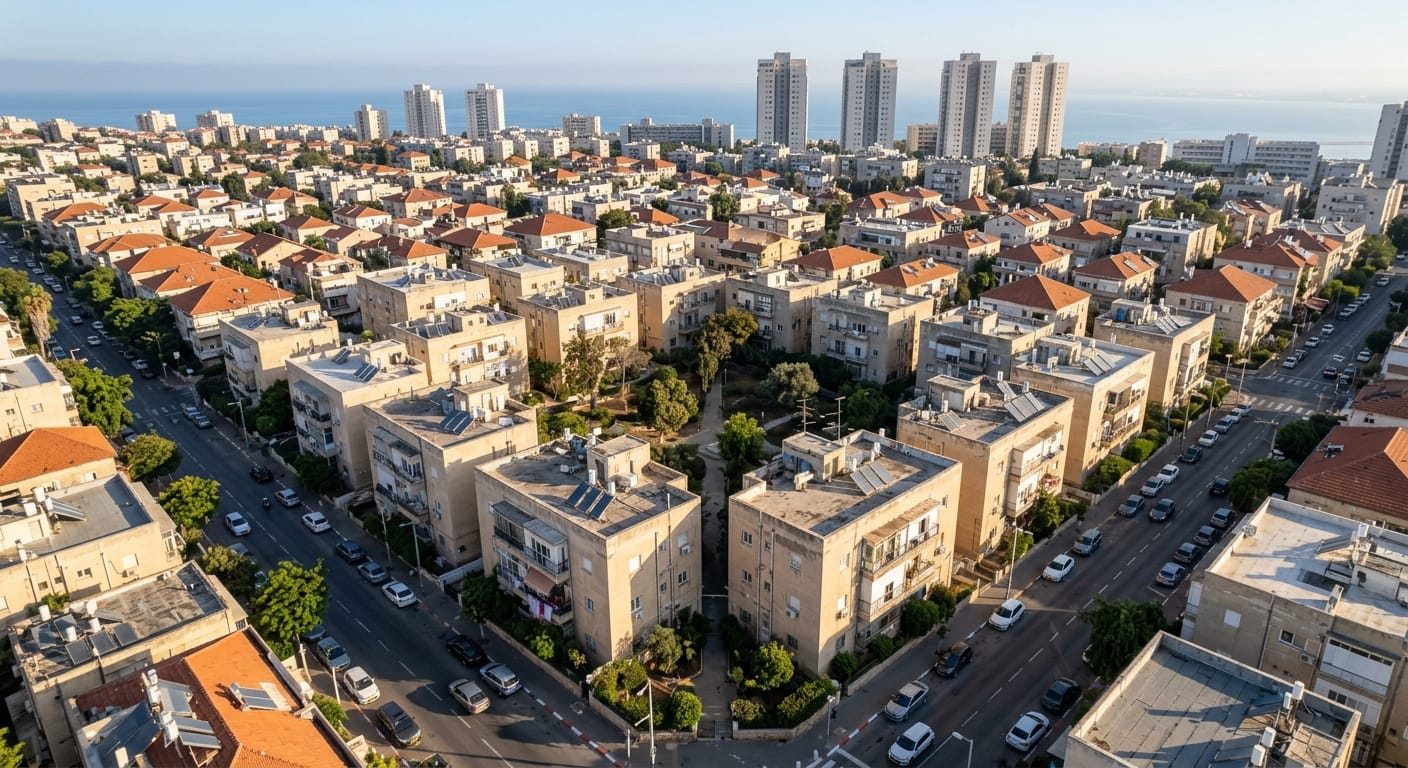
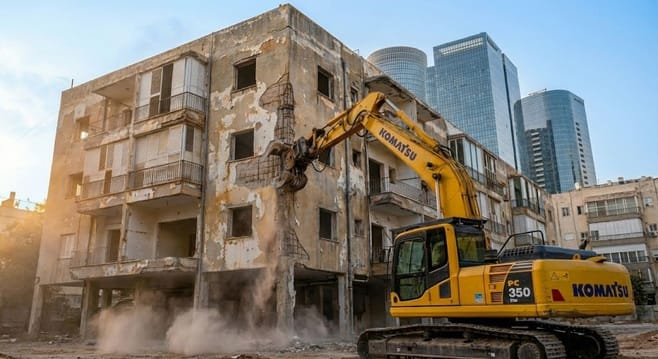
Pinui-Binui · a renewed complex. Several buildings become one complex that is demolished and rebuilt. You move out for the construction period and return to a new, larger apartment.
What opens the door: at least 24 units in the complex.
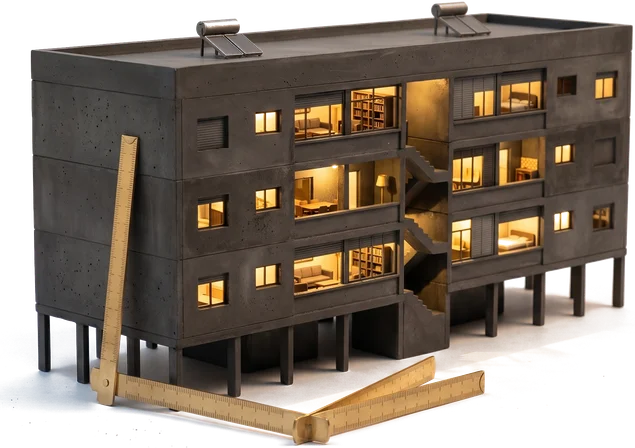
Successor to TAMA 38A single building
Building-level renewal
The Shaked trackWhat is the Shaked track?The track that replaced TAMA 38 for single buildings: the local committee approves a plan to demolish and rebuild or to reinforce, with additional building rights set in advance by statute. The process is shorter, and the choice between the two belongs to the owners.The Shaked track, in depth→or a citywide plan. A single building on its own lot. Approval sits with the local planning committee, so the process is shorter.
What opens the door: the building's age. Broadly, buildings whose permits predate 1980.
The developer track
The owners take the initiative and choose a developer, who then advances the rezoning plan and funds the planning.
Also called the tax track.
The municipal track
The municipality advances the rezoning plan itself.
Tip: choose a developer while the rezoning is still underwayWhy not wait for approval?A rezoning plan is a planning document, not a deal. Without a commercial party at the table during planning, a plan can be approved that serves the municipality but is not profitable for a developer, and so never becomes a deal that pays you. A developer chosen early tests feasibility as the plan takes shape, and can object to a bad plan before it is approved. It happens more often than you'd think..
Demolish and rebuild
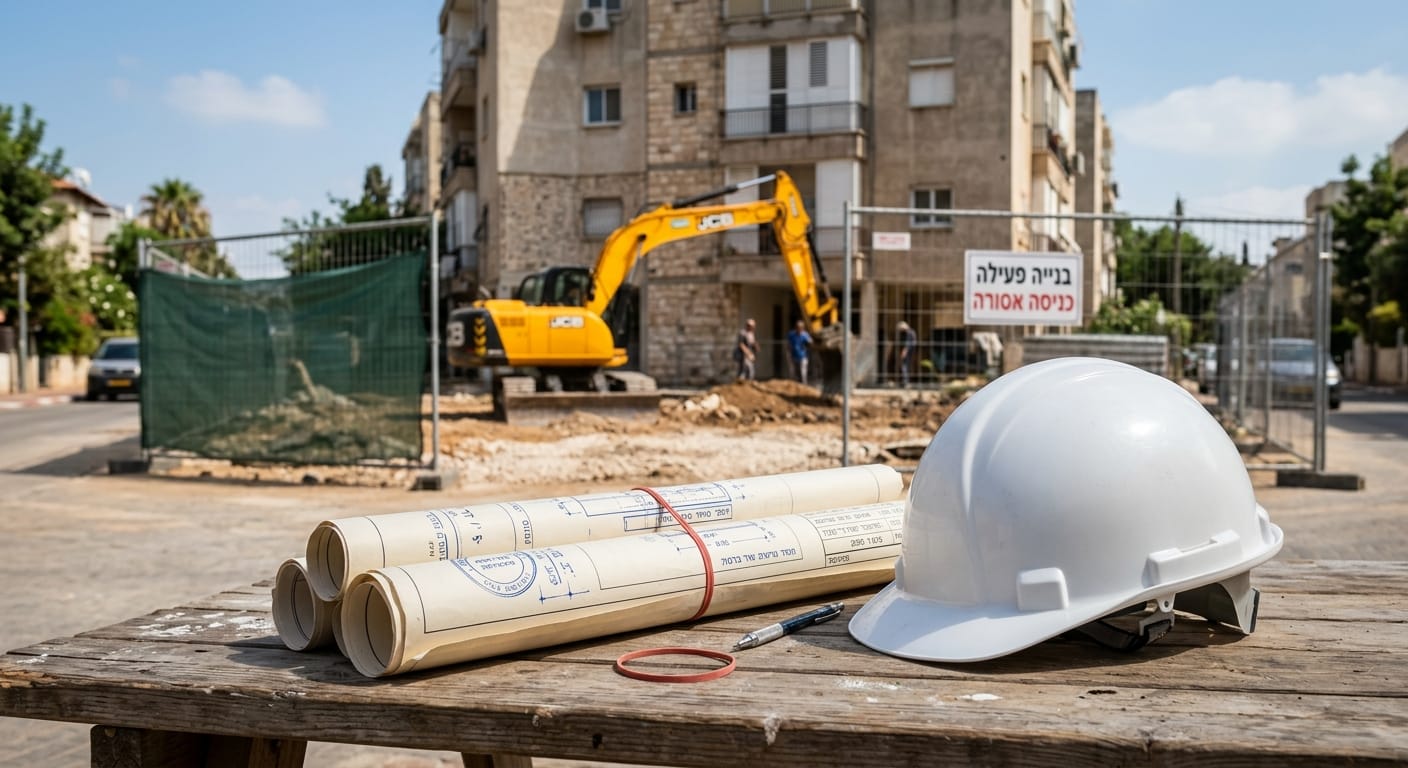
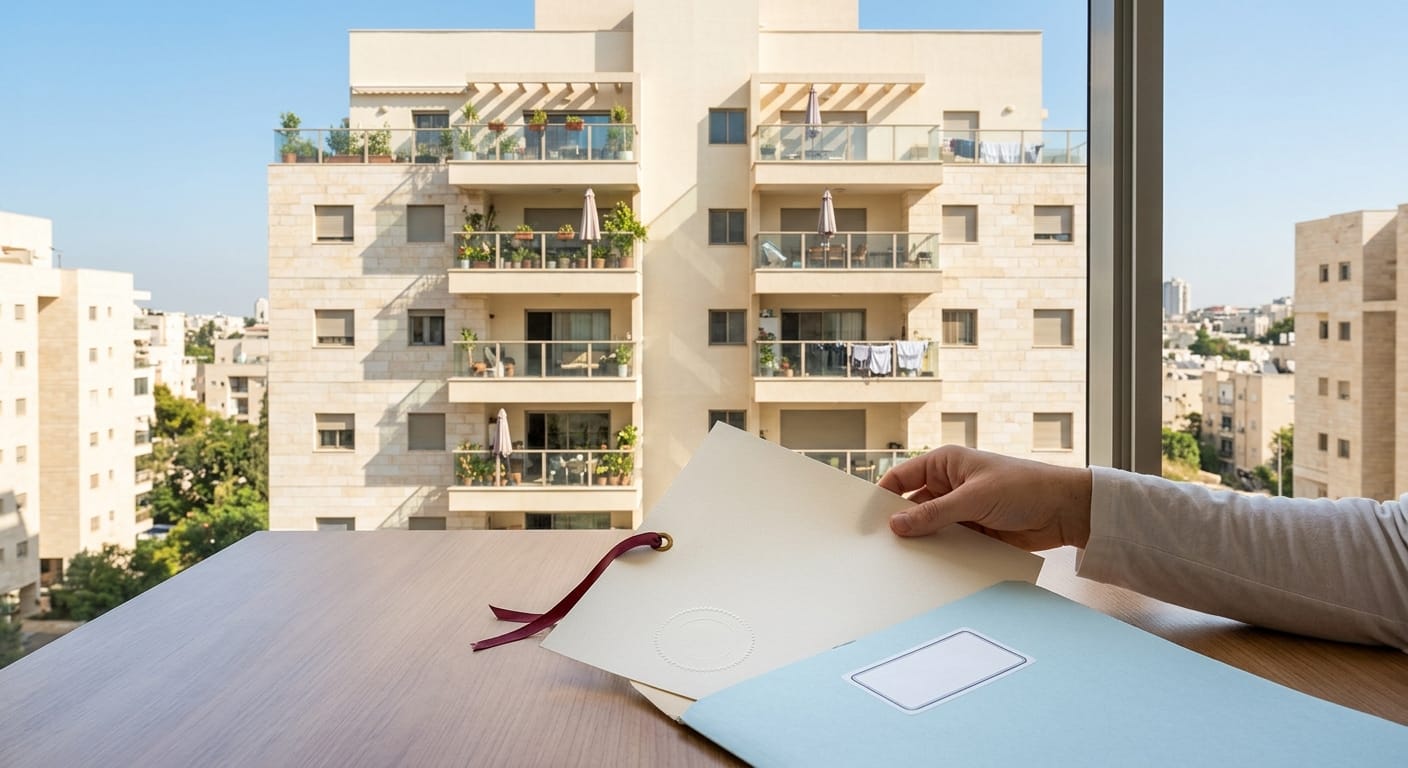
The building is demolished and rebuilt, larger and more modern.
There is also a fast track: plan and permit filed together. With three or more adjoining lots the building rights increase, and neighboring buildings can form a renewed complex here too.
Reinforce and expand
The building stays standing, reinforced and expanded, usually without anyone moving out.
What you get: a safe room, a balcony, a new lobby, sometimes better parking.
And historic buildings? The Shaked track has a route for them too: reinforce, preserve, and the rights pay for it.
Found your track? Now see what it means for your building.
A full set of guarantees, most of them autonomous (on-demand) bank guarantees: cash at the bank, no lawsuit. We lock them in before construction begins.
Guarding your home
Sale Law — enhanced
Covers the full value of the new apartment and its appurtenances, with triggers the law does not require: a prolonged delivery delay or a continuous work stoppage.
Rent
Covers rent for your interim housing — an appraiser's estimate or a signed lease, whichever is higher.
Taxes & levies
Covers all taxes and levies — sized to the maximum expected liability, plus a safety margin.
Defects (bedek)
Covers the repair of construction defects.
Maintenance fund
Funds the maintenance reserve for existing owners.
Registration
Covers the cost of registering title.
Legal costs
The guarantee that funds enforcement itself: attorneys, fees, and costs — if a guarantee ever has to be called.
Among the first to use it
Caution-note cancellation guarantee
Your own attorney can call a bank guarantee to clear the developer’s caution notes — its recorded interest — from your title. With us, that is a condition of signing.
Every guarantee is held in escrow by the owners’ attorney, under instructions no one can change without you. The mortgage on the project secures the developer’s debt — you never guarantee it or owe a shekel.
The law requires the developer to offer owners aged 70+ dedicated compensation alternatives; owners aged 75+ choose for themselves among the options in the first alternative:
The new apartmentThe classic route for every owner: a new apartment in the project — safe room, balcony, elevator, and parking — worth significantly more than the existing one.
+Retirement residence + differenceMoving to a retirement residence, with the difference paid in cash up to the new apartment's value.
A nearby alternative apartmentPurchasing an alternative apartment at the new apartment's value — as close as possible to the existing home, if requested.
The value in cashReceiving the new apartment's value in cash, for the owner to purchase an alternative home.
Two smaller apartmentsTwo apartments in the project at the combined value of the new apartment.
+Smaller apartment + differenceA smaller new apartment, with the difference paid in cash up to the full value.
Not marketing promises — signed clauses. These are mechanisms this firm has already secured in urban-renewal agreements, from the first square meter to the last guarantee. Every complex is negotiated on its own terms.
The physical package
A fixed formula for size
New apartment = existing floor area plus a fixed number of square meters, plus a sun balcony. The measurement includes permitted additions and older balconies that were built with a permit.
Conversion ratios instead of arguments
A planning constraint cost you a balcony or roof space? The contract fixes in advance how much main floor area you get for every square meter lost — 50% for a balcony, 30% for a roof. No haggling after the fact.
Standard parking, attached storage
A standard, recorded underground space — no stackers, lifts or tandem spots — and an attached storage room wherever the plan allows. Where the plan restricts it, the agreement fixes the substitute compensation in advance.
Position and exposure
Owners' apartments from the third floor up, with at least two exposures and a binding commitment to try to keep your current one.
The choice stays with the owners
Before the developer's apartments go on the market, owners get an exclusive window to choose a different apartment in the project: a larger one for just the price difference, a smaller one with the difference refunded, or two apartments instead of one.
What's left in the garage
Owners hold a right of first refusal on any parking spaces and storage rooms left over after allocation — at the developer's list price, less a discount fixed in the agreement.
A spec that only goes up
A floor on quality
Your finishes are never below those in the apartments the developer sells — and when the developer upgrades for its buyers, the upgrade applies to you automatically. The agreement defines the scope of the marketing-promotion exception and which apartment types it covers.
Free owner changes
Moving partitions, interior doors and electrical outlets — at no cost and with no delivery delay, including architect consultation hours for every apartment.
A price cap on changes
Paid changes? Priced off the standard "Dekel" price index at a discount fixed in advance, with no processing fee.
Credit at the higher of the two
A spec item you don't want earns a credit at the higher of the contractor's list price or the credit price in the spec.
Money and time
Rent that doesn't erode
Rent at the higher of an apartment-specific appraisal or your actual lease, adjusted annually by CPI or 5% — whichever is higher — paid quarterly, in advance, until you get the keys.
A move-in grant, in vouchers
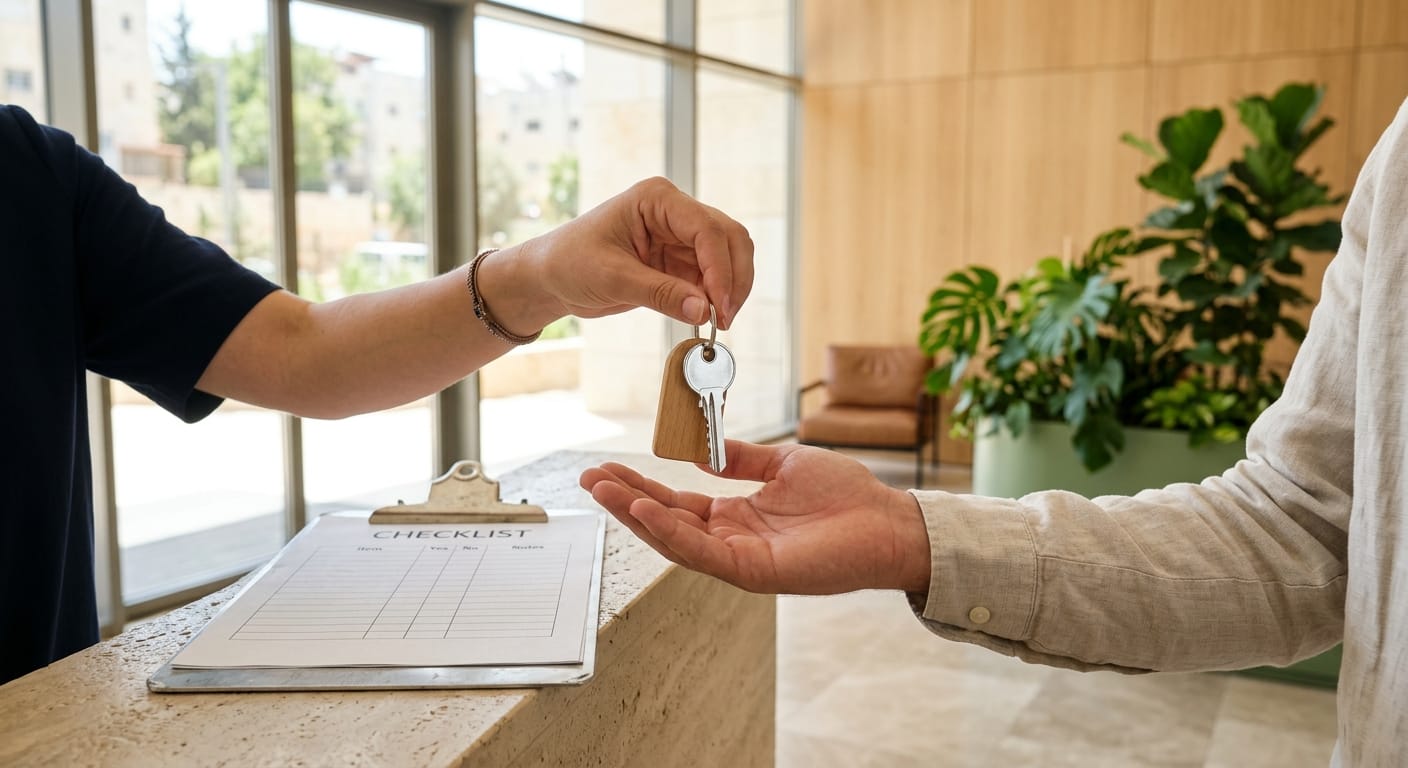
Tens of thousands of shekels per existing apartment, as vouchers for appliances and furniture, handed over by the time you get the keys to the new one — so moving in doesn't come out of your pocket.
A timeline with teeth
Delivery within 40 months of the start of construction, with a grace period of just 30 days. After that — monthly compensation based on the new apartment's value, with no need to prove damages.
Partners in the upside
Developer profit above the threshold set in the agreement? The surplus is shared with the owners — as extra area, upgrades or cash.
Management fees covered
The developer covers the new building's management fees for five years — seven for elderly owners — with the money paid into an escrow account up front.
Upgrade at a pre-set discount
Want a larger apartment than the one you're due? You pay only the difference — at the developer's list price, less a discount fixed in the agreement before that price list even existed.
First refusal on an additional apartment
Owners hold a right of first refusal on an additional apartment in the project — and, where there are commercial units, on a retail space as well — at a price fixed in the agreement, before it goes on the market.
The move — at the developer's expense
The developer pays for the move in both directions and the broker's fee for finding the interim apartment — and, for those who need it, packing, disassembly, and help transferring the utility accounts. On top of the apartment itself, every owner receives a grant — cash or vouchers for furniture and appliances — part at move-out, part on delivery of the new apartment.
Transparency and fair calls
A benefit for one — a benefit for all
One owner got extra compensation outside the formula? Everyone is entitled to it. The complex was expanded on better terms? Those terms apply to everyone.
Allocation without favoritism
The new apartments are allocated by the owners' appraiser, on transparent scoring reviewed by the owners' committee. The developer has no say.
A net deal
Attorney, supervisor, appraiser, tax, and insurance advisers for the owners — all funded by the developer. Not a shekel out of your pocket.
The measurement that sets the base
The existing apartment is measured by a licensed surveyor, under uniform measurement rules and at the developer's expense, with the choice of surveyor agreed with the owners' committee. Everything you receive is derived from that number.
Every mechanism here comes from a signed agreement this firm negotiated — and every one of them is our opening position in the next negotiation.
Feasibility check
Five questions. A first snapshot of where your building stands.
Answer five short questions for a first read on your building's readiness — then we complete the full picture together, on a call.
Feasibility check
1Roughly when was the building built?
2How many apartments in the building?
3Safe rooms and an elevator?
4Does a comprehensive renewal plan apply in your city (like H/619 in Holon)?
5Is there interest among the neighbors?
An initial indication only, based on your answers — not a legal or planning opinion.
Questions, answered
What apartment owners ask us.
Who represents the apartment owners in negotiations with the developer?
Your own attorney, who represents the apartment owners only and is chosen by the owners' committee on behalf of all of them. The attorney is retained before the developer bid process, negotiates the compensation, the guarantees, and the schedule, and stays with you until title is registered.
Less than you've been told. Pinui-Binui (evacuate-and-rebuild): owners of at least 2/3 of the apartments in the project cluster, plus, in each building, 3/5 of the apartments and more than half the common property. A standalone building that is demolished and rebuilt: 2/3 of the apartments and 2/3 of the common property. The law counts apartments, not people, and we run that math with you, apartment by apartment. (General information, not legal advice.)
The owners' attorney represents you independently of the developer and answers to you alone. It's a net deal for the owners: the developer pays the attorney's fee and the other consultants' fees — that's how these projects are structured.
What guarantees do we receive?
A complete set: the enhanced Sale Law guarantee at the new apartment's value, plus bank guarantees — most of them autonomous — for rent, taxes, defects, the maintenance fund and registration, and a dedicated delay guarantee we require in our agreements.
What's the difference between Pinui-Binui and the Shaked track?
In Pinui-Binui the whole complex is demolished and rebuilt as one large project; on the Shaked track (successor to TAMA 38) renewal happens at the building level — reinforcement or demolish-and-rebuild. Each has its own benefits, timelines, and tax treatment.
How long does a project take?
It depends on the track and the complex's planning status. Where a comprehensive urban-renewal plan applies (like H/619 in Holon), a permit can sometimes be pursued directly — saving 3–5 years.
Our building is inside a comprehensive plan. What does that mean?
An excellent starting point: high planning certainty, a more competitive developer bid process, and sometimes a direct route to a building permit with no site-specific rezoning. It's worth checking your lot's exact category — that's exactly what we do.
What happens if the developer is late on delivery?
In our agreements the grace period is just 30 days. After that — monthly compensation based on the rent for the new apartment (not the old one), with no need to prove damages. And in extreme cases — a prolonged delay or a work stoppage — the Sale Law guarantee itself can be called.
Can we sell the apartment mid-project?
Yes, you can sell the apartment mid-project. The agreement protects your right to sell throughout — before the permit, during construction and after delivery — with the guarantees assigned to the buyer and the transfer fee capped at the statutory rate.
Who decides which new apartment we get?
Not the developer. The owners' appraiser scores the existing apartments on professional appraisal criteria, the scoring goes to the owners' committee for review, and the allocation follows it, fully transparently.
Who pays the management fees in the new building?
A new building costs more to maintain than an older one run by a simple house committee — so in our agreements the developer covers the fees for five years for returning owners, and seven for elderly owners and owners with disabilities, with the money paid into an escrow account up front.
More developers bidding meansbetter terms for the owners
The firm runs developer bid processes together with the owners' committee: an organized complex and one process every bidder knows going in. The organizing is the slow part of the project. We've already done it. Offers are measured on what's on the table: what the owners receive, the guarantees behind it, the schedule, and the financial strength to carry it. No offer gets in outside that process.
A conversation with a real estate lawyer, wherever you are in the process.
An apartment you're buying or selling, a building entering renewal, or a contract waiting on a decision. Leave a name and a number and a senior lawyer on the team will call you back: we hear you out and tell you what the next step is — even when it isn't with us.