Pinui-Binui attorney for apartment owners in Israel
How do you know the developer's offer is any good? Put other offers on the table.
A Pinui-Binui attorney represents the apartment owners, not the developer. Your attorney runs a bid process in which several developers compete for your building, writes the agreement from your side, holds the guarantees in escrow, and stays with you until the new apartment is registered in your name.
Attorney Noam Gottlib · Founder · Updated
See if you have a majority
What do apartment owners get in Pinui-Binui?
You give up an apartment in an old building and receive a new apartment in the complex built in its place.
Here's what the agreement puts in writing for you:
- A new apartment, at the size and floor fixed in the agreement
- A safe room, a balcony, an elevator, and parking
- Rent for the entire construction period, paid in advance, plus moving costs both ways
- A bank guarantee behind every obligation, held by your attorney
Each of these exists only if it's written into the agreement.
Whether this is possible in your building at all comes down to a majority of the owners, counted the way the law counts it. See if you have a majority


Apartment ratio, compensation, and guarantees
The apartment ratio is the number behind every project: for each existing apartment that comes down, how many new ones go up.
One comes back to you; the rest are sold and pay for the construction. The higher the ratio, the more room the developer has, and the agreement decides how much of that room reaches you.
But compensation written in an agreement is only words. The guarantees are what hold it up, which is why every row in this table has a third column.
| Item | What you receive | What protects you |
|---|---|---|
| The new apartment | What you receiveA new apartment in the new building, at the floor area, floor, and exposures fixed in the agreement, with a safe room, balcony, elevator, and parking | What protects youA Sale Law guarantee for the value of the new apartment, held in escrow by your attorney |
| The construction period | What you receiveRent for a rental apartment for the entire construction period, paid in advance, plus moving costs both ways | What protects youA bank guarantee for the rent |
| Taxes and levies | What you receiveThe appreciation tax, VAT, and betterment levy on the deal are paid by the developer. The tax benefits of a designated complex reduce them up front | What protects youA taxes-and-levies guarantee, and tax advice for the owners funded by the developer |
| Defects | What you receiveRepair of defects in the apartment and the building during the warranty period, as with any new apartment bought from a developer | What protects youA defects guarantee |
| Registration | What you receiveRegistration of the condominium and of the new apartment in your name at the Land Registry (Tabu), at the developer's expense | What protects youA registration guarantee, held by your attorney until registration is complete |
| Caution notes | What you receiveAt signing, a caution note in the developer's favor is recorded against your apartment, and the agreement sets when it is removed | What protects youA dedicated bank guarantee for removing the caution notes |
| Maintenance fund and legal costs | What you receiveA fund for the new building's management fees in the first years, paid in up front | What protects youA maintenance-fund guarantee, and a separate guarantee for the owners' legal costs |
The tax benefits are set by law, too. In a complex the state has designated as a Pinui-Binui complex (as a rule, at least 24 units), the law's benefits apply to appreciation tax and VAT, and on a residential Pinui-Binui plan the betterment levy is reduced as well:
- Appreciation tax: an exemption on the compensation apartment, as a single replacement home, up to a value cap set by law (Section 49KB of the Real Estate Taxation Law). Anything above the cap is handled in the agreement with the developer.
- VAT: zero-rated on the compensation apartment up to the same cap (Section 31A(b) of the VAT Law).
- Betterment levy: on a residential Pinui-Binui plan, one-quarter of the betterment, and the local authority may set one-half, one-quarter, or an exemption by area (Section 3A of the Third Schedule to the Planning and Building Law).
What Pinui-Binui is, and how it differs from the Shaked track and TAMA 38
Three names that get mixed up at every owners' meeting, each with its own statute, its own majority, and its own decision-maker. Here's how they differ.
Pinui-Binui, Israel's evacuate-and-rebuild track, takes down several aging buildings together and puts up a new complex in their place.
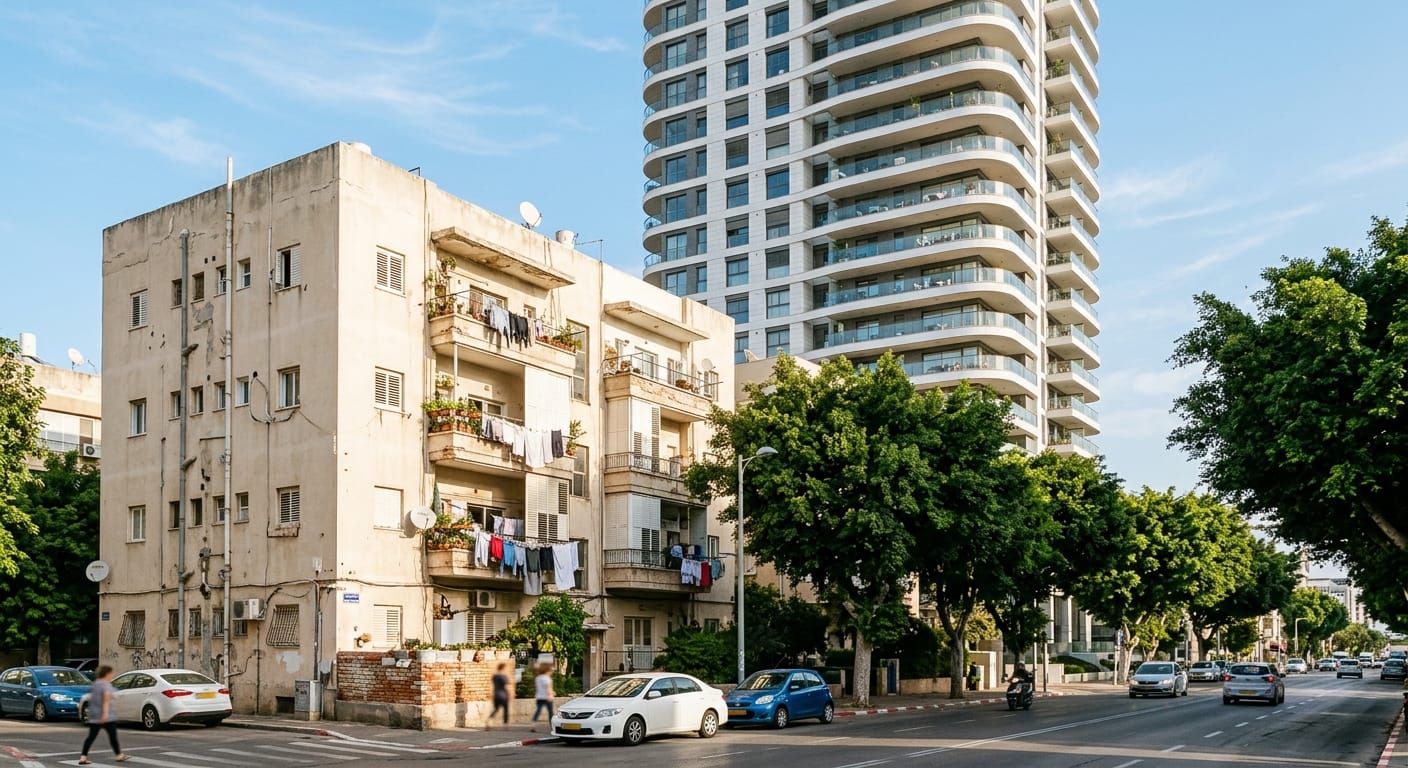
Picture three four-story walk-ups with no elevator and no safe room, sharing one lot.
- The owners move to rentals the developer pays for
- The buildings are demolished
- And every owner comes back to a new apartment in the new building, with a safe room, a balcony, an elevator, and parking.
Pinui-Binui
- What happens to the building
- Several buildings are demolished together, and a new complex is built in their place. The owners move out for construction and return to a new apartment.
- Scale
- A complex of at least 24 housing units that the state has designated (at least 12 on the developer track, when the complex sits inside a plan already deposited for public review of 24 or more).
- The majority
- 2/3 of all the apartments in the buildings vacated together (the cluster)
- 3/5 of the apartments in each building
- More than 1/2 of the common property in each building
- Who approves when not everyone has signed
- The court
- The statute
- The Pinui-Binui Law (Encouragement of Evacuation-Reconstruction Projects), 5766-2006
The Shaked track
- What happens to the building
- A single building on its own lot: demolished and rebuilt, or reinforced and expanded. The local planning committee approves.
- Scale
- One building permitted before 1980 (or through the end of 1984, with an engineer's opinion), with at least two stories and four units.
- The majority
- 2/3 of the apartments
- 2/3 of the common property
- For demolition and rebuilding: a building of at least 4 apartments, with more than two owners
- Who approves when not everyone has signed
- The Supervisor of Land Registration
- The statute
- Chapter C, Article D of the Planning and Building Law (Amendment 139, 2022); the majority under the Land Law (Strengthening of Condominiums Against Earthquakes), 5768-2008
TAMA 38 expired on October 1, 2023. In local planning committees that met the National Planning Council's conditions, it was extended to May 18, 2026, at the latest.
The Shaked track replaced it: Amendment 139 to the Planning and Building Law (Chapter C, Article D, Sections 70A through 70I), which lets the local committee approve a plan for a single building, to demolish and rebuild or to reinforce, with additional building rights the statute sets in advance.
The required majority hasn't changed: it is still set by the Strengthening Law.
Pinui-Binui or a combination deal?
In Pinui-Binui you stay an apartment owner and receive a new apartment in place of the old one; the developer's return comes from the additional apartments it builds and sells.
In a combination deal you are a landowner: you sell the developer part of the land, and in exchange it builds apartments for you on the part that stays yours.
The first fits existing buildings in a complex. The second fits vacant land or a single family's lot.
The Pinui-Binui agreement: the clauses your attorney locks down
The Pinui-Binui agreement is the only document that binds the developer to you. If it isn't in the agreement, it doesn't exist. These are the clauses your attorney locks down before you sign, and what you hold once you have.
The attorney is chosen on behalf of the whole building, usually through the owners' committee, and before anyone signs a document with a developer or an organizer (the intermediary who gathers signatures). No committee yet? That's where you start.
The new apartment, in numbers and in words
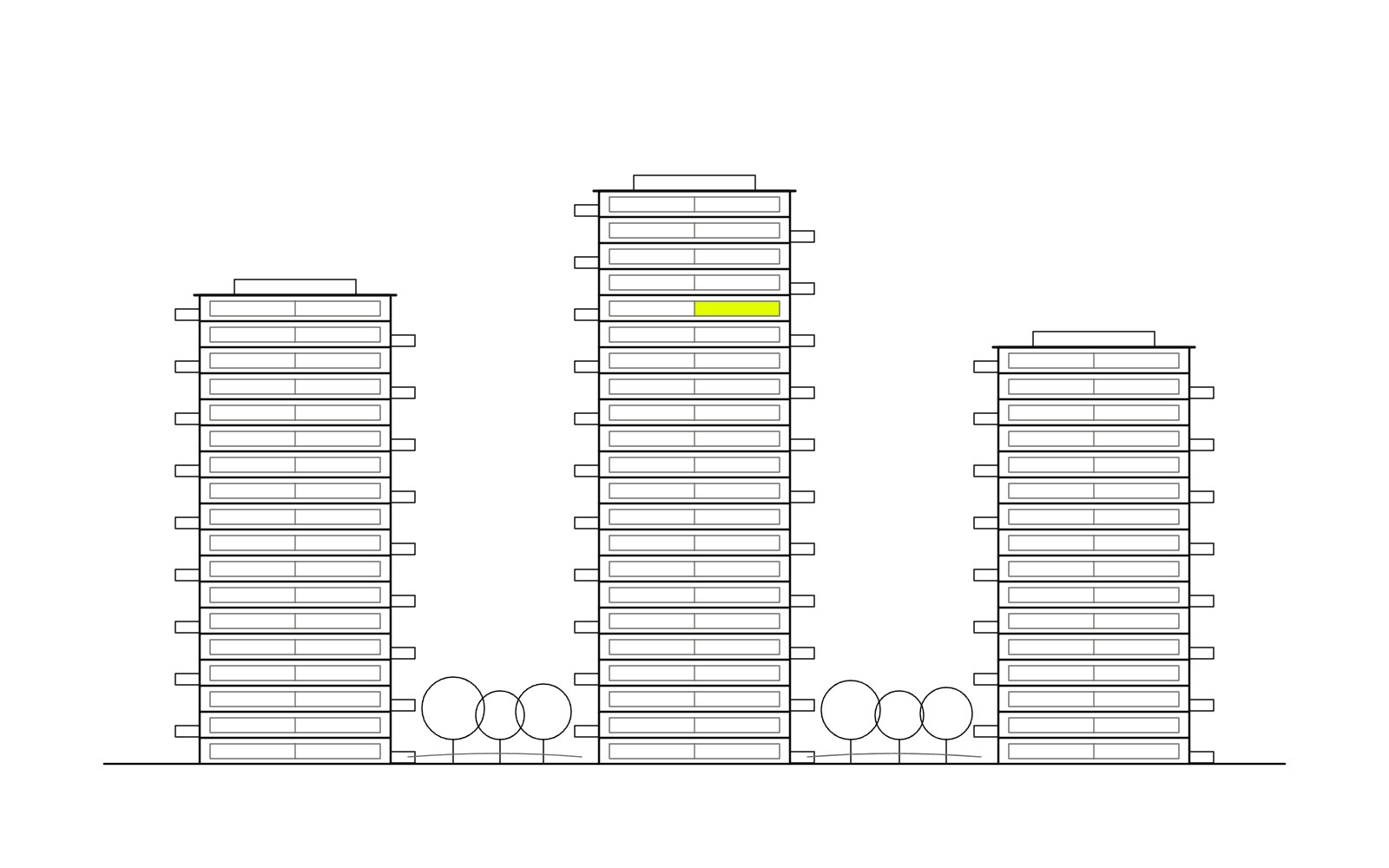
A written formula for the new apartment's floor area, floor, exposures, parking, and storage, settled before there is a plan.
What you holda compensation schedule that describes your apartment, not a general promise of "a new apartment."
A timeline the law gives you
Section 1D of the Pinui-Binui Law sets deadlines for the deal with the developer:
- Half of the owners sign within two years
- Three-fifths within four years
- A detailed plan is filed within four and a half years (one more year in a complex of 120 units or more)
Deadline missed? A majority of the owners in the building, including those who never signed, may resolve at a general meeting that the signatories are free to cancel, and once notice of that resolution is given, anyone who signed may cancel.
Your attorney writes these deadlines into the agreement.
Conditions precedent
The agreement takes effect only when conditions set in advance are met: a majority of signatures, plan approval, a building permit.
Your attorney sets what the conditions are, who confirms they've been met, and by when.
What you holdan agreement that doesn't require you to leave your home before everything is in place.
The guarantees, by name
Each guarantee gets its own clause: a Sale Law guarantee for the value of the new apartment · rent · taxes and levies · defects · registration · the maintenance fund · removal of the caution notes (the Land Registry notations recorded in the developer's favor).
Your attorney sets the amount of each, when the developer deposits it, and with whom.
What you holda letter of instructions under which the guarantees are held in escrow by your attorney and released only with your consent.
Interim housing
Rent for a rental apartment for the entire construction period, paid in advance, in an amount set by appraisal or by an existing lease.
Moving costs, both ways, are in writing too.
What you holda rent clause with an amount, a payment date, and a guarantee behind it.
You sign at home, after you've read it
Your attorney explains the agreement at the owners' meeting, answers every owner's questions, and only then takes signatures, usually in each owner's home.
Everyone who signs receives a signed copy, and your attorney keeps all the signatures in one place.
What you holdyour copy, and the knowledge that you didn't sign alone.
Representing the owners: who pays the apartment owners' attorney
A Pinui-Binui project is structured as a net deal for the apartment owners: every project cost sits with the developer, including the fees of the owners' attorney, the construction supervisor, the appraiser, and the tax adviser. That's how the mechanism works across the industry, and that's how it is written in the agreement.
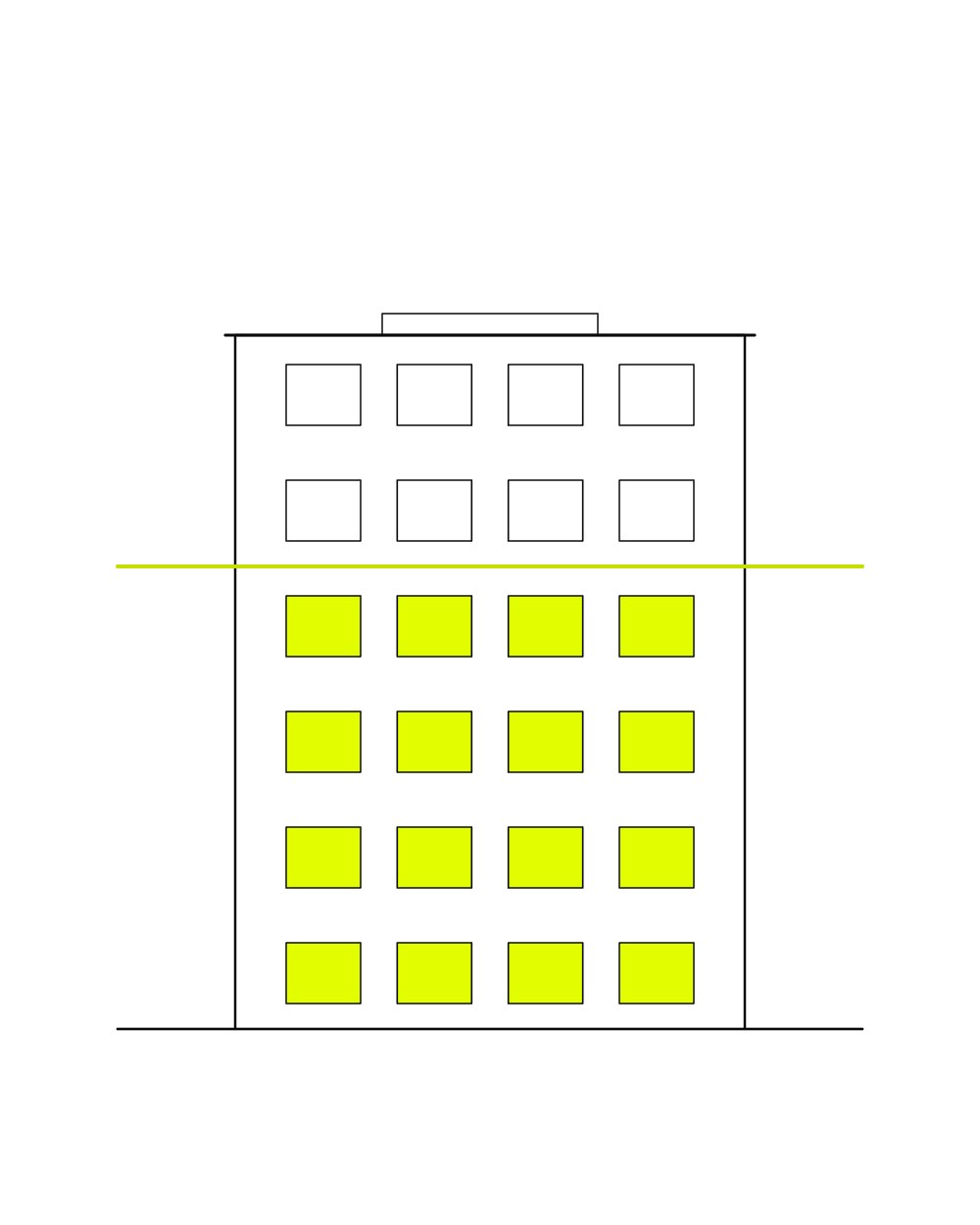
Who pays and who is owed loyalty are two different things.
The developer pays, but the attorney:
- Is chosen by you
- Signs an engagement agreement with you
- And owes loyalty to you alone.
The developer comes to the table with its own attorney. Two attorneys sit on opposite sides of the table, and that's exactly the point.
To keep that loyalty undivided, we hold one line: the firm does not represent the developer in the same project. That is what the Israel Bar Association's Ethics Committee opinion (AT/67/21) requires, and that is how we work.
What a Pinui-Binui attorney does at every stage
The full roadmap is on the urban renewal page. Here the angle is different: at each stage, what the owners' attorney actually does, and what you hold when the stage is done.
1The initial decisionYou don't have an attorney yet, and that's fine. When we're invited to the owners' meeting, we explain which track fits the complex and how the majority is counted, apartment by apartment.
What you holdA snapshot: how many signatures you have, how many you're missing, and where.
Read more: The initial decision2Electing the owners' committeeDrafts the committee's letter of appointment: what it may decide on its own, what goes back to the owners' meeting, and how a member is replaced.
What you holdA committee with written authority that speaks for everyone.
Read more: Electing the owners' committee3Choosing the attorneySigns an engagement agreement with you, the apartment owners, not with the developer. Owes its loyalty to you alone and confirms that the firm does not represent the developer in the same project.
What you holdAn attorney of your own, before any developer is in the picture.
Read more: Choosing the attorney4Choosing the supervisor and consultantsDefines with the committee what the construction supervisor, the appraiser, and the tax adviser do for you, and writes their funding into the agreement with the developer.
What you holdA full team on your side, paid for by the developer.
Read more: Choosing the supervisor and consultants5The developer bid processWrites the bid documents, sets threshold requirements for financial strength and track record, opens the bids with the committee, and compares them in one table: compensation, guarantees, schedule.
What you holdOne comparison table, and the decision in your hands.
Read more: The developer bid process6Signing the agreementNegotiates every clause, explains the agreement at the owners' meeting, and takes each owner's signature after they have read it.
What you holdA signed agreement with conditions precedent, and a copy in your hands.
Read more: Signing the agreement7New zoning planChecks that the plan the developer is advancing matches the agreement: number of apartments, floors, parking. Whatever doesn't match goes back to the developer.
What you holdA plan that matches what you signed.
Read more: New zoning plan8DesignationGuides the designation application and confirms that the complex meets the 24-unit condition and that the tax benefits are written into the agreement.
What you holdA designated complex: the Pinui-Binui Law and its tax benefits apply to you.
Read more: Designation9The building permitSigns off before the committee signs the permit application, and confirms the conditions precedent have been met before the agreement takes full effect.
What you holdA building permit, and an agreement now in full force.
Read more: The building permit10Receiving the guaranteesTakes delivery of the bank guarantees, checks the wording and amount of each, and holds them in escrow under a letter of instructions.
What you holdEvery guarantee with your attorney, before you move out.
Read more: Receiving the guarantees11Interim housing and start of constructionConfirms the rent is paid in advance and the move is arranged, and only then approves the move-out date.
What you holdRent paid, and the keys to your rental before you hand over yours.
Read more: Interim housing and start of construction12Completion and deliveryAttends the handover inspection with the construction supervisor, and releases guarantees only after the supervisor has signed off.
What you holdA new apartment, a signed handover report, and a defects guarantee that stays in place.
13Title registrationOversees registration of the condominium and the apartments, and holds the registration guarantee until the apartment is registered in your name at the Land Registry.
What you holdA Land Registry extract with your name on it. That's the closing.
Read more: Title registration
Apartment owners' rights in a Pinui-Binui project
In Pinui-Binui, the "residents" everyone talks about are the apartment owners. These are your rights, from the first signature to registration.

Representation of your own
Every meeting with the developer includes someone who represents only you.
- An attorney the apartment owners choose
- Loyal to you alone, with fees paid by the developer
- Not the developer's attorney, and not the organizer's attorney.
The decision is yours
You decide. Your attorney lays the groundwork.
- Which developer, which offer, and whether to go ahead at all
- The attorney presents, compares, and negotiates
- The apartment owners make the call at the owners' meeting.
The deal has legal deadlines
The developer doesn't hold your signature forever.
Section 1D of the Pinui-Binui Law sets deadlines for the deal:
- Half the signatures within two years
- Three-fifths within four years
- A detailed plan within four and a half years.
Deadline missed? The owners can vote at a general meeting, by a majority that counts those who never signed, to let the signatories walk away; once that resolution is served, every signer may cancel.
Owners aged 70 and over
An owner who was 70 or older at the building's first signing and has lived in the apartment for at least two years:
The developer has to offer them, in addition to the compensation apartment, at least one of three alternatives, at the developer's choice. If it doesn't, the owner's refusal will not be considered unreasonable, and the court will not force the deal on them.
- The first: the senior chooses between a retirement home with the difference in value settled in cash, another apartment of similar value, or cash to buy one.
- The second: two apartments whose combined value is similar to the compensation apartment.
- The third: a smaller apartment with the difference in value settled in cash.
For an owner aged 75 or older, an owner who is terminally ill, or one entitled to nursing benefits, the developer has to offer the first alternative specifically, and a developer that didn't cannot force the deal on them in court (Sections 2(b)(6) and (7)).
Reasonable refusal
If you're undecided, you get an explanation. If you have reasonable grounds to refuse, the law recognizes them.
- Not every refusal makes someone a holdout
- The law recognizes reasonable grounds for refusing, and the court is what weighs them
- An owner who is undecided is entitled to an explanation from the building's attorney.
Interim housing during construction
You move into the rental only after the rent has been paid.
- Rent for a rental apartment, paid in advance for the entire construction period
- Moving costs both ways
- In our agreements the amount is set by appraisal or by your existing lease, and backed by a guarantee.
How big a majority does Pinui-Binui need?
In Pinui-Binui, in a designated complex, the law counts on two levels: all the buildings vacated together, and each building on its own. To reach a majority, you need to meet all three conditions:
- 2/3 of all the apartments in the buildings vacated together (the cluster)
- 3/5 of the apartments in each buildingIn a building of 4 or 5 apartments, 3 apartments are enough, provided more than two owners have signed
- More than 1/2 of the common property in each building
In single-building renewal (one building demolished and rebuilt or reinforced, the Shaked track), the Supervisor of Land Registration may approve once these have signed:
- 2/3 of the apartments
- 2/3 of the common property
- For demolition and rebuilding: a building of at least 4 apartments, with more than two owners
You count apartments, not people: a couple that owns one apartment is one apartment.
Building 1
Building 2
What the calculator doesn't check:
- Your share of the common property (more than half per building in Pinui-Binui, two-thirds in single-building renewal)
- The more-than-two-owners condition
- One owner holding several apartments in the same building (Section 4 of the law)
- Who the owners are, as recorded in the Land Registry extract
A preliminary count, not a legal opinion. Thresholds current as of October 19, 2026.
Questions apartment owners ask
How much does a Pinui-Binui attorney cost?
The fees of the apartment owners' attorney are paid by the developer, as part of the net deal: every project cost sits with the developer. The engagement agreement is signed with you, the apartment owners, and the developer pays according to the milestones set in the deal. The attorney's loyalty stays with you alone.
What are an apartment owner's rights in a Pinui-Binui project?
An apartment owner in Pinui-Binui is entitled to an attorney of their own who is loyal to them alone; to decide on the offer at the owners' meeting; to a new apartment described in writing in the agreement; to interim housing during construction; to guarantees backing each of the developer's obligations; and to the deadlines the law sets for the deal (Section 1D). If an owner aged 70 or over wasn't offered at least one of the alternatives the law requires, or an owner aged 75 or over wasn't offered the alternative that lets them choose, their refusal is not considered unreasonable.
What is Pinui-Binui?
An urban renewal track in which a complex of several aging buildings is demolished and rebuilt, larger. The apartment owners move to rentals the developer pays for and return to a new apartment in the new building. The developer funds everything from the additional apartments it builds and sells. The track is governed by the Pinui-Binui Law (Encouragement of Evacuation-Reconstruction Projects), 5766-2006, and applies in a complex the state has designated.
How do you know the developer's offer is any good?
Put other offers on the table. The apartment owners' attorney runs a developer bid process: several developers receive the same information about the building and submit offers, and the offers are compared in a single table of compensation, guarantees, and schedule. An offer on its own can't be judged. Next to other offers, you can see what it's worth. The choice between the offers belongs to the apartment owners, at the owners' meeting.
What if one owner refuses to sign?
If the building is in a designated complex, first check whether you have a majority without that signature, on the law's two levels. If you do, an owner who refuses without reasonable grounds is a matter for the court, and the majority can move forward. A refusal on grounds the law recognizes is a reasonable refusal. The details are in the article on reasonable refusal.
How long is the agreement we signed with the developer good for?
Under Section 1D of the Pinui-Binui Law: half of the owners must sign within two years of the first signature, three-fifths within four years, and a detailed plan is filed within four and a half years. In a complex of 120 units or more, one more year. If a deadline passes, a majority of the building’s owners, non-signers included, can resolve at a general meeting to release the signatories, and from the moment notice of that resolution is given, each signer may cancel. The agreement itself also sets the conditions precedent and their deadlines.
What's the difference between our attorney and the developer's attorney?
Each side of the deal has its own attorney. The developer's attorney makes sure the agreement serves the developer. The apartment owners' attorney is chosen by you, signs an engagement agreement with you, and is loyal to you alone, even when the developer is the one paying the fee. The firm does not represent the developer in the same project.
We signed with an organizer. Is that binding?
An agreement with an organizer (the intermediary who gathers signatures before a developer is chosen) is not the deal with the developer. It governs only the relationship between you and the organizer. Under the Urban Renewal (Agreements for Organizing Transactions) Law, 5777-2017, it lapses at fixed points if the organizer hasn't made progress: six months by default, with longer periods only once signatures reach the share the law sets or the plan has been accepted for filing (Section 5). An organizer agreement that isn't in writing, or that leaves out the date it was signed or the determining date, is void (Section 3(b)). Bring the agreement to the building's attorney, who will tell you where you stand on the timeline.
Where do you work?
Throughout Israel. We represent apartment owners in Pinui-Binui projects in Rehovot, Jerusalem, Netivot, and Eilat, among other cities. Owners' meetings and consultations take place where you are, in the building or at home, and so does the signing.
The agreement isn't written yet. Make sure it's written from your side.
Have these ready: the number of apartments in the building, how many have already signed, and any document a developer or organizer left with you. We start from there.
We represent apartment owners throughout Israel, including in Rehovot, Jerusalem, Netivot, and Eilat.
A conversation with an urban renewal lawyer, wherever you are in the process.
An apartment you're buying or selling, a building entering renewal, or a contract waiting on a decision. Leave a name and a number and a senior lawyer on the team will call you back: we hear you out and tell you what the next step is — even when it isn't with us.