A zoning plan sets what you may do with a piece of land. Israelis call it a TABA, the Hebrew acronym for "city building plan." It determines what your lot may be used for (residential, commercial, agricultural), how much can be built on it, how high, and how far from the street and the neighbors (the setback lines). If you own a detached home, for example, it decides whether you can add another unit; if you own vacant land, whether you can build a house on it at all.
Can the zoning on your lot be changed? Yes, you have the right to propose a change. The law lets the landowner, or anyone with an interest in the land, prepare a plan and file it with the local planning committee, which handles planning for your area.
The decision rests with the planning body, meaning whichever committee has the power to approve the plan: the local committee, or the district committee one level up. Either one can approve the plan, approve it with changes or conditions, or reject it. A rejection can be appealed to a separate body, though in some cases you first need permission to appeal. To find the answer for your own lot, start with 5 questions:

You can find out in writing which plans apply to your lot, including any still in preparation or already deposited (published so the public can object). The local committee must provide that information within 30 days of your request. If a change looks possible, the table of routes further down will help you choose how to proceed. Here are the 4 numbers this guide keeps coming back to, 2 of them measured by the State Comptroller, Israel's government auditor:
What does changing a zoning plan mean?
It means filing a new plan that replaces the rules now in force on your lot: permitted use, building rights, setbacks, height. Under the statute, a "plan" includes a change to a plan, so a TABA change is a plan in its own right and goes through the same process as any other. TABA is the everyday name, not a statutory term. At the local level, Israel's Planning and Building Law recognizes 2 kinds of plan: a local outline plan, which sets land uses for an area, and a detailed plan, which works at the level of the individual lot, setting lot lines, where the building sits, and how many units it may contain.
Who else can start one? Besides the landowner and anyone with an interest in the land, a government ministry, a local planning committee, and a municipality can prepare plans, each within its own jurisdiction. So a plan that affects your lot may not be one you started.
Your plan takes its place on a ladder of plans. A national outline plan overrides a district plan, a district plan overrides a local one, and a local outline plan overrides a detailed plan, unless the higher plan says otherwise.
Bottom line: a zoning plan change is a plan you are entitled to initiate for your own lot. You file it with the local planning committee, and it cannot contradict a plan above it on the ladder.
Does your lot need a zoning plan change at all?
Not always. Initiating a plan is 1 of 4 routes, and the only one where you file the plan. Before asking what a plan change costs, find out which route is open to your lot.
| When it fits | Who leads | What you pay, and when | What to check first | |
|---|---|---|---|---|
| Initiate a plan yourself | What you want to build or change is not allowed under the current plan, and a variance cannot cover it | You, as the party filing the plan | The planning team and publication during the process; half the increase in value when you use the rights | Which plan applies today, which committee has authority to approve the change, and which co-owners are signing on |
| Wait for a plan the authorities are advancing | The local committee or a public body is already advancing a plan that includes your lot | The authority; anyone who believes the plan harms them may object | Nothing for preparing the plan. The levy applies even though the plan was not yours: half the increase in value, when you use the rights | What is in the pipeline and at what stage: the local committee must answer a written request within 30 days |
| A variance or a use variance | A departure from the plan that does not add floor area, housing units, or floors, or a different use for a limited period | You, by application to the local committee | Publication of the application, at your expense; the levy applies to both kinds of variance too | When construction of the house was completed, and when the plan that governs it was deposited for public review |
| Sell, before the plan or after it | The question is when to sell, not what to build | You and the buyer, in the contract | A sale counts as using the rights: if a plan that raised the lot's value has already been approved, the levy is due at the sale | Which plans are deposited or in preparation, and whether a plan has already raised the lot's value |
A variance is permission to depart from the plan without changing it. Under a reform that took effect on January 1, 2023, a local committee may grant variances only on matters listed in regulations, and the statute bars that list from including added floor area, added housing units, or added floors. Since April 3, 2025, there has been a second, broader track for an existing building completed 8 years or more before the application, as long as the application does not involve demolishing the whole building and rebuilding it. That track has limits too: no variance that amounts to a substantial deviation from the plan, and where the plan was deposited after August 1, 1989, floor area beyond what it allows is a substantial deviation. Nor is a variance available from a plan approved after April 1, 2025, that already expanded the rights on the same matter. An application filed today is decided under these rules.
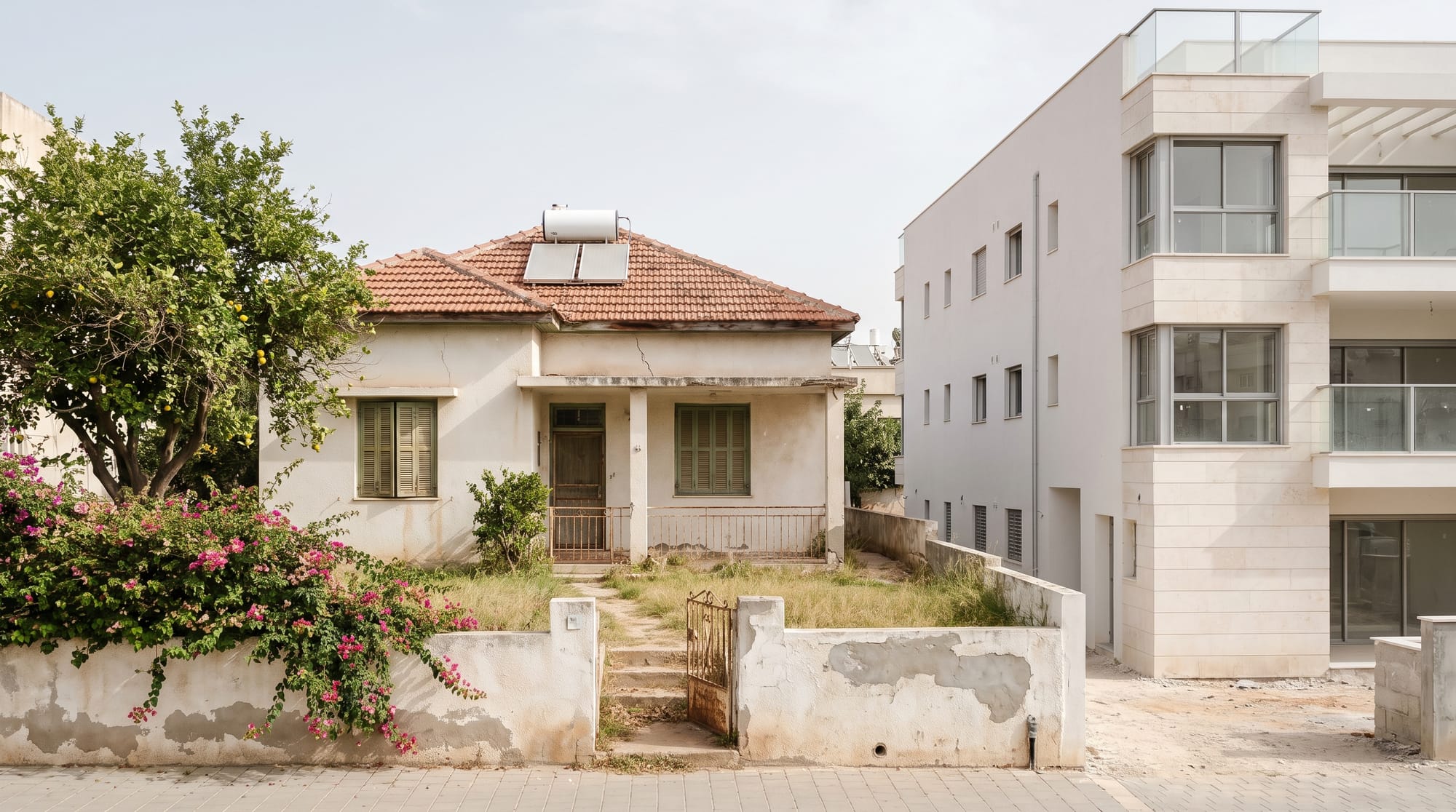
A use variance allows the land or the building to be used for a purpose the plan does not permit. In Israel, a use variance from a plan is granted for a period set in advance, which makes it a temporary fix, not a change in the permitted use.
Bottom line: for a vacant lot, a new house, or a teardown and rebuild, adding floor area, a unit, or a floor takes a plan. If the house has stood for 8 years or more, check first what a variance can cover.
Outline plan vs. site-specific plan: what's the difference?
An outline plan is a rung on the planning ladder: national, district, or local. A site-specific plan is what planners call a small plan covering one lot or a few. The statute does not define a site-specific plan and sets no minimum area for filing a plan, as the State Comptroller noted in a 2023 report. What the statute does have is the detailed plan.
How common are small plans? According to the same report, a procedure of the Planning Administration, Israel's national planning agency, treats a plan covering less than 5 dunams (about 1.2 acres) as site-specific, and such plans made up 60.8% of all plans received from January 2016 through July 2022.
The closest statutory term is the limited plan: a plan within the local committee's authority, on subjects the statute lists, covering a single lot or adjoining lots with a combined area of no more than 5,000 square meters (about 1.2 acres). For these the statute sets a faster track: the chair of the local committee decides on deposit within 45 days of filing, and the committee decides the plan within 8 months instead of 12. The faster track has a catch: a limited plan not approved within 10 months of the decision to deposit it is void. The applicant may ask that the plan not be handled on this track.
Bottom line: one lot, or adjoining lots up to 5,000 square meters, on subjects the statute lists? Check whether the plan qualifies for the limited-plan track: 8 months to a decision instead of 12.
Local or district committee: who approves the change?
A plan whose subjects all appear on an exhaustive statutory list is approved by the local planning committee. Every other plan is approved by the district planning committee. The statute's word is "only": a single subject off the list sends the entire plan to the district committee.
What is on the list? Among other things: consolidation and division of lots without changing the total area of each land use; setting or changing a setback line; changing building-layout and design provisions; height and number of floors, without changing the total permitted floor area; minimum lot size; and adding housing units without adding main-use floor area. Anything that can be requested as a variance can also be requested in a plan within the local committee's authority.
What about added floor area? That is on the list too, with caps. On a residential lot in a city or town, in low-density housing such as a single-family house, the local committee has had authority since April 2025 to approve a plan adding up to 7% of the lot's area or 50 square meters (about 540 square feet), whichever is greater, and never more than 175 square meters (about 1,880 square feet). The conditions: no building on the lot is classified as requiring seismic strengthening, and the lot does not qualify for the broader floor-area track. That broader track has existed in cities and towns since June 1, 2023, and one of its conditions is that at least 5 years have passed since the district-approved plan for the lot took effect. Authority to approve is not approval: it describes the committee's power, not a commitment.
A term to know here: the comprehensive plan. It is a local outline plan approved by the district committee, and it sets, among other things, land uses, floor area, and height guidelines. It matters to you because it determines what your local committee can approve on its own.
Some local committees have broader powers. A committee the Interior Minister has certified as an independent local committee, in a place covered by a comprehensive plan the district committee approved, can itself approve any local or detailed plan within the comprehensive plan's area, as long as the plan does not contradict it. Certification runs for 3 to 5 years at a time, and notice of it is posted on the local committee's website. So check your committee's website for its status and for how long the certification runs.
| Local committee | District committee | |
|---|---|---|
| Which plans it approves | A plan whose subjects are all on the exhaustive statutory list; for an independent committee, also any plan consistent with the comprehensive plan | Every other plan, and usually a change from agricultural to residential use |
| Where you file | With the local committee | Also with the local committee, with a copy to the district committee; the local committee sends its recommendation within 60 days |
| Deposit and objections | The local committee deposits the plan and rules on objections; objections are due within 2 months | The district committee deposits the plan and rules on objections; objections are due within 2 months |
| Statutory deadline to decide | 12 months; 8 for a limited plan | 18 months |
| What was measured | 45% of plans decided within 12 months, 16% in more than 24 (State Comptroller, 2016–2019) | 2.1 years on average from intake to publication of the approved plan, median 1.6 (State Comptroller, plans approved in 2019) |
| Where you appeal | The appeals committee, within 15 days; for an independent committee, only with leave from the appeals committee's chair | The National Planning and Building Council, with leave from the district committee's chair |
Bottom line: one subject off the list is enough to send the whole plan to the district committee. The statutory deadline then goes from 12 months to 18.
How do you change a zoning plan? 7 steps, from records request to a plan in effect
You file a plan with the local planning committee, it is deposited for public objections, the planning body rules on the objections and on the plan, and the approved plan is published and takes effect. What people call an application to change the zoning plan is the filing of the plan itself. The landowner, or anyone with an interest in the land, files it, together with the plan documents and any further document the chair of the planning body requires.
Not every co-owner has to sign. A person who holds 66% or more of the rights in a part of the land covered by the plan may file it, provided the plan does not harm the part held by another rights holder and the planning body's legal counsel has confirmed in a written opinion that the conditions are met.

- 1Ask the local committee for the planning record in writing. Within 30 days it must tell you which plans apply to the land, which are deposited, which are in preparation, and whether any levy is owed on the property.
- 2Prepare the plan and work out whose authority it falls under. An architect drafts the plan documents. Authority follows the plan's subjects: all on the statutory list means the local committee; one off the list means the district committee.
- 3File with the local committee. A plan for the district committee is also filed with the local committee, with a copy to the district committee, and the local committee sends its recommendation within 60 days. The statutory deadlines run from the day the plan counts as filed, meaning after it has met the threshold requirements.
- 4The planning body decides whether to deposit. The statute gives it 60 days to deposit the plan, reject it, or set conditions for deposit; 45 days for a limited plan. A decision to deposit with conditions is not yet a deposit: you have 3 months to meet the conditions at a local committee and 6 at a district committee, and a decision whose conditions are not met in time can lapse.
- 5The plan is deposited and published. Notice runs in the official gazette, in newspapers, online, and on a sign within the plan area, posted at your expense for the entire objection period. For a plan covering up to 3,000 square meters (about 0.75 acre), notice also goes to the owners and occupants of adjoining lots.
- 6Objections for 2 months, then a ruling. Anyone who believes the plan harms them may object within 2 months of the last of the newspaper notices; the planning body can set a period of up to 3 months. An objection must be in writing, state its grounds, and be backed by an affidavit, and it is heard in public. If no objection is filed, the plan is deemed approved 30 days after the objection period ends, unless the planning body decides otherwise; that rule does not apply to a limited plan.
- 7The plan is approved and published. It takes effect 15 days after the last notice of approval, in the official gazette or in a newspaper. The committee's vote to approve is not the effective date.
Bottom line: 3 different clocks run in this process. Objections: 2 months from the last newspaper notice. Effective date: 15 days from the last notice of approval. The committee's own deadlines: from the day the plan met the threshold requirements.
How long does a zoning plan change take?
The statute gives a local committee 12 months to decide and a district committee 18. The State Comptroller's measurements show that a large share of plans take longer. To understand the gap, you need to know what the statutory deadline counts and what it leaves out.
The statutory clock starts only once the plan counts as filed, meaning after it has met the threshold requirements, and it stops at the committee's decision: approve, approve with changes, set conditions, or reject. It does not include the time to prepare the plan, and it does not end with a plan in effect. The statute also allows these deadlines to be extended, provided the reasons are stated in writing. And if the committee misses the deadline, the plan is not approved by default: at the applicant's request it moves up a level, from the local committee to the district committee or from the district committee to the National Planning and Building Council, and that body has 10 months.
What was measured at local committees: of the plans decided between 2016 and 2019, 45% were decided within 12 months, 39% in more than 12 and up to 24 months, and 16% in more than 24 months. For site-specific plans, the average planning process at local committees ran about 361 days for a plan proposing no significant change and about 421 days for one that did; at district committees it ran about 552 days (plans received from January 2016 through July 2022).
What was measured at district committees: for plans approved in 2019, an average of 2.1 years passed from intake to publication of the approved plan, with a median of 1.6 years. Of the plans decided in 2019, 77% were decided within the statutory 18 months. For plans approved from 2016 through 2019, the intake stage, which has no statutory deadline, took 3.7 months on average; meeting the conditions for deposit took 9.7 months; and getting from the decision to publication of the approved plan, another stage with no statutory deadline, took 4.6 months more.
These are the official figures that have been published: State Comptroller reports from 2021 and 2023, covering plans through 2019 and through July 2022. They measure the process inside the planning bodies, not the time it takes to prepare a plan before filing.
Bottom line: plan around what was measured, not around the statutory deadline. At local committees, 55% of plans were not decided within 12 months; at district committees, the average was 2.1 years from intake to publication of the approved plan.
How much does a zoning plan change cost?
There is no single price. The bill has 5 parts: the planning team, filing fees, publication, an indemnity agreement if one is required, and the betterment levy. The first 4 are paid along the way. The last is paid afterward, when you use the new rights.
Then comes the levy. It is half the betterment, meaning half the increase in the land's value that results from the plan's approval. The assessment is made as of the day the plan takes effect, but payment is not due that day:
"The levy shall be paid no later than the date on which the person liable for it realized a right in the land to which the levy applies…" — Planning and Building Law, 5725-1965, Third Schedule (unofficial translation)
Using the rights, or "realizing" them in the statute's words, means 1 of 3 things: receiving a building permit that could not have been issued without the plan, starting the use the plan allowed, or transferring the land, for example by selling it. Use only part of the rights and you pay a proportionate share. Until payment, the amount is indexed to the lower of the rise in the consumer price index and the rise in the construction input index. And without the local committee's confirmation that the levy was paid, or that payment was secured, no transfer is recorded at the Land Registry (Tabu) and no permit is issued.
For the owner of a detached house, 2 rules matter in particular. First: someone who builds or expands a home for their own residence, or a relative's, does not pay the levy at the permit stage as long as the home's total area after construction is no more than 140 square meters (about 1,500 square feet); a proportional levy is paid on any area above that. On a sale, no levy is charged on the home if the owner or a relative lived in it for at least 4 years from the end of construction. Second: a transfer to a relative for no consideration, and a transfer by operation of law, do not count as using the rights, and nothing is paid at the time of the transfer.
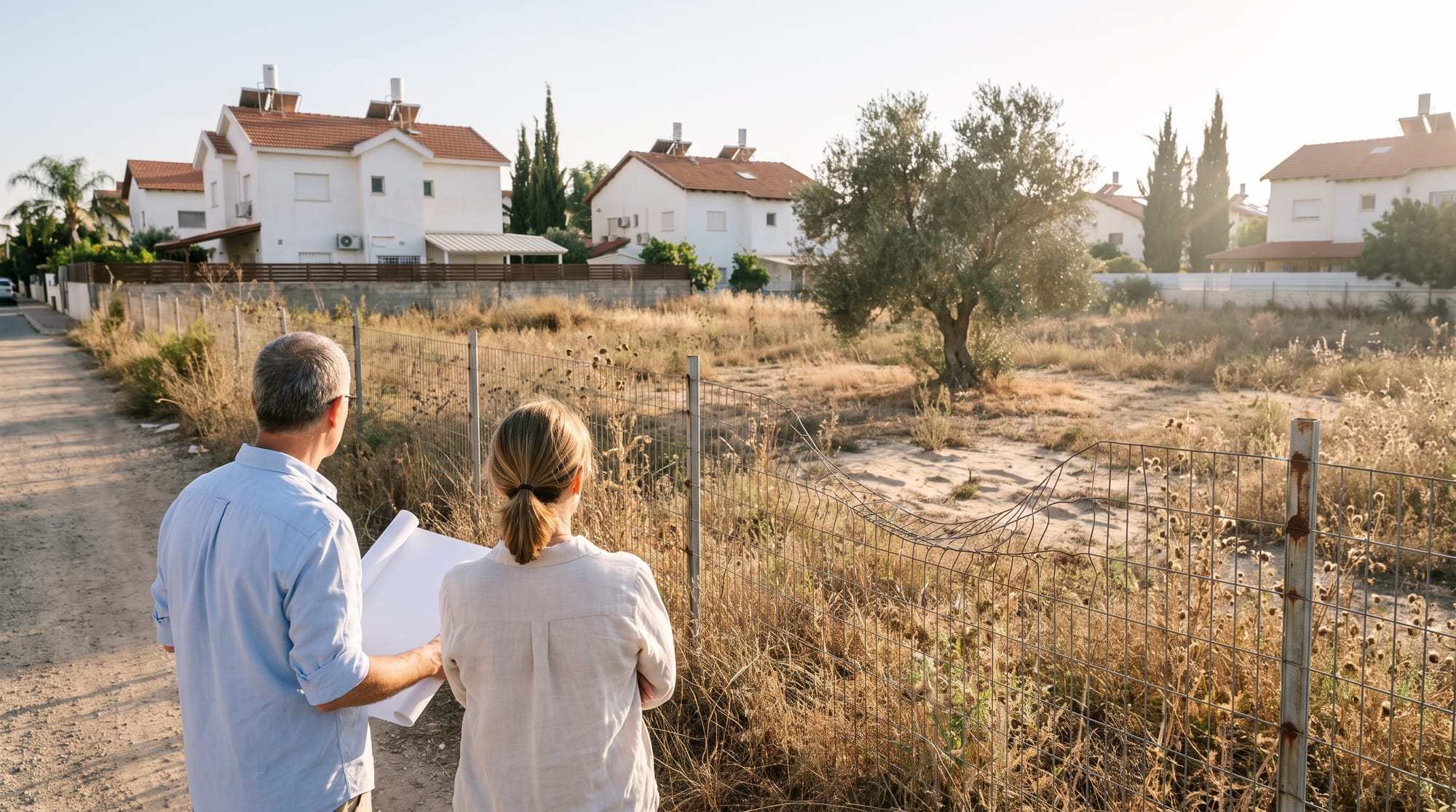
And if you have held the lot for years: where several plans were approved one after another and no levy was paid on any of them, the betterment is measured from the value before the first plan to the value after the last. A comprehensive plan does not trigger the levy on its own; the betterment it creates is added to the assessment when the next plan is approved.
And what happens with tax when you sell a house whose value partly reflects unused building rights? That has its own guide: appreciation tax and building rights on a detached home.
Bottom line: budget for 2 bills, not 1. The process is paid for along the way; half the betterment is paid on the day you pull a permit, start the new use, or sell.
What changes if the land is agricultural or leased from the state?
It changes 2 things: who approves the plan, and who keeps the increase in value. Rezoning agricultural land for residential use is not on the list of subjects a local committee can approve, so it usually goes to the district committee. The statute lists cases where the local committee does have authority, among them: an independent local committee whose comprehensive plan the new plan follows; dividing the residential lot, but not the farmland, of a farm unit in a moshav, one of Israel's cooperative farming villages; and a temporary provision, in force until July 7, 2030, for rezoning to residential use inside an existing community in a regional council in the Northern or Southern District, up to 20 dunams (about 5 acres) and 40 housing units per community, subject to further conditions in the statute.
Agricultural land also gets an extra layer of review. For purposes of the statute, agricultural land is land declared as such in the official gazette, not any land that happens to be farmed. A plan on declared land that the district plan designates for agriculture or open space will not be approved without the consent of the national committee for the protection of agricultural land and open spaces, unless it conforms to an outline plan that committee has already approved. And National Outline Plan 35 (TAMA 35), in the consolidated version the Planning Administration published in 2022, provides that a district plan adding land for development will be deposited only if the addition directly adjoins land already designated for development. That is a condition, not a right to rezoning.
Everything here about initiating a plan assumes privately owned land. If you hold agricultural land under a lease from the Israel Land Authority (ILA), the state agency that manages public land, you are in a different position. As our guide to selling agricultural land before rezoning explains, rezoning there brings the lease to an end and the land goes back to the state, and the increase in value does not pass to the lessee. The levy does not apply there either; an agreement between the ILA and the local authorities applies in its place. On leased land, read the lease before taking any planning step.
Bottom line: privately owned agricultural land? Check first what the district plan says and whether the land is declared agricultural. Land leased from the ILA? Read the lease first.
What to verify before you file
Your questions, answered
Who can apply to change a zoning plan?
The landowner, or anyone with an interest in the land. The statute lets either of them prepare a local outline plan or a detailed plan and file it with the local planning committee. A government ministry, a local planning committee, and a municipality may do the same, each within its own jurisdiction.
Where the land has several owners, you do not need all of them: a person holding 66% or more of the rights in a part of the land covered by the plan may file it, provided the plan does not harm another rights holder's part and the planning body's legal counsel confirms that in a written opinion. Harm includes a case where the other owner's land gains significantly less value than yours. Until June 1, 2023, the threshold was 75%. The threshold is 66%, and a written opinion must confirm it is met.
Can you change the zoning plan if the neighbors object?
Yes. An objection is not a veto: the planning body hears it and decides. Anyone with an interest in land, a building, or any other planning detail who believes the plan harms them may object within 2 months of publication of the deposit. The objection must be in writing, state its grounds, and be supported by an affidavit, and it is heard at a public hearing to which the objector and the applicant are invited.
The body that deposited the plan rules on the objection, and it may approve the plan, approve it with changes, or reject it. A neighbor whose property is harmed by an approved plan may claim compensation from the local committee, which is why the planning body may ask you for an indemnity agreement. An objection is heard and decided; it does not stop the plan on its own.
What's the difference between a plan change, a variance, and a use variance?
A plan change rewrites the rules for the lot. The two kinds of variance are permission to depart from the rules without changing them. A variance is permission to build in a way that departs from the plan, without changing the permitted use. A use variance allows a use the plan does not permit, for a period set in advance.
Planning to add a floor or a housing unit by variance? Check first when construction of the house was completed. For new construction and for a teardown and rebuild, no variance is available for added floor area, housing units, or floors. For a house completed 8 years or more before the application and not being fully demolished, a variance can be requested on any matter that is not a substantial deviation from the plan, and added floor area is a substantial deviation when the plan was deposited after August 1, 1989. Either kind of variance is published at the applicant's expense, with 15 days for objections, and both trigger the betterment levy. What a variance cannot cover goes through a plan.
When is the betterment levy on a plan change due, and what if you never build?
Not on the day the plan is approved. The levy is due no later than the date you use the rights. That means receiving a building permit under the plan, starting the use it allowed, or transferring the land. If you do not build, change the use, or sell, you pay nothing in the meantime, and the amount is indexed until payment.
A sale counts even if nothing was built: an owner who sells a lot after a plan raised its value pays the levy at the sale. A transfer to a relative for no consideration does not count, and nothing is paid at the time of the transfer. If you want to know the amount in advance, you may require the local committee to prepare an assessment, which it must do within 90 days of the request. Approval of the plan fixes the assessment; using the rights fixes when you pay.
What can you do if the committee rejects the plan?
You appeal, and you check right away whether the appeal is as of right or needs leave. A local committee's decision on a plan within its authority is appealed to the appeals committee within 15 days of the day the decision was served on you. If the local committee is an independent committee, the applicant first needs leave to appeal from the chair of the appeals committee. A district committee's decision is appealed to the National Planning and Building Council, with leave from the district committee's chair: the request for leave is due within 15 days, and the appeal within 30 days.
Here too there is the statutory deadline and there is what was measured: the statute gives the appeals committee 60 days to decide, and according to the Knesset Research and Information Center, appeals on plans within local authority took 229 days on average (appeals closed between 2019 and 2022). And if the committee did not reject the plan but failed to decide it in time, you can ask for the plan to move up a level. The 15 days run from the day the decision is served, so read it the day it arrives.
Where do you start with your own lot?
In a zoning plan change, each professional does a different job. The architect drafts the plan. The appraiser quantifies the betterment. Gottlib is an Israeli real estate law firm that represents landowners and owners of detached homes: we read the plans that apply to the lot and what is moving through the committees, quantify the levy exposure before you sign, represent you before the planning committees and the appeals committees, and write the allocation of the levy and the conditions precedent into the contract. The details are on our page on planning and the betterment levy.
Message us on WhatsApp with the block and parcel numbers from your Land Registry extract, and tell us what you want to do with the lot: build more, subdivide, or sell. With those 3 details, our first conversation starts with your lot.
A zoning plan change starts with one question: which route is open to your lot. How long and how much come after it. Know the answer before the first expense — and close with confidence.
Sources: the Planning and Building Law, 5725-1965; the Economic Plan Law (Legislative Amendments for Implementing the Economic Policy for Budget Years 2021 and 2022), 5782-2021; State Comptroller, Local Government Audit Reports 2021, Streamlining Local Outline and Detailed Planning; State Comptroller, Local Government Audit Report 2023, Site-Specific Planning in Local Authorities; Knesset Research and Information Center, Background and Data on the Work of Planning and Building Appeals Committees, April 23, 2023; Planning Administration, explanatory notes to the April 2025 amendment of the law (April 27, 2025); National Outline Plan 35, consolidated non-statutory version published by the Planning Administration (updated June 2022). Law verified as of October 5, 2026. The above is general information only, not legal advice or a substitute for it; consult a lawyer before acting.
General information — not legal advice.