Rights in land are the legal foundation ordering the relationship between people and property in Israel. Anchored in the Land Law, 1969, they define the scope of control, use and exploitation a person or body holds in a property — from the broadest right, ownership, down to narrower ones like the right of first refusal. They can be transferred, charged or limited per the law's conditions. The system reaches into many areas of life, from housing and business to agriculture and urban planning, and provides the legal certainty that lets the country manage its land efficiently. Anyone dealing in real estate, planning and construction, or looking to buy or sell property needs to understand these rights: they set the legal boundaries and define the protections each stakeholder can rely on.
The five proprietary rights in land
- Ownership;
- Lease / long-lease (chachira);
- Mortgage;
- Right of first refusal;
- Easement (zikat hana'a).
What is ownership?
Ownership is the broadest, greatest right in land — nearly unlimited. Owning an apartment lets you hold it, use it, do anything in it, and make any transaction — subject to limits under law or agreement.

A little more detail
- Ownership of land extends to the full depth beneath it (subject to the laws on antiquities, water, oil, mines and minerals) and to the airspace above it (though that does not prevent passage through the airspace — an aircraft overhead, for example).
- Ownership covers what is built and planted on the land, and everything permanently attached to it.
- A land transaction applies to the land together with all of the above — a transaction in a defined physical part has no proprietary effect.

What is a land transaction — and why registration matters
A land transaction is the grant of ownership or another right in land by the grantor's will (excluding inheritance by will). It requires — and is completed by — registration: registration perfects the buyer's contractual right into a registered proprietary right; an unregistered deal is treated as an undertaking to transact only. Why does registration matter so much? In settled land, registration in the Rights Registry is conclusive evidence of its contents, and the registry warrants the validity of every registered right; in unsettled land, registration in the Deeds Registry is only prima facie evidence of its contents and warrants nothing. That is why, in settled land, one who acquired a right for value, relying in good faith on the registration, prevails even where the registration was wrong.

The impersonation example
Reuven owns settled land. An impostor posing as Reuven — forged ID, forged power of attorney — registers the land in Shimon's name in a 'sale'. Shimon did not rely on the registry but on the impostor's false front, so his right does not stand. But if Levi (a third party) later buys from Shimon for value, relying in good faith on Shimon's registered title — Levi's right stands even though the registration was wrong, and if a court finds that Levi acquired the right in settled land for value, relying in good faith on the registration itself, Reuven, the original registered owner, may even be divested of his title. The registry's power is that strong.
Can you transact in a defined part of land?
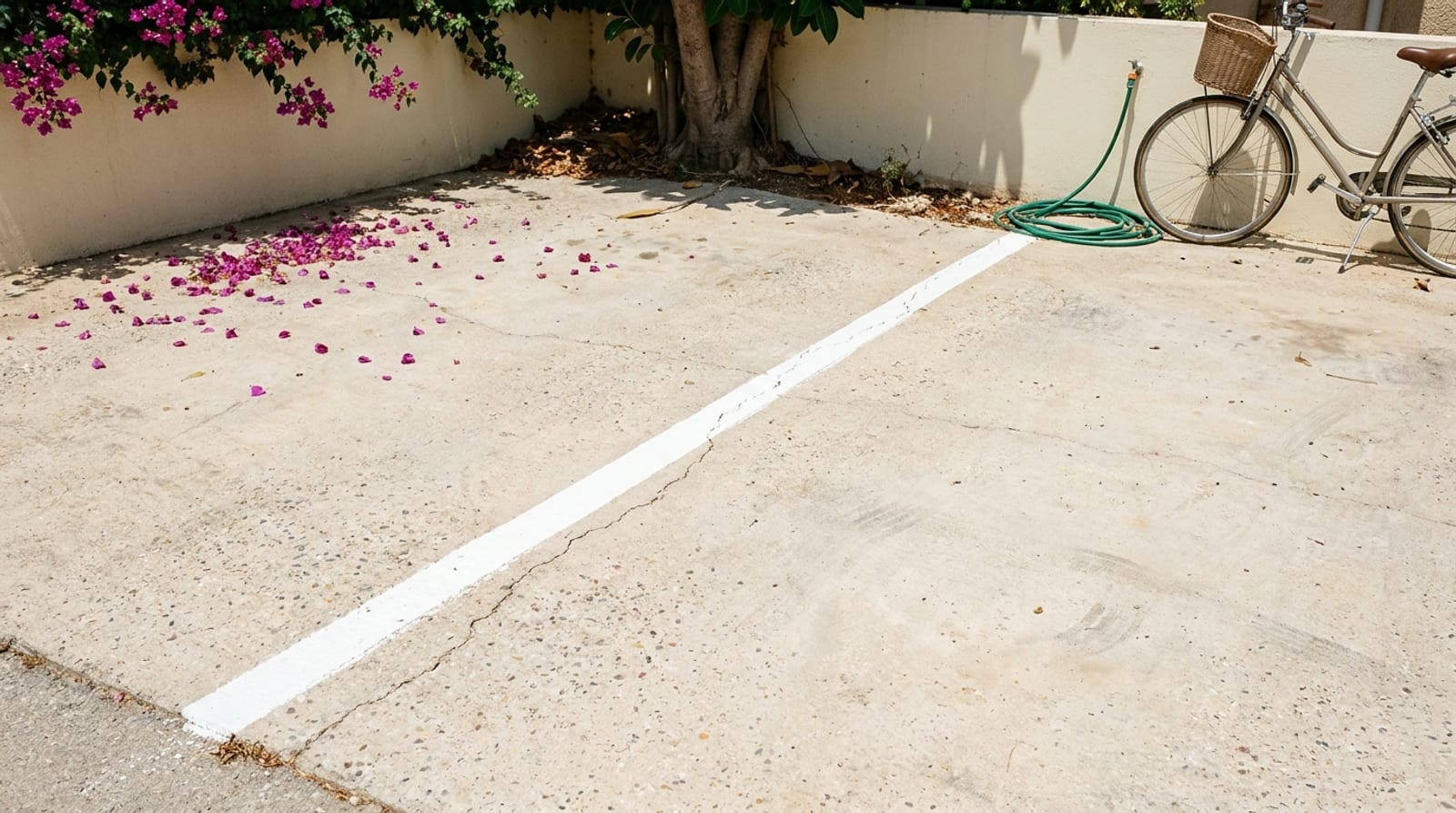
No — a land transaction has no proprietary effect unless it covers a whole unit recognized under the parcelation rules. Sarah owns a dunam and wants to sell Rivka 500 square meters marked on a sketch (say, the northern half) — that deal cannot be registered, and a bank's request to register a mortgage over those 500 square meters will be rejected. But selling an undivided share — a third, a quarter, half of the rights across every point of the land — registers fine. Likewise, spouses own their home in equal undivided shares; you cannot register one as owner of the master bedroom and the other of the kids' room. And an owner of land with a building on it cannot sell the land and the building separately — that, too, is a transaction in a defined part, and land cannot be sold apart from what is permanently attached to it. The root of the rule: the public interest in preventing over-fragmentation of land.
The exceptions we love
- An apartment in a condominium: one land parcel, many owners — parcelation divides it into sub-parcels with attached common property, creating separate whole units. From the condominium order onward, an apartment is a separate object of ownership and transactions.
- Renting a defined part — permitted: a flat-share lease can rent each room separately.
- An easement over a defined part — for example, a specific path across the land used by congregants of the synagogue next door.
- Three-dimensional registration — for example, a subway line running beneath the land.

The above is initial information only and does not constitute legal advice or a substitute for it, and nothing stated above constitutes a recommendation to initiate legal proceedings or to refrain from doing so. Consult an attorney who practices in the field before taking any action. For the avoidance of doubt, responsibility for any consequence of relying on the above rests with the user alone.
A question about this in your own file? Write to us — you will get an answer on the merits, not a brochure.
A preferred source just means you'll see our new articles more often in Top Stories next time you search a topic like this. It's also a nice way to say thanks.
Add as a preferred source on Google (opens in a new tab)
General information — not legal advice.