Under Israeli law, a building designated for preservation is one that a planning body has found to be of historical, national, architectural or archaeological importance. It can be a single building, a group of buildings or just part of one, together with its immediate surroundings. Picture an older apartment building downtown that the city's preservation plan has designated. Once a preservation plan applies to it, it is no longer an ordinary building: you cannot demolish or alter it the way you could any other, and any change that needs a permit can be made only under the preservation plan that governs it.
So can a building like that go through urban renewal at all? It depends on the track, and each track gives a different answer. Under the Shaked Alternative, the single-building track that replaced TAMA 38, a designated building is carved out and left with one route: it is reinforced where it stands, and the building rights are built on another lot. TAMA 38, the national outline plan for earthquake retrofitting, has expired, and even while it was in force its demolish-and-rebuild track did not apply to a designated building. In pinui-binui (evacuate-and-rebuild), there is no reason to demolish it, and the logic is much the same: the building is preserved and reinforced where it stands, and the rights are transferred to another lot. What the apartment owners can gain beyond that depends on the project's feasibility. All of it follows the preservation plan and needs the planning bodies' approval. It all comes down to your building's preservation plan, not a single nationwide rule.
And what if the designated building is not yours, but the one next door? Then this article is for you too. What is allowed in a designated building shapes how the whole complex will look, and that is covered in the section on an older building next to a designated one.
In the building's WhatsApp group it usually sounds different. One neighbor writes, "We're designated for preservation, so there's nothing to talk about." Another says a developer promised him they would take care of it. Both are skipping the same document. Before the details, here is the picture in numbers.
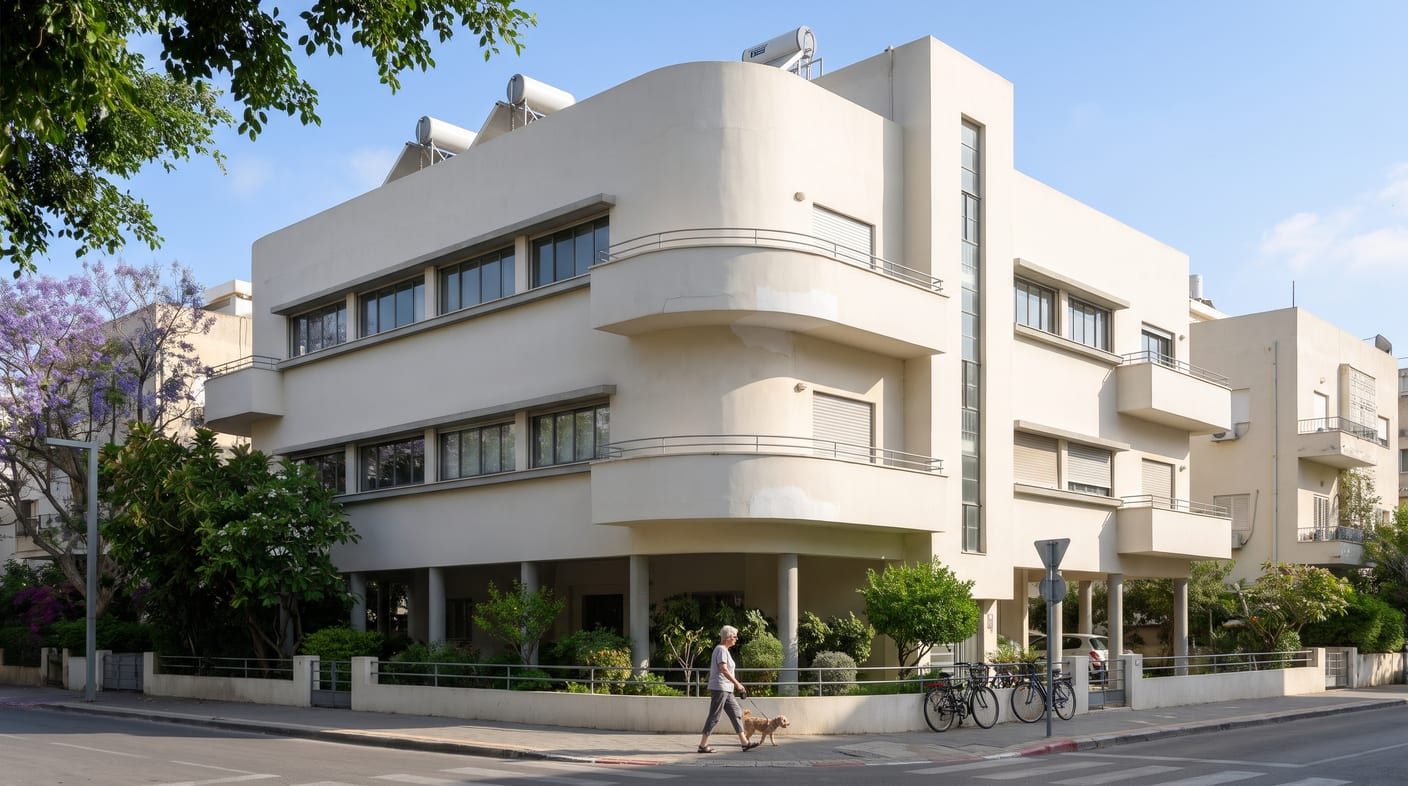
How do you know whether your building is on the preservation list?
Check the records of the municipality and the Planning Administration. The statute requires every local authority to set up a site preservation committee, which draws up a list of the sites worth preserving within its boundaries. Under the statute, the list states why the building merits preservation, how far it may be developed, and who owns it and holds rights in it. The item that matters to you is the middle one: how far it may be developed.
The sources you can open today:
And what if the plan hasn't been approved yet? The designation is already at work. A deposited preservation plan, an approved preservation list, or a notice that a preservation plan is being prepared (a notice under sections 77 and 78 of the Planning and Building Law) is enough to take the building out of the Shaked Alternative, and as early as the preparation stage the committee may impose temporary restrictions on the building. Those restrictions are limited in time. When a preservation plan is deposited, the statute requires personal notice to the owners and occupants.
Bottom line: "not approved yet" does not mean "we're free." Check what is on record for the building today.
What is the difference between regular and strict preservation?
That difference isn't in the statute. It's in the city's preservation plan. The Planning and Building Law recognizes no levels of preservation. It says only that a preservation plan may specify which uses are allowed in the building and what may be added to it. Each city sets the levels for itself.
Here is how it looks in Tel Aviv-Yafo, according to the municipality's explanation of its preservation plan (2650B). In a building under "regular preservation," the additional rights can be used on the building itself, subject to approvals. In a building under "preservation with strict restrictions" it is the reverse. In the municipality's words:
"In these buildings, any added construction is prohibited unless the plan states otherwise." — Tel Aviv-Yafo Municipality, glossary, preservation of buildings and sites (accessed November 12, 2026; unofficial translation)
In exchange, the same plan lets the rights that cannot be used move to another lot. That is true of Tel Aviv-Yafo. In another city, that city's own preservation plan governs, and "regular" and "strict" may mean something else there, or not appear at all.
Bottom line: look up the level of preservation in the plan and on your building's record card. Don't go by what is customary in another city.
Can a designated building go through pinui-binui?
Yes, under the preservation plan, and there is no reason to demolish it. In a pinui-binui complex, the designated building is preserved and reinforced where it stands, and the rights are transferred to another lot. It is the same logic as the Shaked Alternative: the existing structure is preserved, and the rights move elsewhere. Pinui-binui is carried out through a detailed plan. For a designated building, that plan has to fit within the preservation plan or amend it, and that is a decision for the planning body, not for the developer and not for you. The Shaked Alternative's carve-out for designated buildings applies to the Shaked Alternative alone. The statute's starting point is this sentence:
"An owner or occupant of a site designated for preservation who wishes to alter or use the site may do so only under the provisions of the preservation plan." — Planning and Building Law, 5725-1965, Fourth Schedule, section 7(a) (unofficial translation)
What does that mean in practice? As long as the preservation plan is in force and does not allow demolition, a renewal plan can include the building only if it stays where it is. Some renewal plans say outright that the designated building is not demolished and receives an addition based on its documentation file. In a complex like that, the new buildings go up beside it, and yours is preserved and reinforced.
What can apartment owners in a designated building gain? Where the project is feasible, they gain from having their building preserved and reinforced. That can include:
This is a list of what is possible, not a list of entitlements. Preservation is very expensive: reinforcing the building, restoring the facades, the documentation file, and the engineering solutions. So everything on the list, and additional units above all, depends on the project's feasibility and profitability and on what the planning bodies approve.
And where does the new construction go, beside the designated building or on top of it? That depends on the building's preservation terms and on the lot itself:
And under strict preservation? There, as a rule, a tower cannot be built over the building. Construction goes up alongside it, if the lot has room, or the building rights are transferred to another lot.
So why isn't there a tower over every designated building? Because it is complicated and very expensive. Setting a tower on top of a designated building takes engineering solutions such as deep foundations around the old building, without damaging it. That is why projects like these get built mainly where land values are very high.
And who decides? The planning bodies, meaning the local or district committee, depending on the plan. The municipality's preservation committee draws up the list of sites and advises, and it may change the list. None of those bodies is the developer. So a promise along the lines of "we'll get the building off the list" is a promise about someone else's decision.
Bottom line: in pinui-binui there is no reason to demolish the designated building. It is preserved and reinforced, and the rights are transferred. Anything beyond that depends on the project's feasibility, the preservation plan, and the planning bodies. Whatever is agreed goes into the agreement, with a condition in case the plan is not approved.
What does the Shaked Alternative allow in a designated building?
One thing: reinforcing the building where it stands, with the rights that pay for the reinforcement built on another lot. Under Amendment No. 139 to the Planning and Building Law, which created the Shaked Alternative, 2 conditions apply together. The plan does not increase the permitted floor area on the building's own lot, and it sets no provisions that conflict with the preservation. So an offer to add floors to a designated building "under the regular Shaked Alternative" does not square with the statute.
We cover the conditions, caps and timelines of every Shaked Alternative track in a separate guide.
Which tracks are open to a designated building, and which are closed?
| What you want to do | Allowed, prohibited or conditional | Source |
|---|---|---|
| Pinui-binui: a complex that includes a designated building | Conditional. Any change to the building, including an addition or construction above it, is made only under the preservation plan and with the planning body's approval. As long as the plan does not allow demolition, the building stays where it is | Planning and Building Law, 5725-1965, Fourth Schedule |
| Shaked Alternative: added floors on the building itself | Prohibited. Designated buildings are carved out | Planning and Building Law (Amendment No. 139), 5782-2022 |
| Shaked Alternative: reinforcement in place, with the rights on another lot | Conditional. No increase in floor area on your lot, and no conflict with the preservation | Planning and Building Law (Amendment No. 139), 5782-2022 |
| TAMA 38 (expired): demolition and rebuilding | Prohibited. The track did not apply to buildings designated for preservation | TAMA 38, the Planning Administration's consolidated text, December 2016 |
| TAMA 38 (expired): added construction | Conditional. Only if the addition was consistent with the plan governing the designated building | TAMA 38, the Planning Administration's consolidated text, December 2016 |
| Renovation or an alteration that needs a permit | Conditional. Only under the provisions of the preservation plan | Planning and Building Law, 5725-1965, Fourth Schedule |
| An interior change to an apartment | Depends on the plan. Subject to the preservation plan only if the plan says so expressly | Planning and Building Law, 5725-1965, Fourth Schedule |
Where do the building rights go (transfer of development rights)?
To another lot: one inside the complex itself, or one outside it. A transfer of rights is not something the statute grants every designated building. In a pinui-binui complex, the rights can move from the designated building to the complex's new buildings, and sometimes to a lot outside it as well. Either way, it is done through a plan, within what the preservation plan allows and with the planning bodies' approval. The idea itself is not new: TAMA 38, in its Amendment No. 3, already let a planning body approve a plan adding rights on another lot to pay for reinforcement, on cumulative conditions. Among them were an appraiser's opinion weighing the cost of reinforcement against the value of the rights, and both lots lying within the same local authority. How planning and building rights play into the levy is covered on our page on planning and the betterment levy.
Here is how it works in Tel Aviv-Yafo, according to the municipality's page on transferring building rights under preservation plan 2650B (accessed November 12, 2026). Rights that cannot be used in a building under strict preservation move to a "receiving lot." The transfer is made through a separate plan within the local committee's authority, and the main condition is the owners' commitment to carry out the renovation as the preservation department directs. The volume of rights is calculated from the unused rights remaining on the lot, plus incentives. The municipality's page does not address how the proceeds are divided among the apartment owners in a condominium. That is left to the agreement.
3 questions before you sign an agreement that relies on a transfer: Who finds the receiving lot? Who pays for the preservation work itself? And what happens if the plan for the receiving lot is not approved?
Bottom line: the rights can move to the complex's new buildings, or to a lot outside it. What is allowed in your building, and where the rights go, is decided by the plan and the planning bodies.
Your building is old, and the one next to it is designated for preservation. Are you stuck?
Not necessarily. When you look at the complex as a whole, the designated building can be part of the solution. It is easy to assume that a designated building shuts down the whole street. But in pinui-binui it stays where it is, preserved and reinforced, and the rights that cannot be built on it can move to another lot. In a plan that covers both buildings, and if the planning bodies approve it, that other lot can be yours.
What changes when the complex is planned together?
And who gets a complex like that off the ground? The apartment owners, when they organize together: the designated building and the buildings beside it. A complex with a designated building in it is more complicated than an ordinary one. So it is examined as one complex, not building by building.
Bottom line: a designated building on the street does not necessarily shut down renewal for the buildings beside it. Look at the complex as a whole, not at each building separately.
What can you renovate, and what is a documentation file?
Any change that needs a building permit can be made only under the preservation plan. An interior change to an apartment, one that does not touch the exterior, is subject to the plan only if the plan says so expressly. So the answer to "Can I renovate?" is in the provisions of your building's plan.
A documentation file is a term used by municipalities and plans, not by the statute. According to the Tel Aviv-Yafo Municipality, it is a document that records the building, with historical, architectural and engineering information, and serves as the basis for how the building is treated. Some plans make it a condition of any building permit in a designated building and allow additions only in line with its findings. If your plan requires a documentation file, it comes before any conversation about an addition.
Bottom line: before you hire a contractor, read what the preservation plan says about the building's exterior and the apartment's interior.
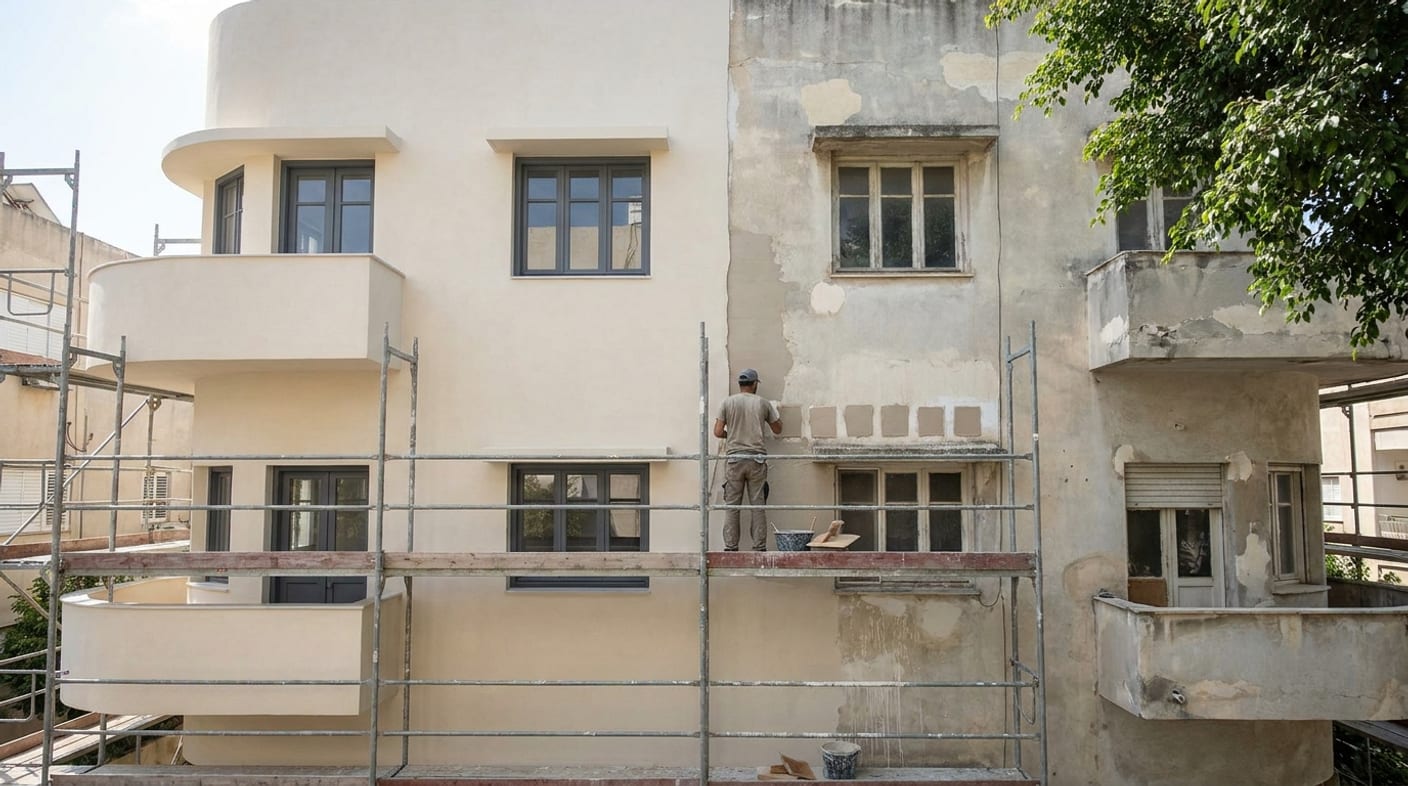
And what if the designation hurt the apartment's value?
The statute recognizes that a preservation plan can give rise to a compensation claim under section 197 of the Planning and Building Law. But the money is not guaranteed. The statute itself anticipates 3 outcomes:
In other words, even a successful claim can lead to a move to remove the designation, and not necessarily to money. There is a filing deadline, and the full conditions are set out in our guide to section 197.
Bottom line: before you file, decide what you want to happen: compensation, or a building with no designation. The claim can lead to either.
4 checks before you sign with a developer, step by step

What to verify before you commit
Your questions, answered
The municipality sent us a demand to carry out maintenance work on the building. Do we have to?
Preservation is also an obligation. If the building is at risk of destruction, or the purpose of the preservation is at risk, the preservation committee may require the owners to carry out work within a period it sets. Where there is a real danger of destruction and the owners have not done the work, the local authority may carry out the essential work itself and charge the owners for the cost, unless it has decided to bear it.
If the work is not done in time and there is concern that the preservation will be defeated, the statute even lets the authority expropriate the site, with the district committee's approval and after the owners have had a chance to be heard. A maintenance demand and an expropriation can both be appealed to a special appeals committee, and its decision can be appealed to the Administrative Affairs Court.
Is a designated building exempt from the betterment levy?
Not as a general rule. What the statute provides is much narrower: if the preservation plan was canceled or amended, no compensation was paid, and the property reverted to its earlier zoning, a person who held the right both when the preservation was approved and when it was canceled pays no betterment levy on account of the cancellation.
One more thing: the statute lets the local committee use betterment levy funds for preservation costs as well. It may, but it does not have to.
A developer is offering us TAMA 38. Is that relevant to a designated building?
First ask under which plan. TAMA 38 has expired: according to the Planning Administration, the final date, even in local authorities that received an extension, was May 18, 2026. So ask the developer to show you the plan it is relying on today.
And even while TAMA 38 was in force, its demolish-and-rebuild track did not apply to buildings designated for preservation, and added construction was allowed only if it was consistent with the plan governing the designated building. The preservation plan comes first here too.
We heard the city is preparing a preservation plan. How will we know if our building is in it?
A preservation plan can come from the local committee, and also from anyone with an interest, such as the local authority or a landowner. As early as the preparation stage, in a notice under sections 77 and 78 of the Planning and Building Law, temporary restrictions can be imposed on the buildings the plan marks, and those restrictions are limited in time.
When the preservation plan is deposited, the statute requires personal notice to the owners and occupants of property within its boundaries. Until then, check the municipality's preservation list and the Planning Administration's website, and don't wait for a letter.
We're about to buy an apartment in a designated building. What should we check first?
The same documents the owner would check. The restrictions apply to whoever holds the building, owner or occupant, so they will apply to you too. Read the preservation plan's provisions: which additions and uses are allowed, and whether an interior change to the apartment is also subject to the plan.
Ask, too, whether the preservation committee has required maintenance work from the owners that has not yet been done. And find out what the preservation list says about how far the building may be developed. That is the entry that determines what can be done with it down the road.
Our building isn't designated, but the one attached to it is. Can we do pinui-binui?
First check what the preservation plan says about your lot: a designation can also cover the building's immediate surroundings. Then check which plans apply to your own lot.
If both buildings come into one complex, the designated building is preserved and reinforced where it stands, and the rights are built on the lots beside it, under the plan and with the planning bodies' approval. So the check starts with both buildings together.
A designated building: a decision that starts with one document
A building designated for preservation is not a building without a future, and it is not a building where anything can be promised either. What is open to it is written in the city's preservation plan, and an owner who has read it knows which developer offer rests on a plan in force and which depends on a decision not yet made. At the Law Office of Noam Gottlib, urban renewal attorneys, we represent apartment owners: we read the plan that applies to the building, check which track the offer comes under, and draft the agreement so that what you receive does not rest on an assumption. We also look beyond the lot line. When a designated building looks like a dead end, we examine it together with the buildings around it and look for a solution for the complex: the building is preserved, and the rights are built beside it, if the planning allows. That is how we work on the harder sites too.
The first step is simple: find the building's entry on the preservation list and read what it says.
Is your building designated for preservation, or is there a designated building in your complex? If you want to know which solution is open to you, send us the address of the building or complex and the city on WhatsApp, and we'll get back to you with two checks: what the preservation plan allows, and what opens up when you look at the complex as a whole.
The designation tells you where the answer is written: in the city's preservation plan. Owners who read it before they sign close with confidence.
A preferred source just means you'll see our new articles more often in Top Stories next time you search a topic like this. It's also a nice way to say thanks.
Add as a preferred source on Google (opens in a new tab)
General information — not legal advice.