Section 197 of Israel's Planning and Building Law lets a property owner claim compensation when an approved plan has harmed the property. A plan (Israelis call it a TABA, the Hebrew acronym for "city building plan") is the document that sets what may be built on each lot: how many stories, for what use, where a road will run. Here is an example. A pinui-binui plan (Israel's evacuate-and-rebuild track) is approved that allows towers on the lot adjoining your building, or a plan is approved that widens the road running alongside it, and your apartment is now worth less than it was before the approval. That is a loss in your apartment's value, and section 197 is how you seek compensation for it from the local planning and building committee.
"Where land located within the plan area or bordering it has been harmed by a plan, other than by expropriation, whoever was the owner of the land or the holder of a right in it on the day the plan took effect is entitled to compensation from the local committee…" — Section 197 of the Planning and Building Law, 5725-1965 (unofficial translation)
So does every drop in your apartment's value entitle you to compensation? No. Section 197 applies only when several conditions are all met, and even then the law denies compensation in some cases. Before you file a claim, check 5 things:
Bottom line: section 197 is a defined track with conditions. If what hurt you was noise, dust, or a building permit rather than a plan, you are probably outside it.
What if the plan approved next to you is a pinui-binui plan? Then there are two questions here, not one. The first is whether you are entitled to compensation, and the 5 checks answer it. The second is whether your building can be renewed too, and that is the subject of the section just before the questions and answers.
Looking for a different section 197? In the Municipalities Ordinance, section 197 deals with a municipality's duty to contract through public bidding and has nothing to do with compensation. The Land Law has no section with that number at all. Anyone looking up the section in connection with a drop in an apartment's value means the Planning and Building Law.
If the section does apply to you, here is the track in 4 numbers.
All 4 numbers come from the Planning and Building Law, 5725-1965, as published and amended in Israel's official gazette. Text checked on November 12, 2026.
Compensation under section 197: which harm can you claim for, and which can't you?
Check 1: a plan, not construction. Section 197 compensates for harm that the plan itself does to the property's value. The statute's words are "harmed by a plan," and a "plan" under the law is one made by the planning bodies: national, district, local, or detailed.
What is left out? Noise, dust, and blocked access during construction are not the grounds this section covers. A building permit issued to your neighbor is not a plan, and neither is any other municipal decision. If that is what hurt you, look at other routes.
What about expropriation? The section applies to harm "other than by expropriation." Expropriation, Israel's counterpart to eminent domain, and the betterment levy are separate proceedings, each with its own rules. We represent property owners on the betterment levy, and the details are on our planning and the betterment levy page.
Bottom line: first ask what lowered your apartment's value. If the answer is an approved plan, go on to the next check.
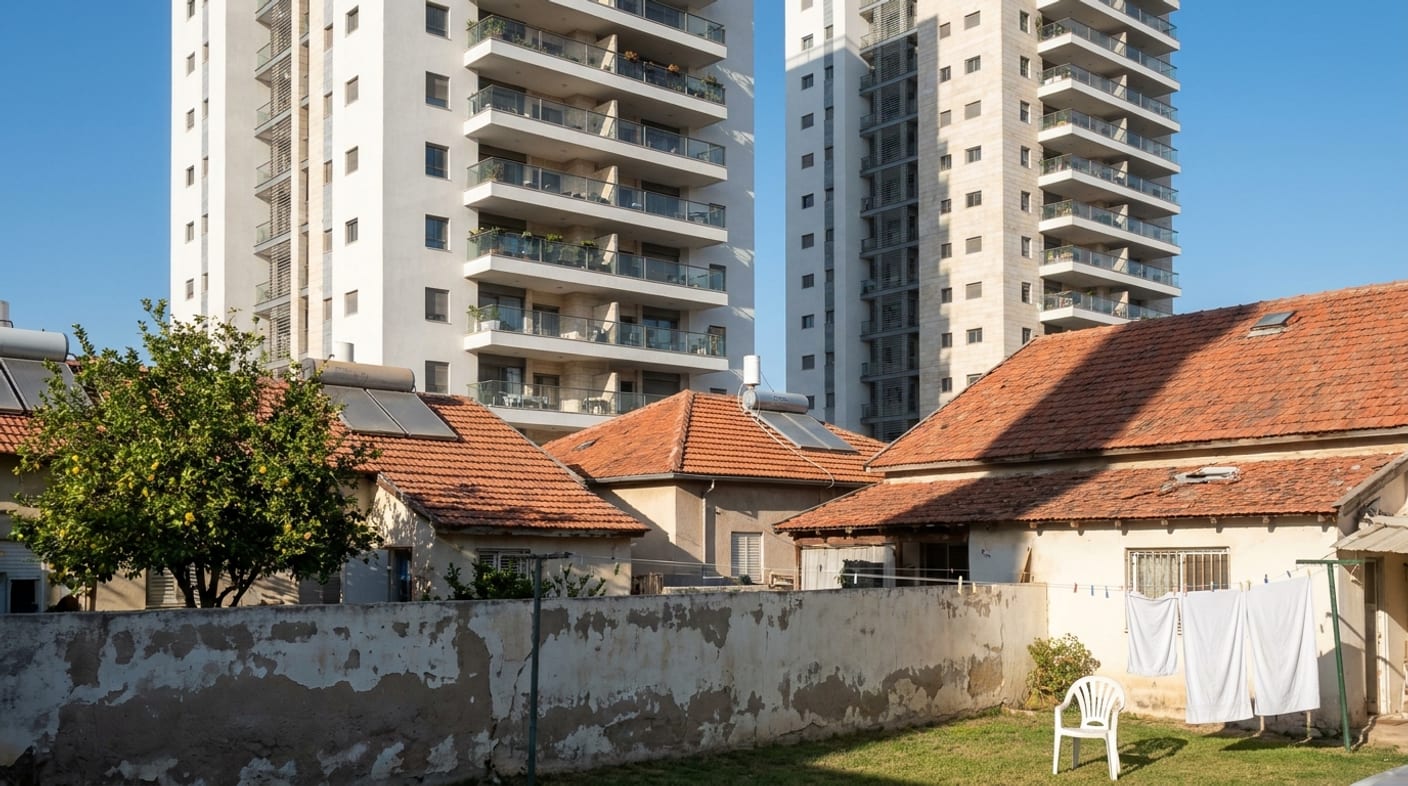
Who can file, and what if the plan is next to your home rather than on it?
Anyone whose property is inside the plan area or borders it, and who held the right in the property on the day the plan took effect. So a neighboring owner can file too, provided the lot borders the plan area.
Check 2: where the property sits. The requirement that the property be inside the plan area or border it entered the law in a 1982 amendment. A property a block or two from the plan boundary falls outside the section's wording, even if its view is blocked.
What counts as "bordering"? The section itself does not define it. When a road or a path separates your lot from the plan boundary, the question is decided on its facts, and you cannot assume the answer in advance.
Check 3: the right was yours. The person entitled is whoever was the owner of the land or the holder of a right in it "on the day the plan took effect." Someone who bought the apartment after the plan took effect is not the person the law is describing.
And whom do you file against? The local planning and building committee. That holds even when the plan is a national one, and even when a developer stands behind it. More on the developer below.
Bottom line: two facts decide this stage. Where the plan boundary runs, and who held the property on the day the plan took effect.
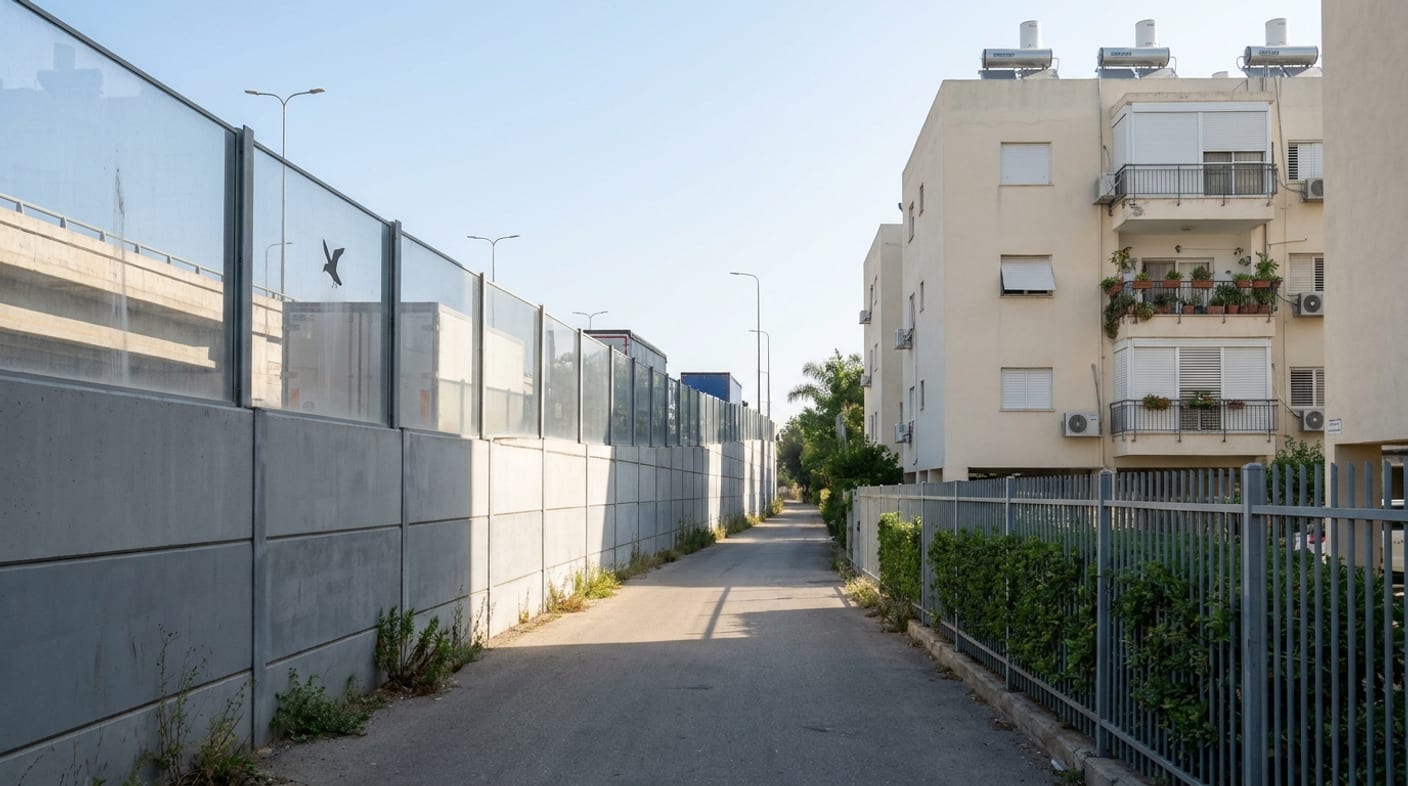
What is the deadline for a section 197 claim, and when does the clock start?
Within 3 years of the day the plan took effect, under the Planning and Building Law, 5725-1965. The clock does not start on the day construction began, or on the day you first felt the harm.
"The claim for compensation shall be filed at the offices of the local committee within three years of the day the plan took effect…" — Section 197 of the Planning and Building Law, 5725-1965, as amended by Amendment No. 43 (1995) (unofficial translation)
Check 4: the deadline. Wait until the towers are standing or the road has been widened and you may find the period has already run out. Years can pass between a plan's approval and the start of construction, and the clock runs the whole time.
When exactly does the count begin? Under section 119 of the Planning and Building Law, a plan takes effect 15 days after notice of its approval is published, in the official gazette or in a newspaper, whichever publication is later. The law adds that the date of publication in the official gazette is "the determining date" for the compensation claim. The gazette publication date always comes before the effective date, so count from the earlier one: the gazette publication date. For national plans and for plans approved under special statutes, check the effective date separately.
What if the period has passed? The law lets the Minister of the Interior extend it, even after it has expired, but only "for special reasons, to be recorded." The extension is at the minister's discretion, and it is not a right. Do not plan around it.
What about the war? The law that extended legal deadlines during the Iron Swords war froze this one too: the days from October 7 to October 31, 2023, do not count toward the 3 years. In the northern-border and Gaza-border communities the law lists, and in the area bordering them, the freeze is longer. If your 3 years included October 2023, check how many days were added.
Bottom line: the deadline is a fact you can calculate. The date to find is the day the plan's approval was published in the official gazette.
How to check for yourself whether you're within the deadline: 4 steps
- 1Find the plan. On the Planning Administration's planning-information site (mavat.iplan.gov.il), search by plan number, or by town and address.
- 2Locate the approval notice. On the plan's page, look for the notice of the plan's approval that was published in the official gazette (in its notices series, Yalkut HaPirsumim), and write down its date. That is not the date of the committee's decision, and it is not the start of construction.
- 3Count 3 years from that date. The law counts from the effective date, 15 days after publication, so if you count from the publication date you will not be late. If time remains, you know how much. If the 3 years included October 2023, also check the Iron Swords deadline freeze.
- 4Open the plan map. The plan map marks the plan's boundary. Check whether your lot is inside it or touches it.
Bottom line: after these 4 steps you know whether your clock is running, and from what day. The last day itself is calculated from the documents, not from memory.

When is there no compensation even though the plan lowered your apartment's value?
When the harm comes from a type of provision on the exhaustive list in section 200 of the Planning and Building Law, it does not exceed what is reasonable, and it would not be just to pay for it. All 3 conditions must be met together. If one is missing, the exemption does not apply.
Check 5: the exceptions. The statutory list has 11 types of provisions. Among them: a change in the conditions of land use in an area, the spacing between buildings, the height and shape of buildings, limits on how buildings may be used, and a requirement to install parking or a shelter. The height of buildings is one of the types on the list. So when a plan that allows towers on the adjoining lot has cut your apartment's value, there are 3 things to check: whether the harm comes from a provision on the list, whether it exceeds what is reasonable, and whether it is just to pay compensation for it.
"…provided that the harm does not exceed what is reasonable in the circumstances and it is not just to pay compensation to the injured party" — Section 200(a) of the Planning and Building Law, 5725-1965 (unofficial translation)
What counts as reasonable? The law names no percentage and no amount. It sets a test of "the circumstances," so even a provision on the list does not rule out compensation when the harm goes beyond what is reasonable. The figures that circulate online as a "threshold" are not written in the law.
Two more exceptions, briefly. First, added by Amendment No. 149: a plan whose sole purpose is to build a safe room (mamad) or a room with protective upgrades in an existing building, and that was deposited for public review on or after November 30, 2023 (or a national outline plan approved from that date on), is not treated as a harmful plan, subject to the carve-out in the law, and no reasonableness test applies here. Second: no compensation is paid for a building erected, or anything else done, within the plan area after notice of the plan's deposit was published in the official gazette. If you built or improved after the deposit, you will not be compensated for what you built.
Bottom line: real harm to value is not enough on its own. Also check what type of provision caused the harm, and what was built on the property after the deposit.
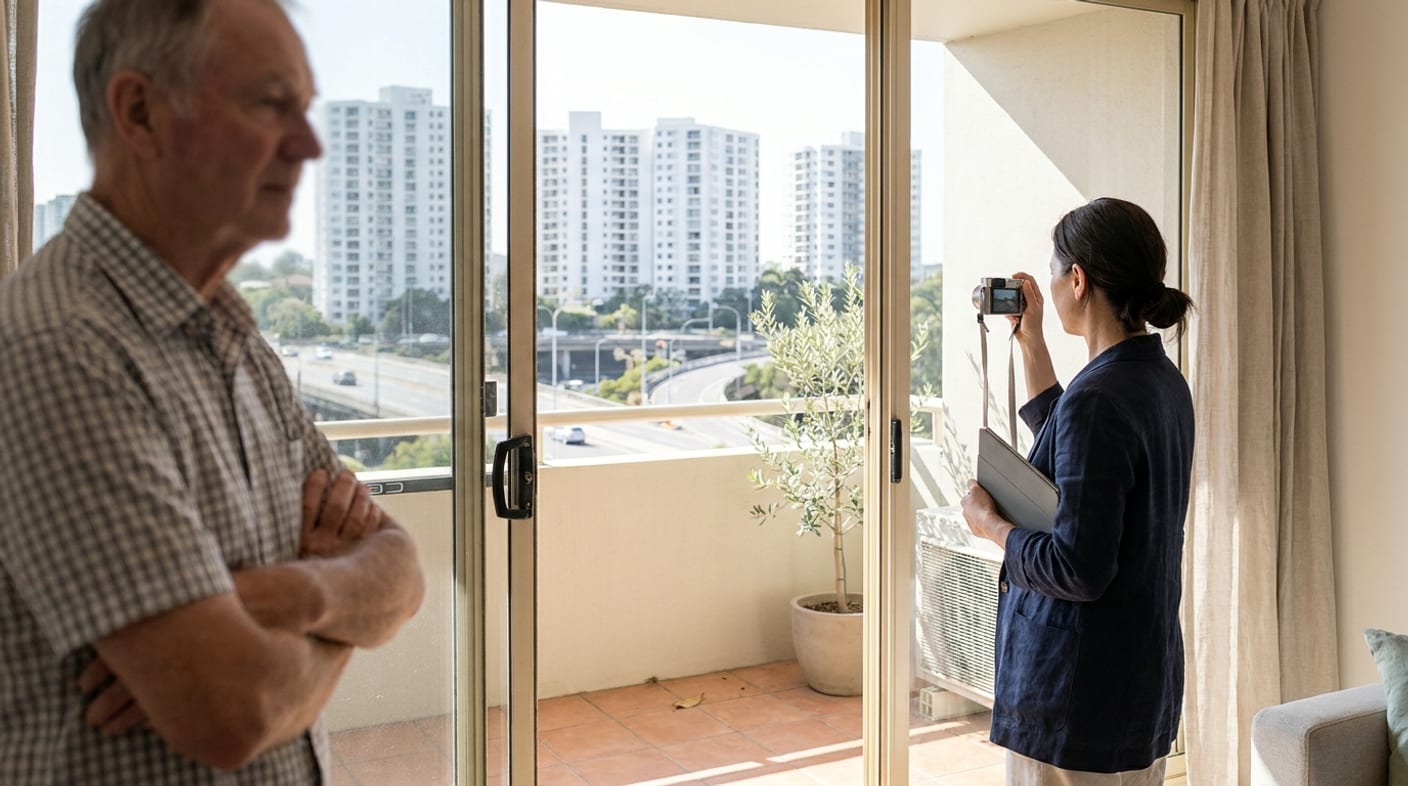
What is section 197A, and why is the developer sometimes sitting across from you?
Section 197A of the Planning and Building Law, added in 2017 by Amendment No. 115, lets a planning body condition the deposit or approval of a plan on an indemnity agreement, in full or in part, against claims under section 197. Whoever provided the indemnity agreement will bear the payment, in whole or in part, if the claim succeeds. When that is the plan's developer, the developer is who you will meet in the proceeding.
What does that change for the property owner? Not where the claim goes: you file with the local planning committee, and it is the committee that owes the compensation. What changes is who sits across from you. The committee notifies whoever may have to bear the payment, and that party joins the proceeding. The law calls them "the respondent." So you do not go to the developer instead of the committee, and you should not be surprised when the developer opposes the claim.
And when the plan is a pinui-binui project on the adjoining lot? If the planning body made the plan conditional on an indemnity agreement, and the party that provided it is the developer of the project next door, that developer will be a party to the proceeding, across the table from you. One more thing is worth checking, without holding up the deadline check: the area where you are weighing a claim is one that urban renewal has already reached, and your building may be able to join it.
And under TAMA 38? The TAMA's provisions, in the consolidated text the Planning Administration published in December 2016, authorized the local planning committee to require a written commitment from the permit applicant to indemnify it against claims under section 197. That is all the provision says. Whether a neighbor of such a project is entitled to compensation, and when that neighbor's deadline starts to run, are questions decided case by case.
Bottom line: the indemnity agreement determines who pays in the end. It does not replace the local planning committee as the place where the claim is filed.
What happens after you file, and what do you do if the committee says no?
Under section 198 of the Planning and Building Law, the local planning committee has to decide within 90 days whether to accept the claim or deny it and, if it accepts, what amount it offers. A denial, in full or in part, is appealed to the Appeals Committee for Compensation and Betterment Levy within 45 days of the day the decision was served on you.
| Stage | Who decides | Time frame | Source |
|---|---|---|---|
| Filing the claim | Filed at the offices of the local planning committee | 3 years from the day the plan took effect | Section 197 of the Planning and Building Law, 5725-1965 |
| Decision on the claim | The local planning committee, after notice to the respondent | 90 days from filing | Planning and Building Law (Amendment No. 43), 5755-1995 |
| Appeal of a denial, in full or in part | The Appeals Committee for Compensation and Betterment Levy | 45 days from service of the decision | Planning and Building Law (Amendment No. 84), 5768-2008 |
| Deciding appraiser, on the amount only | An appraiser appointed by the chair of the Council of Real Estate Appraisers, only with the consent of the committee, the claimant, and the respondent | Request within 45 days | Planning and Building Law (Amendment No. 84), 5768-2008 |
| Appeal of the appeals committee's decision | The Administrative Affairs Court | The deadline is not set in this provision itself. Check it separately | Planning and Building Law (Amendment No. 84), 5768-2008 |
What about a deciding appraiser? In a section 197 claim, a deciding appraiser is available only when the local planning committee has recognized the entitlement and disputes the amount, and only when the committee, the claimant, and the respondent all agree to go to one. The appraiser decides the amount only. When the claim is denied outright, there is no deciding appraiser. There is an appeal.
And who is the "advisory appraiser"? In an appeal of a denial, the appeals committee may ask that an appraiser be appointed from the roster of deciding appraisers, and that appraiser submits a written opinion to it. The decision remains the appeals committee's, after the parties have argued the opinion.
What if the local planning committee does not decide within the 90 days? This provision itself does not say what happens then. So do not assume that silence means acceptance, or that it means denial. The appeal deadline, too, can be extended only "for special reasons, to be recorded," by decision of the appeals committee's chair.
Bottom line: the default after a denial is an appeal within 45 days. A deciding appraiser is a route by agreement, not a right of the claimant.

What should you gather before you decide whether to file?
A plan that harms your property is not always the last word in planning. Sometimes the right question is whether the plan can be changed, and we cover that in our article on changing a zoning plan in Israel.
Pinui-binui was approved next to your building. File a claim, or renew your building too?
You can look into both, and one does not replace the other. A section 197 claim is about what the plan took away from your apartment's value. Urban renewal is about what your building could become. In an older building, the second question deserves a look just as much as the first.
Why now? A pinui-binui plan on the adjoining lot tells you that renewal has already reached your area: there is approved planning, and someone is moving it forward. An older building standing next to a complex like that does not have to stay out of the picture.
Look at the area, not just the building. One building on its own cannot always carry a project. Several neighboring buildings together already make a complex, and a complex opens options a single building does not. Here are 4 directions to check:
Each of these directions depends on the planning that applies to the area, on feasibility, and on the planning bodies' approval. So you start with a check, not an assumption.
And what about the claim? It does not go away, and its deadline does not stop either. The 3 years keep running while the building is being looked at, so find the gazette publication date in any case. Whether to file remains your decision.
How do you start? In our building feasibility check, you answer 5 questions and get a first indication of where your building stands. It is a general indication, not an opinion. And on the basic question, why urban renewal is worth it for apartment owners, we have written separately.
Bottom line: a claim is about what was taken away. Urban renewal looks at what your building could become, and you can look into both at the same time.
Your questions, answered
I bought the apartment after the plan was already approved. Can I file a claim?
Under the section's wording, the person entitled is whoever was the owner of the land or the holder of a right in it "on the day the plan took effect."
So you compare two dates: the day the plan took effect, and the day you acquired the right in the property.
The plan was approved more than 3 years ago. Is it too late to file?
The statutory deadline is 3 years from the day the plan took effect. After that you can ask for an extension, even once the period has passed, but the law allows one only "for special reasons, to be recorded," and it is at the discretion of the Minister of the Interior. It is not a right.
Before you give up, check one more thing: if the 3 years included October 2023, the frozen days under the Iron Swords law (October 7 to October 31, 2023, and longer in the communities the law lists) do not count toward them.
How much compensation do you get for a drop in your apartment's value?
The law names no amount and no percentage. It sets who is entitled, from whom, by when, and when there is no compensation despite the harm. The amount is set in each claim on its own facts: the local planning committee decides whether to accept the claim and what amount it offers, and that decision can be appealed.
So there is no "typical" number here. A number like that, without the plan and without your property, tells you nothing.
The developer provided an indemnity agreement under section 197A. Should I file against the developer directly?
No. The claim is filed with the local planning committee, and under the section it is the committee that owes the compensation. The indemnity agreement governs the relationship between the developer and the committee: who bears the payment if the claim succeeds.
For you, it means the developer will be a party to the proceeding, as the "respondent," and may also appeal the committee's decision. The claim still goes to the local planning committee.
The committee recognized the harm but offered less than we claimed. Do we go to a deciding appraiser?
Only if everyone agrees. When the committee decides that compensation is due in an amount different from the one claimed, the committee, the claimant, and the respondent may jointly ask the chair of the Council of Real Estate Appraisers, within 45 days, to appoint a deciding appraiser, who will decide the dispute over the amount.
Without the agreement of all three, the route is an appeal to the Appeals Committee for Compensation and Betterment Levy, within 45 days of the day the decision was served on you.
Pinui-binui was approved for the building next to ours. Can we file a claim under section 197?
A pinui-binui plan approved as a detailed plan is examined like any other plan, with the same 5 checks: your property is inside the plan area or borders it, the right was yours on the day the plan took effect, the claim is filed within 3 years, and the harm is not of a kind the law exempts from compensation. The height of buildings is one of the types of provisions on the list in section 200. So you also check whether the harm exceeds what is reasonable, and whether it is just to pay for it.
While you are at it, check one more question: whether your building can be renewed too, on its own or as part of the complex.
5 checks on the claim, and one on the building
A section 197 claim starts with documents: the plan, the plan map, the gazette publication date, and the property's registration. You can start the 5 checks yourself, in the order the article sets out. At the Law Office of Noam Gottlib, urban renewal attorneys, we represent apartment owners in renewal projects, and we look into the second question: whether your building can be renewed, and how. When a complex is being renewed next to an older building, we look beyond the lot line as well: we check whether the building can join the complex next door, combine with the buildings beside it, or be renewed on its own. That is how we work on the harder sites too, including complexes that contain a building designated for preservation.
What do you get from us at the first stage? Send us the building's address and the city, and we'll get back to you with two checks: what the planning in the area allows for your building, and whether it has a path to renewal, on its own or as part of a complex.
Was a plan approved next to your building, and do you want to know whether it can be renewed too? Message us on WhatsApp with the building's address and the city.
Section 197 has conditions and a deadline, and you can check both today. Owners who check, at the same time, what their building could become close with confidence.
A preferred source just means you'll see our new articles more often in Top Stories next time you search a topic like this. It's also a nice way to say thanks.
Add as a preferred source on Google (opens in a new tab)
General information — not legal advice.