Pinui-binui, Israel's evacuate-and-rebuild track, is a deal in which the owners of an old building hand it over to a developer, the developer demolishes it and builds a new, larger building in its place, and every owner receives a new apartment in the new building. The road there: signing an agreement with the developer, approval of a plan, a building permit, a move to a rental the developer pays for during construction, and at the end, keys. Say you signed in 2024, the plan is on its way to approval, and life did not wait: the family grew, or you are moving to another city, and you need to sell now. Your apartment is no longer just a two-bedroom on the second floor. It is also an agreement, and the agreement is being sold too.
So can you sell? Yes. Signing a pinui-binui agreement does not lock you in. But three things decide whether the sale is simple or complicated: what your agreement with the developer says about selling and transferring; whether the Land Registry (Tabu) extract shows a caution note in the developer's favor, the Israeli registry's protective notation that says you are committed to it; and whether, in the eyes of the Israel Tax Authority, the apartment has already been "sold" to the developer, or not yet. The third is the least known, and it is the one that moves the tax and the price.
What am I actually selling: an apartment, or an agreement?
Both, and the law treats them differently. A pinui-binui agreement gives you rights against the developer: a new apartment, rent during construction, guarantees. And it puts obligations on you: to hand over the apartment, to vacate on time, to sign what is required. The Assignment of Obligations Law treats those two sides differently. A contractual right, including one that depends on a condition or will only crystallize in the future, can be transferred without the other side's consent, unless the agreement limits it. An obligation, by contrast, passes to the buyer only under an agreement the developer has consented to. Without that consent, the obligation stays with you even after you have sold.
"A debtor's obligation may be assigned, in whole or in part, by an agreement between the debtor and the assignee to which the creditor has consented…" — Assignment of Obligations Law, 5729-1969 (unofficial translation)
And what does the buyer get? Exactly what you had, no more and no less. The statute provides that a transfer changes neither the obligation nor its terms, and the buyer steps in with every defense you had. The same new apartment, the same deadlines, the same guarantees, the same rent during construction. Anyone who promises a buyer "you'll get a bigger apartment because you're coming in now" is selling something that does not exist.
So the first question is what your agreement says. Most agreements address a sale expressly: a clause requiring the developer's consent, a mechanism in which the buyer signs a joinder, sometimes conditions on who may come in. The statute does not regulate when the developer may refuse and when it may not. That is set in the agreement, and whatever the agreement is silent on is judged under ordinary contract law.
Bottom line: your rights pass to the buyer; the obligations pass only with the developer. The buyer steps into your shoes, in exactly your size.

If the law doesn't require it, why do you need the developer in practice?
Because of the extract. A caution note is a notation in the land register stating that the owner has committed in writing to a transaction in the property. In urban renewal deals, a note like that is usually registered in the developer's favor, on the strength of the owners' commitment. The Land Registry has a dedicated filing track for it. And as long as the note is registered and has not been removed, the Land Registrar will not register a transaction that contradicts it without the developer's consent or a court order.
What does that mean for your sale? That even if you transferred the rights to the buyer, the buyer is not registered as owner until the developer signs a consent, or a document that formalizes the buyer's entry into the agreement. Whether a sale in which the buyer joins the agreement is a "contradicting transaction" at all is a question of how the note and the agreement are worded. In practice, clearing it with the developer before you list the apartment spares you a surprise at the Registrar's desk. And some agreements add a layer: a note on the extract making any transaction in the apartment conditional on a third party's consent, on the strength of your written commitment. If there is one, the buyer sees it on the extract before ever speaking to you.
Bottom line: the law does not require the developer's consent to a sale. The extract, in practice, does. Check it before you list.
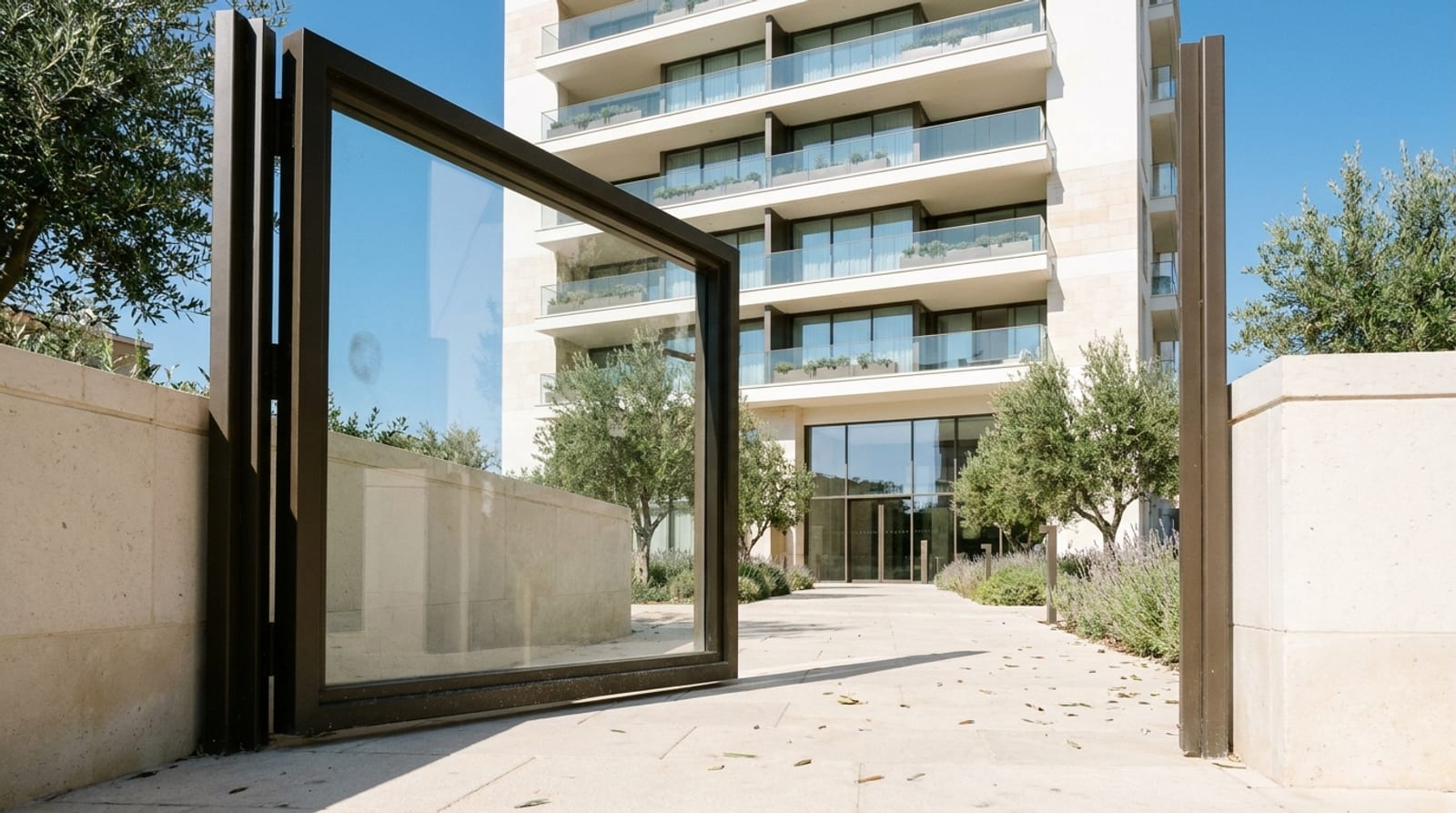
The tax: it all turns on whether the "date of sale" to the developer has arrived
This is the part that moves the tax. When you sell to a developer under an agreement with a condition precedent (plan approval, a permit, a signing majority), the Real Estate Taxation Law does not always treat the sale to the developer as having happened on the day you signed. In a declared complex, or one with a preliminary-approval request filed (or filed shortly after), the "date of sale" to the developer is the earlier of the day the condition was met and the day the developer began construction in the building, provided the developer notifies the tax office within 30 days. Until then, as far as the Tax Authority is concerned, the apartment is still yours. In a building not yet declared and without such a request, the date of sale is tested under the statute's ordinary rules, case by case.
Selling before the date of sale to the developer? Then you are selling an ordinary residential apartment, and the tax is the ordinary tax on an apartment sale. If it is your only apartment, you have held it for at least 18 months since it became a residential apartment, and you have not sold another apartment under this exemption in the 18 months before, the only-apartment exemption is on the table, up to a ceiling of NIS 5,008,000 in 2026. Whatever is above the ceiling is taxed proportionally. And who sells to the developer? The buyer. The pinui-binui exemption goes to whoever sells the developer all their rights in a residential unit in exchange for one replacement apartment, and the statute does not condition it on a minimum holding period. The condition is on the apartment: that it was used as a residence for at least 2 consecutive years shortly before the complex was declared. An apartment declared as an investment, or questions about an exemption used in the past, are checked against the facts of the case.
Selling after the date of sale to the developer? Then for tax purposes the old apartment has already been sold to the developer, and what you hold is a right to a replacement apartment that has not been built yet. Here the statute closed the question in 2021: for anyone who sold to the developer under the pinui-binui exemption track, the right to the replacement apartment they received is treated as a residential apartment, for purchase tax and for appreciation tax alike. That is a classification, not an exemption: whether the sale of that right is exempt is tested under the ordinary exemption conditions. And one more figure the buyer will want: the acquisition date and acquisition value of the replacement apartment are those of the old apartment.
"…where a residential unit was sold in a sale under section 49KB, a right to a replacement residential unit received in exchange for the residential unit sold shall be treated as a residential apartment…" — Real Estate Taxation (Appreciation and Purchase) Law, 5723-1963 (unofficial translation)
Bottom line: before the date of sale to the developer, you are selling an apartment. After it, you are selling a right to one. Two different tax tracks, and you check the date before you name a price.
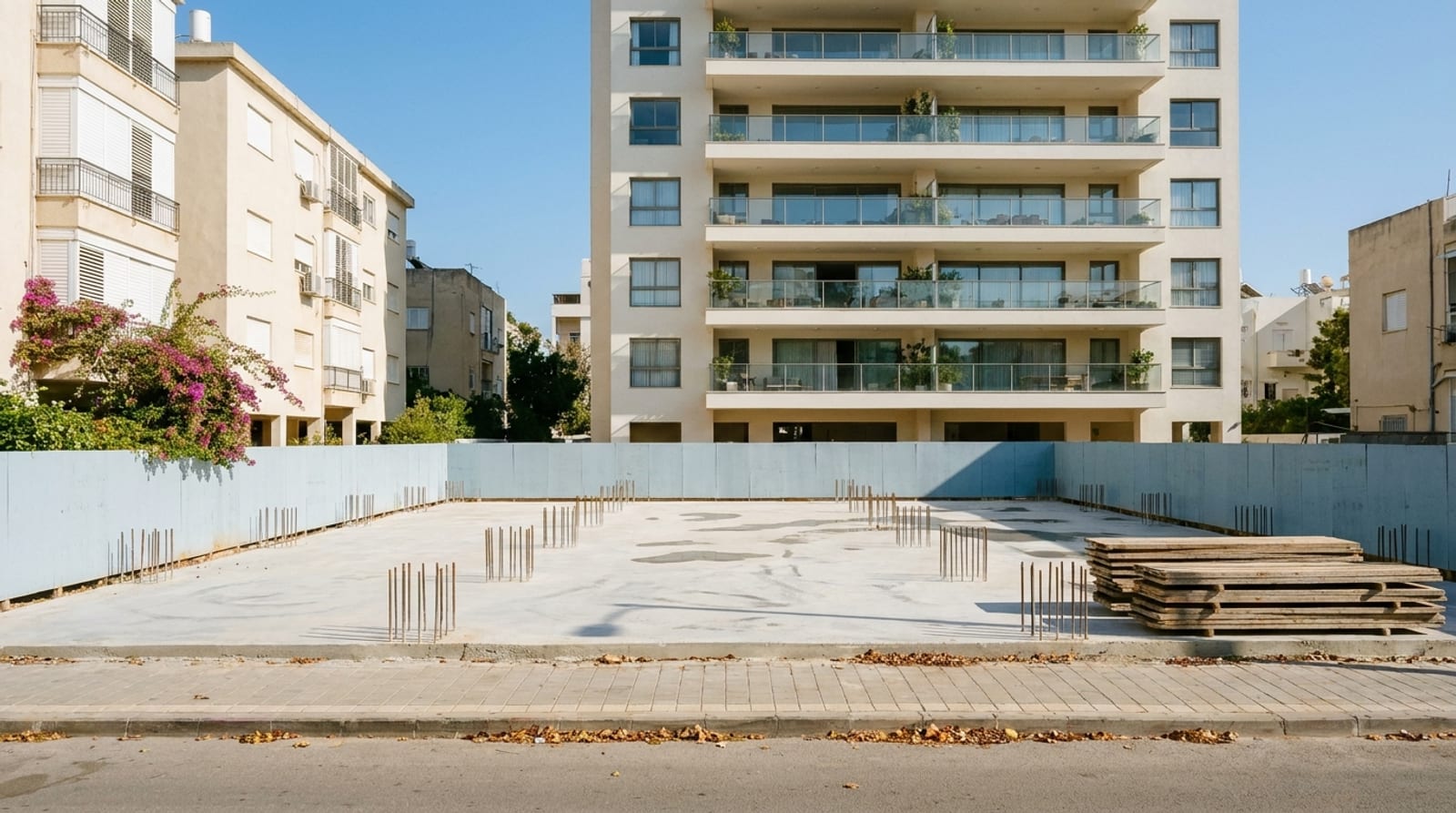
What does not pass to the buyer, even when everything is signed?
Two things are fixed on the day of the first deal in the building, and they do not move. The first is senior status. Under the Pinui-Binui Law, a "senior" is an owner who had turned 70 on the day the first deal in the building was signed, and had lived in an apartment in that building for at least 2 years on that date. It follows that someone who bought after that day was not an owner in the building on that date, and does not meet the condition, even at 80. That is an inference from the definition, not an express provision of the statute, but it is a direct one. And in tax law the definition is similar and stricter: age 70, or someone who needs long-term nursing care, and residence in the apartment both on the day of the first agreement in the building and on the day of their own signing. The benefits for seniors in pinui-binui belong to whoever met the conditions on that day.
The second is the developer's clock. The Pinui-Binui Law gives the owners leverage over a developer that is not moving: if within 2 years of the first deal in the building the developer has not signed half the owners, or within 4 years has not signed three-fifths, or has not filed a detailed plan within 4.5 years (in some declared complexes the plan condition does not apply), a majority of the owners may resolve at a meeting that anyone who signed may cancel their deal, after notice to the developer. And the developer is entitled to a payment under regulations. In a declared complex of 120+ units, every period runs a year longer. What matters to the buyer: this clock started at the first deal in the building, and it does not reset when the apartment changes hands. A buyer who comes into a building where the first deal was signed 3 years ago comes into a clock that is already running.
Bottom line: the buyer gets the agreement, not your history. Senior status and the clock against the developer were fixed on day one, and they stay there.

What will the buyer check on your end, and what should you have ready?
A serious buyer will ask to see four things before talking price. The pinui-binui deal itself: the statute requires it to include the principal terms, the outside dates for plan approval, for the permit and for delivery of the new apartment, details of who will build, and the developer's commitment to post guarantees for the owner; and a power of attorney is attached to the agreement. The current extract, with the caution note. The developer's consent to the sale, or at least the clause in the agreement that governs it. And the stage of the project: when the first deal in the building was signed, how many have signed, where the plan stands. No complete copy? The statute requires the developer to hand you the deal documents, or a certified copy, after signing. You ask.
And what about the buyer's tax? The buyer pays purchase tax at the ordinary brackets. The purchase-tax exemption on the replacement apartment belongs to whoever sells to the developer, meaning the buyer, when their turn comes. And if you have already sold to the developer under the pinui-binui exemption track, the buyer is acquiring from you a right the statute classifies as a residential apartment. What matters to you: a buyer who understands this prices correctly, and does not knock money off the price over a fear with no basis.
Bottom line: an orderly file, four documents and one date, is what separates a buyer bargaining on fear from a buyer bargaining on value.
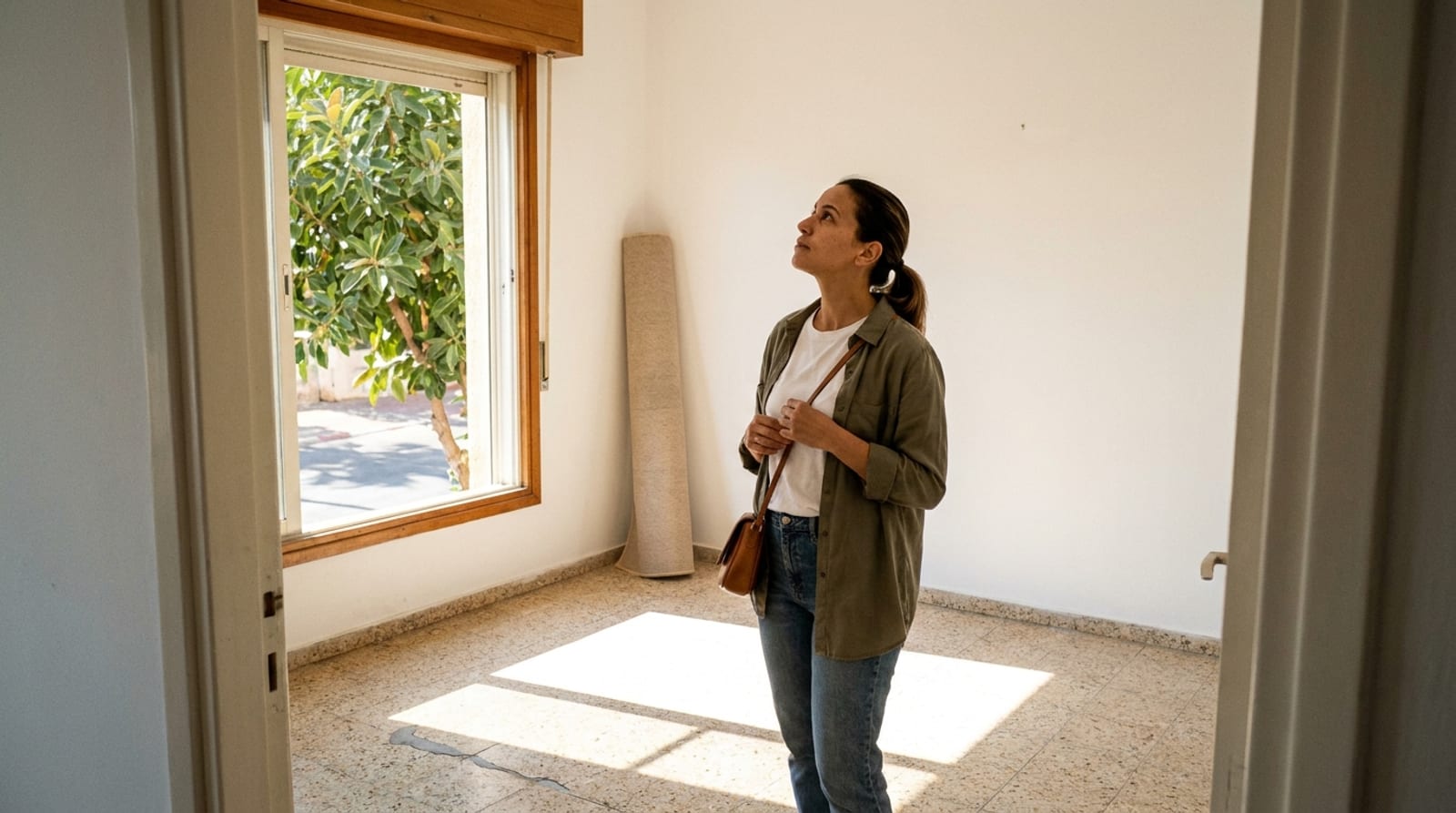
Before and after the date of sale to the developer: the difference, side by side
| Before the date of sale to the developer | After the date of sale to the developer | |
|---|---|---|
| What you are selling | A residential apartment, with the agreement attached to it | A right to a replacement apartment not yet built |
| Your appreciation tax | Apartment-sale rules: the only-apartment exemption if you meet the conditions | Apartment-sale rules: the right is classified as a residential apartment once sold to the developer on the exemption track |
| Who sells to the developer under the pinui-binui exemption | The buyer, if the apartment was used as a residence for 2 years before the declaration | You, in a sale already made |
| The developer's place | Consent to the transfer of the obligations; the caution note on the extract | The same, plus registering the replacement apartment in the buyer's name at the end |
| Declaration to the Real Estate Taxation Office | Within 30 days of the date of sale | Within 30 days of the date of sale |
Want to sell? 6 steps before you list the apartment
- 1Pull out the deal documents. The agreement, the annexes, the power of attorney. No complete copy? The developer must provide one.
- 2Read the sale-and-transfer clause. Whether the developer's consent is required, how you request it, and what the buyer signs.
- 3Order a current Land Registry extract. A caution note in the developer's favor, a note making any transaction conditional on a third party's consent, a mortgage.
- 4Find out whether the date of sale to the developer has arrived. Was the condition precedent met? Has construction begun? Was the complex declared? That sets the tax track, and the price.
- 5Write to the developer before you list. Consent to the transfer of the obligations, and a joinder for the buyer to sign.
- 6After signing with the buyer: a declaration to the Real Estate Taxation Office within 30 days.

What to verify before you name a price
Your questions, answered
I asked the developer to approve the sale and it isn't answering, or it refuses. Now what?
First, read what your agreement says. The statute does not set when the developer may refuse a transfer and when it may not. That is set in the transfer clause you signed. Some agreements say consent will not be withheld without reasonable grounds, some set up a joinder mechanism, and some are silent. Whatever the agreement is silent on is judged under ordinary contract law.
And what does not change: without the developer's consent, your obligations to it stay with you, and as long as the caution note in its favor is registered, the buyer is not registered without its consent or a court order. So the request to the developer goes in writing, citing the relevant clause of the agreement, and before you sign with the buyer.
My buyer is 72 and asks whether he will be a "senior" under the law. What do I tell him?
Under the Pinui-Binui Law, a "senior" is someone who had turned 70 on the day the first deal in the building was signed and had lived in an apartment in that building for at least 2 years on that date. Someone who bought after that day was not an owner in the building on the date the statute looks at, and so does not meet the condition. That is an inference from the definition, not an express provision, but it leaves little room for interpretation.
In tax law the definition is stricter still: age 70 (or someone who needs long-term nursing care), and residence in the apartment both on the day of the first agreement in the building and on the day of your signing. So a buyer who prices in seniors' benefits is pricing something that will not pass to him, and he had better hear it from you.
Instead of selling, I'll give the apartment to my son. Does that have consequences?
Yes, and since 2023 they are written into the statute. A tax-exempt transfer of the apartment to a relative during the "project period," which starts 24 months before the signing of the agreement with the developer and runs until the date of sale to the developer, means you and the relative are treated as a single seller for those units. In plain terms: the transfer does not create an additional seller with a separate entitlement.
What that means in numbers in your case depends on how many apartments you own in the complex and on what has already been used. You check that before the transfer, not after.
The apartment is rented out and I never lived in it. The buyer will ask whether he gets an exemption when he sells to the developer. What do I say?
The exemption on a sale to the developer requires the apartment to be a "residential unit": an apartment used as a residence for at least 2 consecutive years shortly before the complex was declared. The condition is on the apartment and its use, not on who owns it. An apartment rented out as a residence is an apartment used as a residence; an apartment that stood empty or was used for a business is a different question.
An apartment that was declared at the time as an investment, and any question of an exemption used in the past, are checked against the facts of the case. The honest answer to the buyer is "here are the documents, check," not "you're sure to get the exemption."
The buyer asks: if the developer stalls, can I cancel the deal? What do I tell him?
That cancellation is a mechanism of the building, not of one apartment. The Pinui-Binui Law lets a majority of the owners resolve at a meeting that anyone who signed may cancel their deal, if the developer has not signed half the owners within 2 years of the first deal in the building, or three-fifths within 4 years, or has not filed a detailed plan within 4.5 years. In a declared complex of 120 units or more, the periods run a year longer. After the resolution, each signer may cancel by notice to the developer, and the developer is entitled to a payment under regulations.
And two things the buyer needs to hear from you straight: the clock runs from the first deal in the building, not from his purchase. And the resolution belongs to the majority at a meeting. One buyer does not trigger it alone.
Want to sell an apartment in a building going into pinui-binui? Send us the transfer clause from your agreement and a current extract on WhatsApp, and we will tell you which track you are on: an apartment, or a right to one, and what you need from the developer.
Your apartment is also an agreement, and the agreement sells too
A sale in a building going into pinui-binui is an ordinary sale with three extra questions: what the agreement allows, what the extract blocks, and which side of the date of sale to the developer you are standing on. Whoever answers them before listing sells an apartment. Whoever discovers them after signing sells a problem. At the Law Office of Noam Gottlib, urban renewal attorneys, we represent apartment owners in urban renewal and in resale deals: we settle the buyer's entry into the agreement with the developer, draft the sale agreement so the developer agreement passes to the buyer together with the apartment, and fix the tax track before a price is named, so the declaration to the Real Estate Taxation Office is filed right. The stage before all of this, how many square meters you get in pinui-binui and what to do when the developer wants to cut, and what surrounds it, the caution note in a real estate deal, the types of guarantees for apartment owners, seniors' rights in urban renewal and who pays the rent during construction, are covered in our guides.
Need to sell now? Send us the agreement and the extract. We will tell you what you are selling, and what you need from the developer.
An apartment in pinui-binui is not locked. It simply sells together with its agreement, and whoever knows which side of the date of sale they are standing on will close with confidence.
Sources: the Assignment of Obligations Law, 5729-1969 · the Land Law, 5729-1969 · the Pinui-Binui Law (Encouragement of Evacuation-Reconstruction Projects), 5766-2006 · the Real Estate Taxation (Appreciation and Purchase) Law, 5723-1963, including the freeze provision for tax years 2025–2027 · the Ministry of Justice, Land Registry and Settlement of Rights (caution-note registration service). This article is general information, not legal advice; every agreement and extract is read on its own wording and circumstances.
A preferred source just means you'll see our new articles more often in Top Stories next time you search a topic like this. It's also a nice way to say thanks.
Add as a preferred source on Google (opens in a new tab)
General information — not legal advice.