Cet article est publié en anglais. Une question à son sujet ? Écrivez-nous sur WhatsApp.
Why did the neighbor sell to a developer — while you got a letter from the ILA?
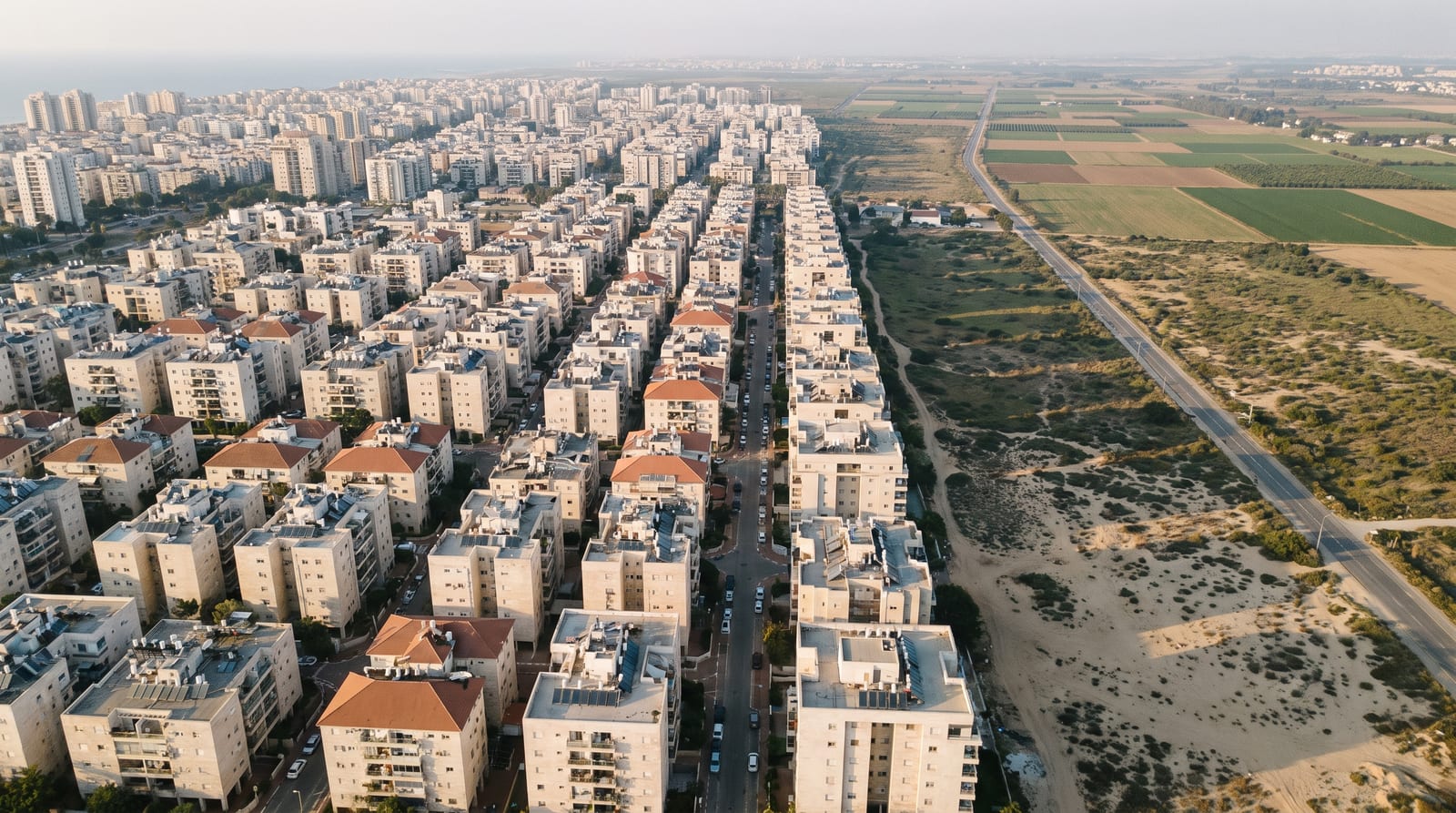
Suppose this is your situation: a few dunams (about a quarter acre each) on the edge of Ness Ziona or Rehovot, farmed by the family since the 1960s. Two years ago a plan was approved that turns the whole block into a residential neighborhood. The neighbor across the road sold his parcel to a developer. You opened an envelope from the Israel Land Authority (ILA). The difference between you is not luck. It is the kind of right each of you holds. His parcel is privately owned, with title recorded at the Land Registry, and the rezoning gain is his. Your land is Israel Lands, the statute's term for public land, and Basic Law: Israel Lands bars any transfer of its ownership (section 1), so you are a lessee, not an owner, even when the lease is recorded at the Land Registry. Think of it as a ground lease: the state keeps the land, you hold the leasehold. And the Israel Land Council Decisions Compendium — the codified decisions of the Israel Land Council, which sets the ILA's policy — requires every agricultural lease to provide (section 8.1.2) that on rezoning the lease ends and the land reverts to the Authority, in exchange for compensation at a rate the Council sets.
So the same plan tells two entirely different stories. For the neighbor, it raises the value of the land; for you, it ends the lease. If you don't know which of the two tracks you're on, you'll price your land as if you were on the neighbor's. The gap comes down to four numbers:
Title at the Land Registry or a lease from the ILA: what's the difference, and which one are you?
With title at the Land Registry you are an owner; under an ILA lease you are a lessee. Which one you are is written in the Land Registry extract and in the lease itself. Two parcels side by side, in the same plan, can be on two different tracks. About 93% of the land in Israel is Israel Lands — owned by the state, the Development Authority, or the Jewish National Fund (JNF) — and only about 7% is privately owned (State Comptroller, January 2017). Five kinds of rights turn up in practice, and each answers the question "Can I sell?" differently:
Bottom line: a lease recorded at the Land Registry is not ownership. The extract says who owns the land, and the lease says what happens on rezoning. Those two documents decide which track you are on.
Why does the owner keep the rezoning gain, and what comes off the top?
Because the land belongs to the owner, and so does everything the rezoning adds to its value. A plan that rezones a parcel from agricultural to residential raises its value, and the law does not take that gain from the owner. It takes a cut of it, three ways. The betterment levy: the local planning committee collects 50% of the betterment, meaning the rise in value caused by the plan's approval, when the owner sells or builds (section 196A and the Third Schedule to the Planning and Building Law, sections 1–3). Expropriation, Israel's version of eminent domain: the law allows up to 40% of a parcel to be taken for public use without compensation (section 190(a)(1), applying section 20 of the Land (Acquisition for Public Purposes) Ordinance), but never part of a lot if the remainder would lose value — and the courts have held that when a whole parcel is taken, full compensation is due.
The third is appreciation tax — Israel's capital gains tax on real estate. Land is not a residence, so there is no exemption and no favorable formula. The inflation-adjusted gain is split by period: the part accrued through November 7, 2001 is taxed at the top marginal rate (currently 47%), the part from November 7, 2001 through December 31, 2011 at up to 20%, and everything from 2012 on at 25% (section 48A of the Real Estate Taxation Law). Land held for decades accrues most of its gain in the high-rate years. Above an annual threshold of ₪721,560 (frozen through 2027) the surtax kicks in: 3%, plus, from 2025, another 2% on capital income, including the gain on a sale of real estate (section 121B of the Income Tax Ordinance). The appreciation tax calculator on this site is built for a home. Land is a different calculation, run on the numbers of your actual deal.
And what do you do with the gain? You have two main ways to turn it into money: sell the land to a developer for cash and be done, or enter into a combination deal, where you hand over part of your land today and receive apartments in a building that doesn't exist yet. Either way, the developer is paying for the building rights the plan added to your land. Cash gives you their value today; a combination deal keeps you a partner in what those rights generate once the building stands. How much land for how many apartments? There is no going rate. The combination ratio is the result of an appraisal — the land's value, rights included, weighed against construction cost and the developer's profit — not a rule of thumb, and not the developer's opening offer. If you inherited the land, a deal like this needs every co-owner's signature. And each route has its own tax treatment.
Bottom line: with private title, the plan works for you. The state taxes the gain instead of taking it. Even after the levy, the taking, and the tax, what is left is still priced off residential value, not off farm value.
What does an ILA lessee get when agricultural land is rezoned?
Compensation at agricultural value, not at the value of the neighborhood about to be built. That is the heart of the difference, and it was written into your lease before any plan existed: the Compendium requires every agricultural lease to carry a surrender clause.
"Lease agreements for agricultural land shall provide that upon a change in the designation of the agricultural land to another designation, the lease agreement shall come to an end and the land shall revert to the Authority. …" — Israel Land Council Decisions Compendium, section 8.1.2(a); the principle set in section 10 of Council Decision 1 (1965) (unofficial translation)
How much is paid for the right that ends? Chapter 8.18 of the Compendium, Part B, sets fixed per-dunam compensation by type of cultivation: base amounts of ₪6,000 for rain-fed field crops, ₪12,700 for irrigated crops, and ₪30,800 for orchards, indexed to the CPI from December 2010, so higher by the time of payment (section 8.18.12). The crop type follows the purpose stated in the lease. The lessee may instead ask for an individual appraisal, which can include farm buildings put up with a permit and which the lessee may contest, but the appraisal does not push back the surrender date. A lessee who hands over on time earns a 50% on-time incentive on the compensation (section 8.18.14(1)) and a direct allocation, with no tender: the right to buy, at full capitalized lease value and with no regional discounts, lots in the plan worth up to 20% of the relative value of the surrendered land (25% in a national priority area), as a rule only after 40% of the plan's housing units, or 500 units, whichever is lower, have been sold at public tender (section 8.18.14(2)). For a sense of scale: in the ILA's Ness Ziona Northeast tender (results published July 2024), the winning bidders paid about ₪936 million before VAT and development costs for land zoned for about 1,037 housing units — roughly ₪900,000 of land value per unit.
The deadlines are set out in the Compendium as well. A surrender notice goes out once a plan rezoning the land for housing or business use is approved and the ILA's management decides the land is needed for immediate sale (section 8.18.11). The surrender date is 60 days from the notice, extendable by up to 45 days at the Authority's discretion (section 8.18.10). In a plan of more than 200 housing units the Authority may send a surrender offer as soon as the plan is on deposit, meaning published for objections, with a 20% advance (section 8.18.16). And investments made after the notice are not compensated (section 8.18.12(f)). As of today, Part B, with its fixed compensation, incentives, and allocation, applies to surrender notices sent through December 31, 2026 (section 8.18.17(b)). After that date the lease terms and Part A apply, under which a compensation committee measures the loss of farming income for the remainder of the term (section 8.18.5). Inside a preferred housing complex handled by the national fast-track housing committee (the Vatmal), the law lets the ILA transfer the rights by order once the plan takes effect (sections 29D–29E of the Vatmal Law), and the Compendium adds a special incentive of 20% for a lessee who signs a surrender agreement quickly (section 8.18.30). The Vatmal Law is a temporary order, extended in July 2026 through August 2027 (Amendment 9), and it continues to govern plans that entered the system during that period even after it lapses.
Bottom line: the lessee gets a fixed per-dunam rate, an incentive for meeting the deadline, and the right to buy some lots at full price — not the rezoning gain. The 60 days run from the notice, not from the plan.
Why is an ILA lease worth the most to a buyer before rezoning, not after?
Because with private title, rezoning raises the value of the land, and under an ILA lease, rezoning ends the lease. For the neighbor, every stage of the plan (deposit, approval, permit) adds value. For the lessee, the same stages bring the surrender notice closer, and once it is served the compensation is already fixed by the schedule. What a buyer is willing to pay today, while the plan is still in the pipeline, is a price for the upside: the fixed rate, the incentive, the direct allocation, and whatever the specific lease says. The market calls it a speculative premium. It is market practice, not a right, and there is no guarantee a buyer will turn up. The ILA does not pay it: the ILA pays what the Compendium says.
And a transfer always runs through the ILA. The transfer carries a consent fee: for a long-term orchard or cultivation lease, the Compendium's agricultural fee schedule sets it at ₪2,000 per dunam (section 8.17.14), subject to the Compendium's exemptions and to the terms of your own lease. Transferring a right in ILA agricultural land without a permit is a prohibited "non-conforming use" under the Agricultural Settlement Law (First Schedule, item 1), so a private contract between seller and buyer, without the Authority, transfers nothing. Once a surrender agreement is signed, the lease is canceled (section 8.18.15(2)) and the compensation is final and covers all rights (section 8.18.20) — there is nothing left to transfer. And in a plan of more than 200 housing units, as noted, the surrender offer can arrive as early as the plan's deposit.
One caveat, and it is a case-by-case question: section 8.1.2 requires a surrender clause in leases signed today, but the clause that binds you is the one in your own lease, whether it is old, renewed, or assigned. Read that clause before drawing any conclusion about what rezoning will do.
Bottom line: with private title, the plan adds value. Under an ILA lease, whatever there is to sell exists only before the surrender notice. And any transfer needs the ILA's consent, and as a rule a consent fee.
Land Registry title vs. ILA lease, in one table
| Private ownership at the Land Registry | Agricultural lease from the ILA | |
|---|---|---|
| The right | Ownership — the extract is in your name | A lease — the owner is the state, the Development Authority, or the JNF; the Basic Law bars a transfer of ownership |
| Who captures the rezoning gain | The owner | The public — the lease ends and the land reverts (section 8.1.2) |
| Betterment levy | 50% of the betterment, to the local committee | None — the ILA makes a payment in lieu of the levy to the municipality (Third Schedule, section 21) |
| What you get on rezoning | The new value, less the levy, a taking of up to 40%, and appreciation tax | A fixed per-dunam rate (₪6,000 / ₪12,700 / ₪30,800 base amounts, CPI-indexed), a 50% incentive, and the right to buy up to 20%–25% at full price |
| When you can sell to a third party | At any stage, as a cash sale or a combination deal; timing is a question of tax and levy | Only before the surrender notice, with the ILA's consent and a consent fee; after a surrender agreement — no right to transfer |
How to sell agricultural land — six steps
- 1Read the original lease. What kind of agreement it is (long-term lease, efficient cultivation, tenancy), what its stated purpose is (that sets the crop type for compensation), how long the term runs and whether there is a renewal right, and exactly what the surrender clause says. If you own the land: a current extract and the betterment levy status from the municipality.
- 2Pull a Land Registry extract and the ILA's confirmation of rights. The extract says who owns the land and whether the lease is recorded. The confirmation says what the Authority's books show: debts, capitalization, uses.
- 3Check the planning status. Is there a plan on deposit or already approved, how many housing units does it carry, and has a surrender notice or a surrender offer been sent? A letter like that changes the order of the steps.
- 4If you lease from the ILA: file a transfer-of-rights application. The Authority sets the consent fee by the type of agreement — ₪2,000 per dunam for a long-term orchard or cultivation lease (section 8.17.14) — and gives its consent. Without a transfer permit, the deal is a prohibited non-conforming use under the Agricultural Settlement Law.
- 5If you own the land: sign the sale agreement and report the sale. The declaration to the real estate tax office is filed within the statutory deadline, and appreciation tax and the betterment levy are paid per the assessments. This is also the moment to check whether spreading the gain over several tax years lowers the tax.
- 6Register. With the ILA, a lease in the buyer's name. At the Land Registry, the transfer of ownership or of the lease, after the tax and municipal clearances.
What to verify before you decide
Your questions, answered
I inherited agricultural land in Israel — how do I know whether it's Tabu or an ILA lease, and where do I get the lease if I don't have it?
From the extract first, then from the ILA's books. Order a current Land Registry extract by block and parcel number. If the ownership line shows a private individual, the land is privately owned, and you are on the Land Registry track. If it shows the state, the Development Authority, or the JNF, with a lease recorded in your parents' names, it is a lease, and you are on the ILA track even though the family's name appears at the Land Registry. If there is no entry at all, the right lives only on the Authority's books: ask the ILA for a confirmation of rights, and request the lease itself from the property file at the ILA regional office where the land is registered.
With both documents in hand, read three things: who the party to the lease is (and how the right passes to heirs), what the lease's stated purpose is, and what the surrender clause says. Those three answers decide what there is to sell, and what you would be paid if the land is surrendered.
Can I sell an ILA agricultural lease before the rezoning plan is approved, and what does the ILA charge?
It depends on the kind of agreement, and the transfer always runs through the ILA. A long-term lease whose terms allow a transfer can be assigned with the Authority's consent. On a transfer the ILA collects a consent fee: for a long-term orchard or cultivation lease, ₪2,000 per dunam under the Compendium's agricultural fee schedule (section 8.17.14), subject to the terms of the lease and the Compendium's exemptions. A short-term tenancy or an "efficient cultivation" agreement carries no transfer right at all (sections 8.15.5 and 8.15.12). And in every case, a transfer without a permit is a prohibited non-conforming use under the Agricultural Settlement Law: a private contract on its own moves nothing.
What the buyer pays is a price for the upside, not for residential value. And note that in a plan of more than 200 housing units the Authority may send a surrender offer as soon as the plan is on deposit (section 8.18.16). What you can do on your own: file a transfer-of-rights application with the ILA and get the consent-fee assessment. The price is negotiated with the buyer; the consent fee is set by the Compendium.
The ILA sent a surrender notice — is it too late to sell, and what are the deadlines?
The notice starts the clock: 60 days to hand over possession. The clock runs from the notice, and the Authority may extend the date by up to 45 days at your request, for reasons it puts in writing (section 8.18.10). A lessee who hands over on time earns, on top of the fixed compensation, the 50% incentive and the direct allocation (section 8.18.14). Investments in the land from the date of the notice are not compensated (section 8.18.12(f)). Until a surrender agreement is signed the lease is still in force, but a transfer at this stage needs the consent of an ILA that knows the land is slated for sale. And from the moment the surrender agreement is signed, the lease is canceled (section 8.18.15(2)) and the compensation is final (section 8.18.20).
Two decisions stay in your hands even after the letter. The first: the fixed rate or an individual appraisal (section 8.18.12(c)), and the appraisal does not delay the handover. The second: compensation under Part B or through the compensation committee of Part A, as long as no decision has been made in your case (section 8.18.9). What you can do on your own: mark day 60 on the calendar and start collecting the tax, fee, and levy clearances, because the Authority requires them within 6 months of signing (section 8.18.15(3)). The letter sets the schedule; the choices inside it are still yours.
How much compensation does an agricultural lessee get for surrendering rezoned land?
A fixed per-dunam rate by type of cultivation, an incentive, and the right to buy some lots at full price. The base amounts: ₪6,000 per dunam of rain-fed field crops, ₪12,700 for irrigated crops, and ₪30,800 for orchards, indexed to the CPI from December 2010 (section 8.18.12). Surrender on time adds another 50% (section 8.18.14(1)), plus the right to buy, without a tender and at full capitalized lease value, lots worth up to 20% of the surrendered land, or 25% in a national priority area (section 8.18.14(2)). VAT is added against an invoice (section 8.18.21), and the appreciation tax on the surrender falls on the lessee (section 8.18.15(4)). A lessee who opts for replacement farmland offered by the Authority gives up the compensation and the incentives (section 8.18.23).
As of today this arrangement applies to surrender notices sent through December 31, 2026 (section 8.18.17(b)). After that date, the lease terms and the compensation committee apply, and the committee measures the loss of farming income for the remainder of the term (section 8.18.5). And none of it applies to an efficient cultivation agreement (section 8.15.19). The amount follows the purpose stated in the lease, so read that before you run the numbers.
Does an ILA lessee pay the betterment levy on rezoning?
No, because the betterment never becomes the lessee's. On ILA agricultural land that has been surrendered and sold, the lessee pays no betterment levy. In its place the ILA makes a payment in lieu of the levy to the municipality (Third Schedule to the Planning and Building Law, section 21), set at 12% of its land-sale receipts by an ILA procedure, not by the statute. The logic is simple: the levy is collected from whoever enjoys the rise in value, and the lessee hands the land back before enjoying it.
What the lessee does pay: appreciation tax on the compensation (section 8.18.15(4)), any debts to the Authority through the surrender date, and a consent fee if the lease is transferred before surrender. A private owner, by contrast, pays 50% of the betterment on the very same plan. The lessee does not receive the rezoning gain, and so is not charged a levy on it.
Read the extract and the lease before you decide
"Sell now or wait?" sounds like a timing question. In practice it is a document question: who the extract names as owner, what the surrender clause says, what the lease's stated purpose is, and where the plan stands today. The Gottlib firm, an Israeli real estate practice, represents owners of agricultural land and ILA lessees in selling and transferring their rights, and landowners in combination deals across the table from the developer. On a sale, we read the original lease, check the planning status, negotiate with the buyer, handle the transfer of rights with the ILA and the Land Registry, and see the deal through to registration. In a combination deal, we commission the appraisal on your behalf, negotiate the ratio and the consideration-apartments annex (the list of exactly which apartments you receive), build the security package, and stay with you until the apartments are registered in your name.
Message us on WhatsApp with a photo of the first page of your lease and a current Land Registry extract — and we'll tell you which of the two tracks you're on. If a developer has already made you a combination-deal offer, send that along too, before you reply.
Land Registry or ILA lease: the answer is in your own extract and lease. Read them before you set the timing. You decide with the facts in hand — and close with confidence.
Sources: Basic Law: Israel Lands — sections 1–2; the Israel Lands Law, 5720-1960; the Israel Land Authority Law, 5720-1960 — section 3; the Israel Land Council Decisions Compendium (version of March 26, 2026) — sections 8.1.2, 8.3.49, 8.15.5, 8.15.12, 8.15.19, chapter 8.18 Parts A–C, and 8.17.14; the Planning and Building Law, 5725-1965 — sections 188, 190, 196A and the Third Schedule (sections 1–3 and 21); the Agricultural Settlement (Restrictions on the Use of Agricultural Land and Water) Law, 5727-1967 — section 2 and the First Schedule; the Promotion of Construction in Preferred Housing Complexes Law (Temporary Order), 5774-2014 — chapter C1, and Amendment 9, 5786-2026; the Real Estate Taxation (Appreciation and Purchase) Law, 5723-1963 — section 48A; the Income Tax Ordinance — section 121B; the State Comptroller's special report on the Jewish National Fund (January 2017); the Knesset Research and Information Center (July 2022, December 2025); the Israel Land Authority's notice of the Ness Ziona Northeast tender results (July 1, 2024). Current versions verified on September 2, 2026. The above is general information only, not legal advice or a substitute for it; consult a lawyer before acting.
Informations générales, sans valeur de conseil juridique.