Pinui-binui, Israel's evacuate-and-rebuild track, is a deal in which the owners of an old building hand it over to a developer, the developer demolishes it and builds a new, larger building in its place, and every owner receives a new apartment in it. Between the day you hand over and the day you get the keys, there is a stretch when your apartment simply does not exist: the old one gone, the new one not yet built. During that stretch you live in a rental, and the developer pays. For example: a family hands a developer its apartment in a building from the 1960s, rents a similar apartment in the same neighborhood, and receives the rent from the developer every month until the day it moves into the new apartment. That is "rent during construction," and it is what this guide is about.
So is there a law that makes the developer pay? No. The Pinui-Binui Law does not require the developer to pay rent, does not say how much, and does not say for how long. What binds the developer is the agreement you sign, and only that. And that is exactly where your leverage is: the rent clause is written once, before signing, and whatever did not make it in will not exist. The agreement sets the amount, the date it gets updated, the guarantee behind it, and what keeps running when possession is late.
If not from the statute, where does the duty to pay rent come from?
From the agreement, and from the way the statute defines a deal. For your contract with the developer to count as a "pinui-binui deal" under the Pinui-Binui Law, and with it the majority needed to move the project and the ability to act against a refusing owner, it must contain four things: the principles for setting each owner's terms; the outside dates for approving the plan, obtaining the permit and handing over the new apartment; the details of who is carrying out the construction; and the developer's commitment to post guarantees. Rent is not on the list. The statute leaves it to the agreement.
Still, the statute gives rent teeth, indirectly. When one owner refuses the deal and the rest of the building wants it, the deciding question is whether the refusal is reasonable. And the statute says a refusal is not unreasonable, among other cases, when the refusing owner was not offered alternative housing for the construction period. A developer that offers no alternative housing will have a hard time painting the refusing owner as a holdout. That is why, in practice, developers offer rent. The question is not whether, but how much, until when, and with what guarantee.
"…the refusing apartment owner was not offered alternative housing for the period of construction of the new building…" — original text (Book of Laws 2046) of the Pinui-Binui Law (Encouragement of Evacuation-Reconstruction Projects), 5766-2006 (unofficial translation)
Bottom line: the statute does not write the rent clause. It only makes sure that without one, the developer cannot call you a holdout. You write the clause.
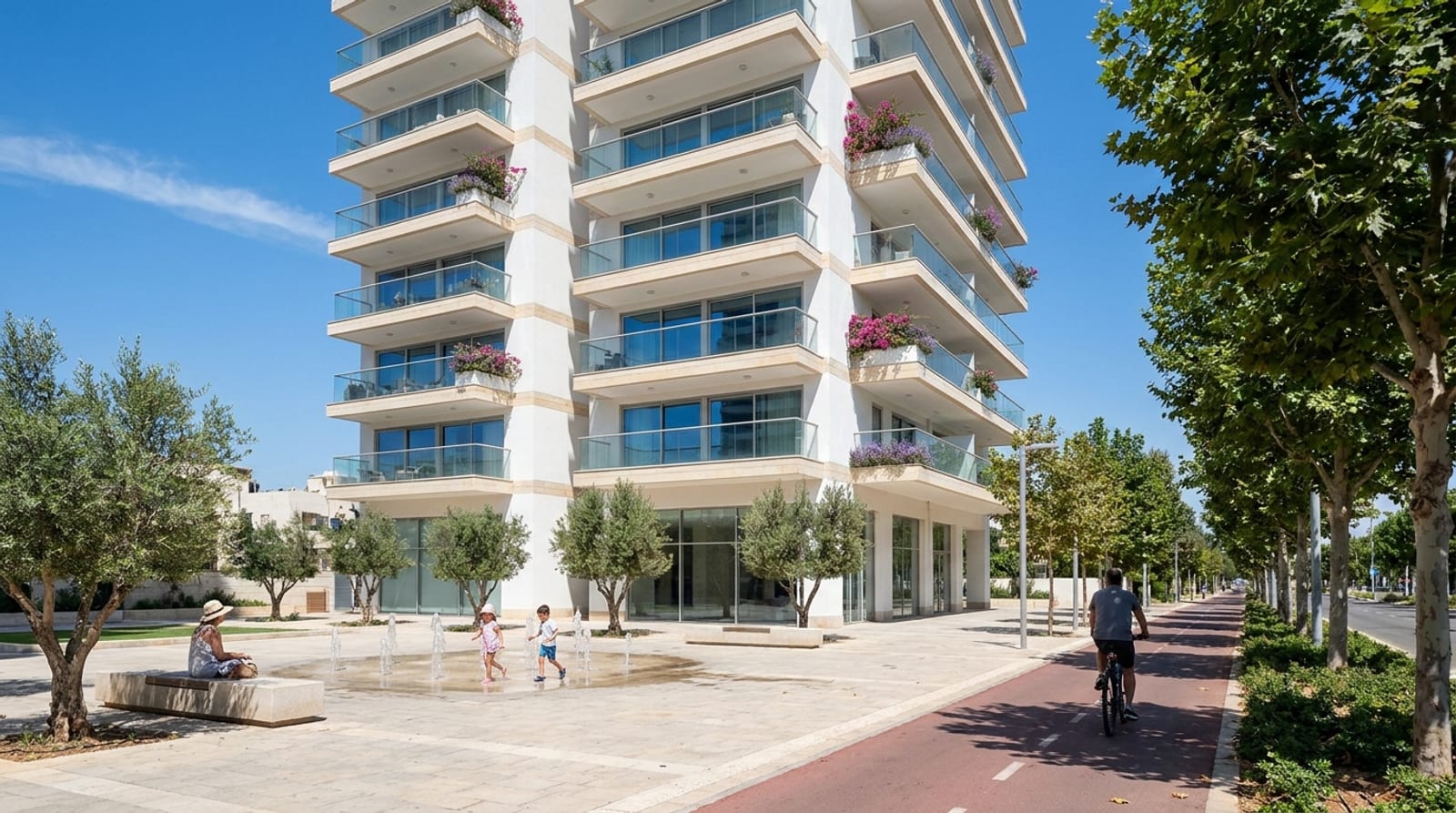
How much is paid, and who sets the amount?
The agreement sets it, and there is a benchmark you can point to. When the State itself funds a pinui-binui project, the Government Authority for Urban Renewal sets minimum requirements for the developer's agreement with the owners. In bid process 12/2023, for a neighborhood in Rehovot, the developer was required to pay every owner rent from move-out until the owner receives the new apartment, in an amount set by an appraiser close to the move-out date, based on an apartment similar to the one being vacated, in the project's surroundings. And more: moving costs both ways, and for anyone elderly or with a disability, packing, disassembly and reassembly too. That is not law that applies to every project. It is what bid process 12/2023 required, with the State's money on the table, and there is no reason your building should ask for less.
And what about "the standard"? Standard 21.1 of Israel's Council of Real Estate Appraisers tells the appraiser who tests whether a pinui-binui plan is viable to itemize the rent that will be paid to the owners after move-out, across the construction period, along with the related costs, and to put them into the calculation. In other words, your rent is a cost of the project, and an appraiser has already counted it. The standard sets no amount, no number of months and no indexing, and it does not bind the developer to you. It only reminds everyone that this money was in the numbers from day one.
What goes in the agreement? Three things you do not leave to the developer's draft: what the amount is measured against (an appraiser close to move-out, a similar apartment, and the higher of the two), how it gets updated over the years, and until when it is paid. The full practical list, including indexing, payment dates and the "cushion" in the guarantee, is in our guide to moving out for alternative housing. Here we stay with the question of money and time.
Bottom line: an amount written today is measured against the market of a few years from now. That is why we require an appraiser acting for the owners close to move-out, and so should you.

Does the statute require a guarantee for the rent?
The statute requires "guarantees," and does not say which. The developer's commitment to post guarantees is one of the four things that make a contract a pinui-binui deal. But the statute spells out no guarantee for the rent, no amount and no period. A rent guarantee is a matter of the agreement, and therefore of the negotiation.
And there is a draft. In 2024 the Ministry of Justice published draft regulations that would set what a pinui-binui deal must contain, among them an unconditional guarantee payable on demand, issued by a financial institution, for the rent from move-out until the new apartment is received. What governs the rent today, and the guarantee behind it, is the agreement, so that is the clause you check first.
And what did bid process 12/2023 of the Government Authority for Urban Renewal require, with the State funding the project? A separate guarantee, apart from the apartment guarantee:
"The developer shall deliver to the apartment owners an autonomous (unconditional) bank guarantee securing payment of the rent until the new apartment is received" — Government Authority for Urban Renewal, Annex G1 to bid process 12/2023, minimum requirements for the agreement (unofficial translation)
Note the difference. The apartment guarantee secures that you get the new apartment. The rent guarantee secures that you get the monthly check for the temporary one. These are two different guarantees, for two different risks, and in bid process 12/2023 they stand side by side. A developer offering "one guarantee that covers everything" is offering less than that bid process required, and less than we require in the agreements we negotiate for apartment owners. How an autonomous guarantee works, and what else has to be signed before the keys change hands, we explained in our article on the guarantees.
Bottom line: a rent guarantee is not required by statute. In the agreements we negotiate for apartment owners it is a condition of moving out, and it stands on its own, beside the apartment guarantee.
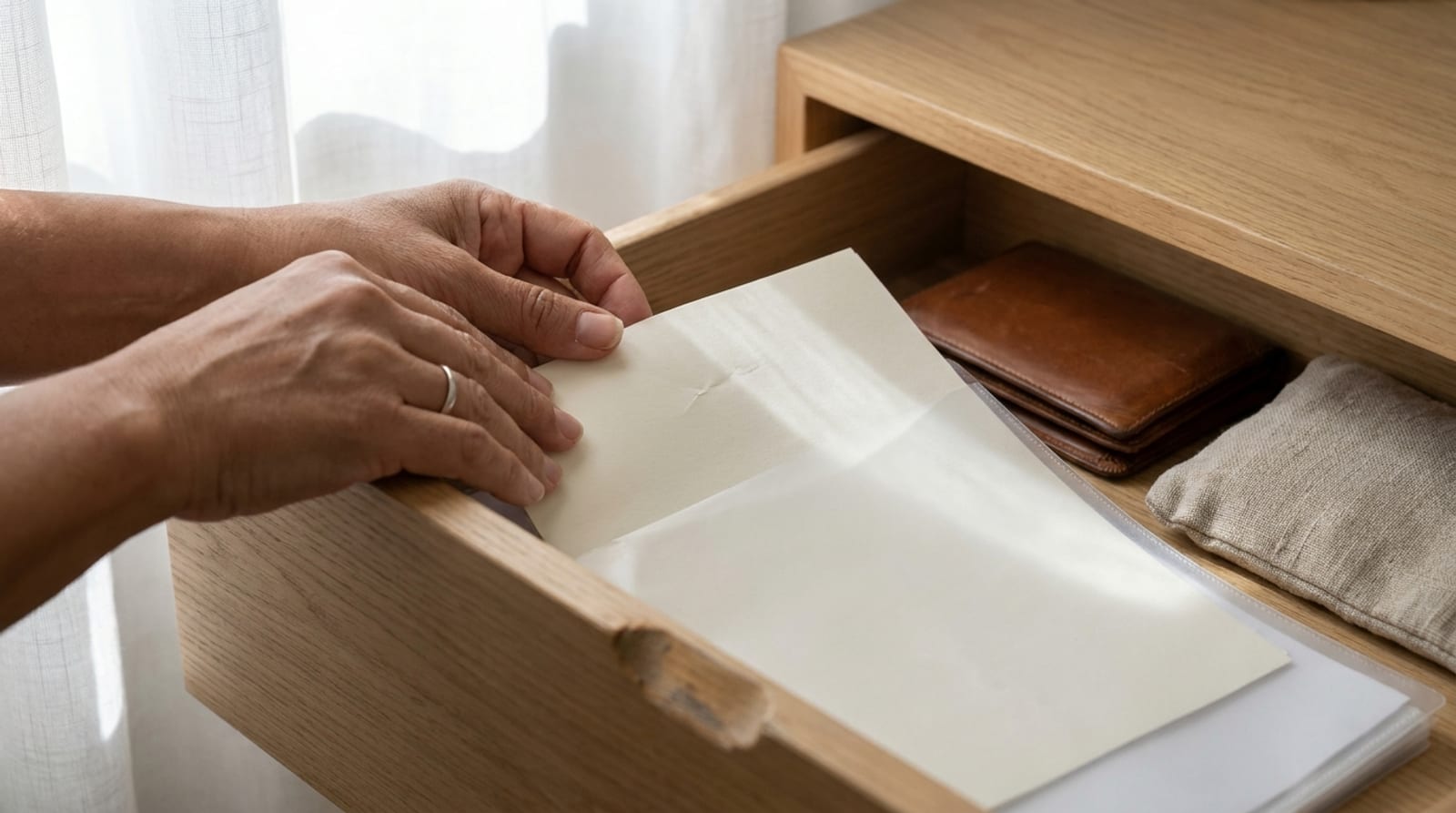
Construction is running late. Does the developer keep paying?
If the agreement says so, yes. And if it does not, no statute fills the gap. In pinui-binui there is no provision saying the developer keeps paying rent when possession is late. So that clause is written in expressly. In bid process 12/2023 of the Government Authority, a delay outside the developer's control extends the timeline, and the developer keeps paying rent in the meantime. This is a point agreements tend to blur: the developer asks for a "justified extension" and forgets to add "and payment continues." The two halves go together.
And there is a second floor, from the world of buying new. Someone buying new from a developer, under a contract signed on or after July 7, 2022, receives compensation for late possession under the Sale (Apartments) Law without having to prove a loss. Not from day one, but once a month has passed from the contract date. And then, for every month: the rent of a similar apartment in size and location through month 4 after the contract date, 1.25x from month 5 through month 10, and 1.5x from month 11 on. Or the compensation in the contract, whichever is higher, paid at the end of each month. Do those tiers apply on their own to an owner in pinui-binui, who pays with the old apartment and not with cash? The law is silent; don't bank on it. In the agreements we negotiate for apartment owners, the Sale Law applies because the agreement incorporates it: its tiers are written into the clause expressly, calculated on the rental value of the new apartment, and never less than the rent set in the agreement.
"An amount equal to the rent of an apartment similar in size and location, multiplied by 1.5 – for the period beginning 11 months after the contractual date and onward." — Sale (Apartments) Law, 5733-1973, as amended in 2022 (unofficial translation)
What decides a delay? Three dates written in the agreement. The move-out date. The outside date for possession, which the statute requires the agreement to contain. And what "possession" means: keys in hand, or an apartment connected to utilities with a certificate of occupancy. The rent runs until the third date, and you write its definition.
Bottom line: in a delay, the statute is silent and the agreement speaks. You write into it that payment continues, and that the Sale Law tiers are the floor.

What we require in our agreements
The statute leaves rent to the agreement, so this is what we put into it. In the agreements we negotiate for apartment owners, these are our opening demands for the period you are out of your home. Not every developer agrees to every clause; this is what we bring to the table, and the final terms are settled in negotiation.
And alongside this, you have a deadline too. The same agreements impose daily liquidated damages on an owner who is late moving out, which the developer may set off against the rent. An owner who rents the apartment out to others makes sure, from the moment the plan is filed, that their lease has a short-notice termination clause, and if the tenant refuses to leave, acts at once: an eviction suit and notice to the developer.
Bottom line: the statute writes none of these clauses. The agreement does, and we write it before you sign.
Do you pay tax on the rent the developer gives you?
Two layers, and two different answers. The first layer is appreciation tax, and it is in the statute. Under the Real Estate Taxation Law, the "replacement housing unit" an owner receives in pinui-binui includes not only the new apartment but also the payment of rent for the period of its construction, and coverage of related expenses. In other words, rent during construction is part of the consideration the statute exempts from appreciation tax, together with the apartment. The exemption on the apartment itself runs up to a value ceiling the statute sets, and anything above the ceiling is taxable. And the appraisal standard adds that the moving expenses counted are "in a reasonable and customary amount."
The second layer is income tax, and it is a position of the Tax Authority, not a statute. In a notice dated July 9, 2025, the Israel Tax Authority published a position paper: rent an owner receives from the developer in pinui-binui, in return for vacating the apartment and for the period the statute defines, need not be reported as taxable income, and no tax is withheld from it. And that holds even if the apartment was rented out to others before move-out. The notice itself notes that the exemption on the apartment runs up to the ceiling in the statute, and that the rent comes in addition to it.
"need not be reported as income taxable under income tax, and no tax is to be withheld from it, regardless of whether the apartment served as the seller's residence or was rented out to a third party." — Israel Tax Authority, notice on a position paper, July 9, 2025 (unofficial translation)
And now the gap no one talks about. Per the notice, the period during which the rent is exempt begins on the date the apartment is demolished and ends when you take possession of the replacement apartment. But move-out day and demolition day are not the same day: between the keys you handed over and the bulldozer, months can pass. On those months the notice is silent, and so is the statute, which speaks of the apartment's "period of construction." We are not writing here that they are exempt, and not that they are taxable, because no one has ruled on it. What we can say: it is a question you ask before signing, and you arrange the move-out and demolition dates in the agreement so that the gap between them is as short as possible.
Bottom line: appreciation tax: the statute exempts the rent for the construction period, on top of the exemption on the apartment, which runs up to the ceiling. Income tax: the Tax Authority says there is none. And what lies between move-out and demolition: an open question, kept short by contract.

Who decides what: the statute and your agreement
| The question | What the statute says | What we require in the agreements we negotiate for apartment owners |
|---|---|---|
| How much is paid | Nothing. No amount in the statute | An appraiser close to move-out, a similar apartment nearby, and the higher of the two; updated over the years |
| Until when | An outside date for possession must be in the agreement; the statute does not set it | From move-out until you receive the new apartment: keys, utilities and a certificate of occupancy |
| Guarantee | "Guarantees," with no detail | A separate autonomous guarantee for the rent, held by the owners' attorney, beside the apartment guarantee |
| Delay | No provision in pinui-binui; when buying new: tiers once a month has passed | Payment continues through any extension, and at least the Sale Law tiers in writing |
| Tax | Appreciation tax: exempt for the construction period, on top of the exemption on the apartment (which is capped). Income tax: the Tax Authority's position, none | Move-out and demolition dates close together; moving expenses in a reasonable amount |
5 steps before you sign the rent clause
- 1Read how the amount is set. A fixed number from today, or an appraiser close to move-out? A number written today is measured against the market of years from now.
- 2Mark 3 dates. Move-out, demolition, possession. Rent runs from the first to the third; the Tax Authority counts from the second.
- 3Find the delay sentence. "Extension" without "and payment continues" is half a sentence. Complete it.
- 4Count 2 guarantees. One for the apartment, one for the rent. Separately, as bid process 12/2023 of the Government Authority required.
- 5Bring it to the building. One rent clause, the same for everyone, through the owners' committee and the owners' attorney, before the first signature.
What to verify before you hand over the keys
Your questions, answered
The apartment was rented out before the project. Now the developer pays me rent. Is that income I have to report?
Per the Tax Authority's position, no. The notice of July 9, 2025 says that rent an owner receives from the developer, in return for vacating the apartment and for the period the statute defines, need not be reported as taxable income and no tax is withheld from it, regardless of whether you lived in the apartment or rented it out to others.
Two caveats worth remembering: this is the Authority's position, not a section of a statute. And it speaks of rent for the period the statute defines; the appraisal standard speaks of moving expenses in a reasonable and customary amount. In our view, rent for a different period, or above what is customary, may come under scrutiny as well, so you clear it up before you sign.
I'm 72. Can I skip the rental period altogether?
Yes, and the statute makes sure it is offered to you. Anyone who was 70 on the day the first deal in the building was signed and has lived in the apartment for at least 2 years: their refusal is not unreasonable unless they were offered, on top of the new apartment, at least one of several alternatives, at the developer's choice. Among them: a move to a senior residence, the purchase of a replacement apartment, or a sum of money to buy one, all by the move-out date set in the deal; two apartments of a similar combined value; or a smaller new apartment with equalization payments.
The first alternatives make the rental period unnecessary altogether: you move once, not twice. The full picture is in our article on the rights of seniors in urban renewal.
The developer says the new apartment is ready, but there's no certificate of occupancy yet. Does the rent stop?
What the agreement says governs. In bid process 12/2023 of the Government Authority, payment continues until you receive the new apartment. In the agreements we draft, "receiving" means full possession: keys, connection to permanent utilities and a certificate of occupancy, and the rent runs until then.
If your agreement says only "an apartment fit to live in," that is the definition you fix before signing, not after the developer announces the apartment is ready.
I heard there are regulations that require a rent guarantee. Is that true?
There is a draft from 2024, in which the Ministry of Justice proposed regulations that would set what a pinui-binui deal must contain, among them an unconditional guarantee payable on demand, issued by a financial institution, for the rent from move-out until the new apartment is received. What binds the developer to you today is the agreement you signed.
The meaning for now is simple: a rent guarantee is a clause in the agreement. If the developer says "the regulations will take care of it," the answer is that the clause is written now. In the agreements we negotiate for apartment owners, that guarantee is deposited with the owners' attorney as a condition of moving out.
Our building was damaged in the war and is on the rehabilitation track. Who pays our rent in the meantime?
That has a statute of its own. Under the War Damage Rehabilitation Through Urban Renewal Law, an owner who received a new apartment in a rehabilitation deal, and rent until receiving it, is treated as having received the Compensation Fund's war-damage payment. And if the Compensation Fund's director deferred the date of that payment, the owner is entitled in the meantime to fair rental value, in an amount the director sets, and only until the land is handed over to the rehabilitation developer.
Who sets the amount on that track is the Compensation Fund's director, not the developer and not the Government Authority for Urban Renewal.
Received a draft agreement? Send us the rent clause on WhatsApp, and we will tell you what it covers and what it is missing.
Rent is a clause, not a favor
The developer pays your rent because the agreement says so, and exactly as the agreement says. So the place to ask "measured against what, until when, and what happens in a delay" is before signing, while there is still something to write. At the Law Office of Noam Gottlib, urban renewal attorneys, we represent apartment owners across from the developer: we write the rent clause to the floor we set in every agreement, not to the draft the developer brought. What comes before this clause, how many square meters you get in the new apartment, and what happens when you want to sell midway, selling an apartment in a building entering pinui-binui, and beside it the types of guarantees for apartment owners, and for anyone who has turned 70, the rights of seniors in urban renewal, are covered in our guides.
Moving out? Send us the clause. We will tell you whether it holds until the keys are in your hand.
Rent during construction is not born in a statute and not in the developer's goodwill. It is born in a clause. Write it right, and you wait for the new apartment and close with confidence.
Sources: the Pinui-Binui Law (Encouragement of Evacuation-Reconstruction Projects), 5766-2006 · the Real Estate Taxation (Appreciation and Purchase) Law, 5723-1963 · the Sale (Apartments) Law, 5733-1973, as amended in 2022 · Real Estate Appraisal Standard 21.1, Council of Real Estate Appraisers, 2022 · Israel Tax Authority, notice on a position paper on rent in urban renewal, July 9, 2025 · Government Authority for Urban Renewal, Annex G1 to bid process 12/2023, minimum requirements for the agreement · draft Pinui-Binui Regulations (Content and Form of an Urban Renewal Deal), 5784-2024, a draft published by the Ministry of Justice · the War Damage Rehabilitation Through Urban Renewal Law, 5786-2026 (Book of Laws 3521, April 5, 2026). This article is general information, not legal advice; every agreement is read on its own wording and circumstances.

Mit uns als bevorzugter Quelle sehen Sie unsere neuen Artikel häufiger in den Schlagzeilen, wenn Sie wieder etwas Ähnliches suchen. Und eine schöne Art, Danke zu sagen.
Als bevorzugte Quelle auf Google hinzufügen (öffnet sich in einem neuen Tab)
Allgemeine Informationen – keine Rechtsberatung.